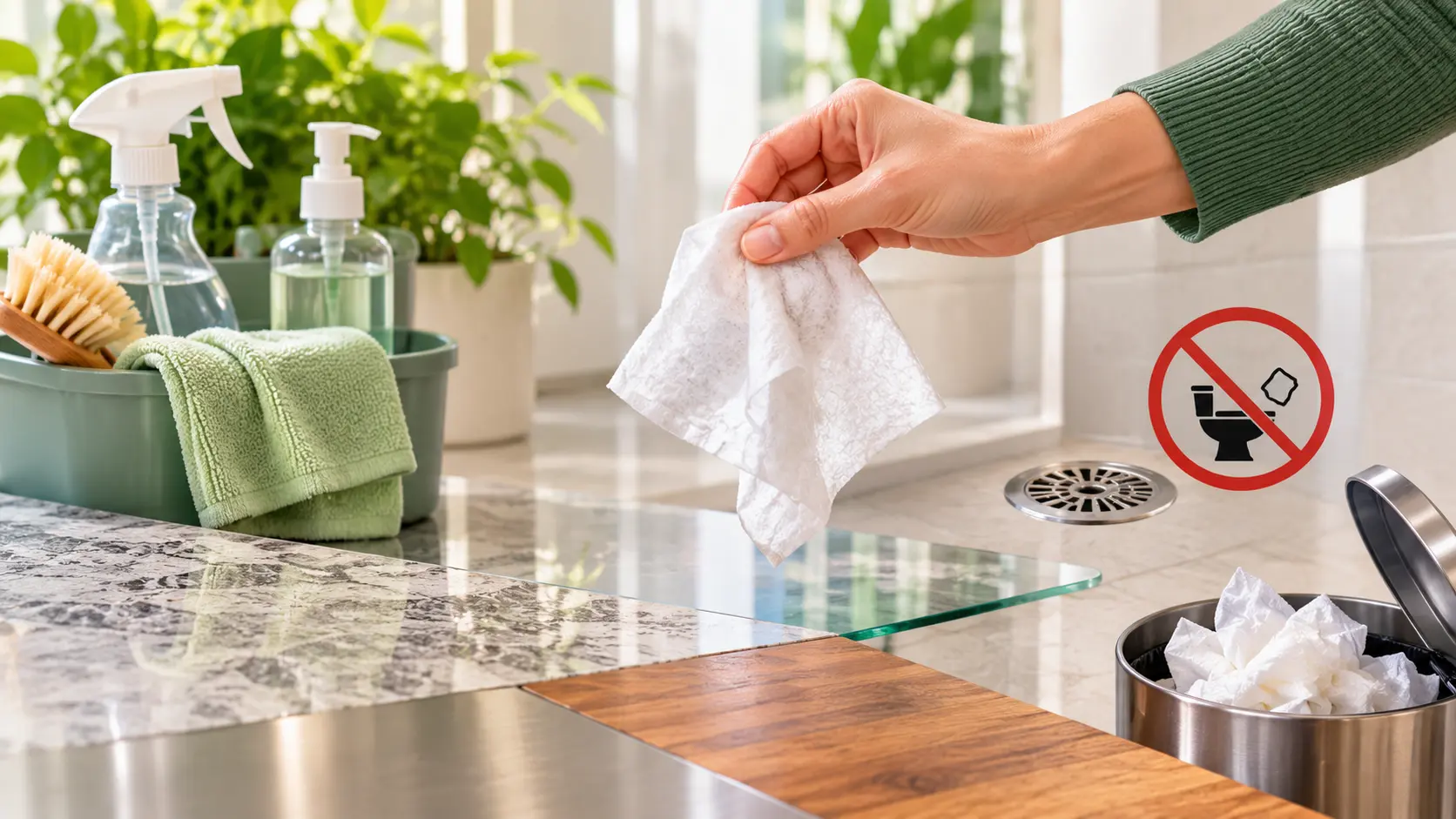
No. Disposable wipes are convenient and useful for quick jobs, but they are not safe for every surface, and they should not go down any drain or toilet, even if the packaging says “flushable”. Wipes don’t break down like toilet paper, and they are a leading cause of blocked pipes. On surfaces, the wrong wipe can dull finishes, leave residue or damage delicate materials.
What Disposable Wipes Are Made Of
Most wipes are not paper. They are usually made from:
- Synthetic fibres such as polyester or polypropylene, or blends with viscose or cotton
- Binders and resins that hold the fibres together when wet
- A liquid solution containing cleaning agents, disinfectants, fragrance and preservatives
The fibres and binders are what make wipes strong, and also what stop them from dissolving in water. That is the root of the drain problem.
The Drain and Toilet Problem
Why wipes block pipes
Toilet paper breaks apart within moments of contact with water. Wipes do not. Instead they:
- Travel down the pipe and snag on rough joints, bends and roots
- Tangle together with fat, oil, hair and other debris
- Build up into dense masses, sometimes called “fatbergs” at larger scale
- Block building drainage, pumps and sewer lines, not just your own toilet
“Flushable” does not mean safe
Many wipes carry a “flushable” label, but:
- The label usually means the wipe can pass through a toilet bowl, not that it breaks down in pipes and sewers.
- Standards and testing for the term vary, and many “flushable” wipes still fail to disperse the way toilet paper does.
- Water utilities and plumbers commonly report that they are a major cause of blockages.
This matters in apartment towers, where a single blockage in a shared stack can affect multiple units and lead to costly callouts and building management disputes.
What should go where
| Item | Toilet | Sink drain | Bin |
|---|---|---|---|
| Toilet paper | Yes | No | Yes |
| Cleaning wipes | No | No | Yes |
| Baby wipes | No | No | Yes |
| Makeup remover wipes | No | No | Yes |
| “Flushable” wipes | No (safest practice) | No | Yes |
| Wet wipes after pet cleanup | No | No | Yes (sealed bag) |
The simple rule: only toilet paper and human waste go in the toilet. Everything else goes in the bin.
Signs a wipe-related blockage is developing
- Slow flushing or gurgling sounds
- Water draining slowly in bathroom basins or showers
- Recurring blockages that clear temporarily
- Sewage smells from drains
- A plumber finding wipe clumps in the line
Are Wipes Safe for Every Surface?
Also no. Wipes are designed for convenience, not for universal use.
Surfaces where wipes generally work well
- Sealed hard surfaces: laminate counters, glazed tiles, plastic, stainless steel (check the label first)
- Bathroom fixtures: taps, basins, toilet exteriors (use dedicated wipes for the toilet only). For how often these areas need attention, see the ideal frequency for bathroom cleaning.
- Door handles, light switches and remote controls (with a suitable disinfecting wipe, and wrung out so they are not dripping)
- Quick spill and sticky-mark cleanup
- Hands and skin, only if the product is designed for it
Surfaces where wipes can cause damage
| Surface | Risk |
|---|---|
| Natural stone (marble, granite, travertine) | Acidic or citrus-based wipes can etch and dull the surface |
| Unsealed or oiled wood | Moisture and chemicals can stain, swell or strip the finish |
| Polished or lacquered wood furniture | Can leave streaks, dull the shine or react with the polish |
| Leather and suede | Alcohol and chemicals dry the leather out and can discolour it |
| Screens (phones, TVs, laptops) | Harsh chemicals can damage anti-glare and oleophobic coatings |
| Camera lenses and glasses with coatings | Can scratch or strip coatings |
| Painted walls (matte) | Can rub off paint or leave marks |
| Fabric upholstery | Can leave rings, spread stains or leave residue |
| Antique, gilded or brass items | Can strip finishes or tarnish |
| Stainless steel with a brushed grain | Wiping across the grain can leave marks |
| Granite and quartz worktops with strong disinfectant wipes, repeated | Can dull the sealant or finish over time |
Glass and mirrors are another weak spot, since wipes tend to leave streaks. See how to clean mirrors streak-free every time and how to clean windows without streaks or marks for better methods.
When in doubt, spot-test somewhere hidden or use a damp microfibre cloth instead.
Common Mistakes With Wipes
- Flushing them. The biggest and costliest mistake.
- Using one wipe on many surfaces. Moving from toilet to taps to kitchen spreads germs, not removes them.
- Not allowing contact time. Disinfecting wipes need the surface to stay visibly wet for the time stated on the label (often a minute or more). Quick wipe-and-dry doesn’t disinfect.
- Using disinfecting wipes on food-prep surfaces without rinsing, unless the label says they are food-safe.
- Using bathroom wipes in the kitchen, or the reverse.
- Letting the pack dry out. Dry wipes clean poorly and leave streaks. Reseal the lid properly.
- Treating them as a replacement for real cleaning. Wipes move dirt around, and they don’t remove grease, limescale or built-up grime as well as a proper cleaner and cloth. For kitchen grease, see how to remove grease stains from kitchen surfaces.
- Using them on skin not meant for it. Household disinfecting wipes are not for hands, baby skin or faces.
- Leaving the pack within a child’s reach. Disinfecting wipes contain chemicals that are harmful if swallowed or if they contact the eyes.
Hygiene and Health Considerations
- Fragrance and preservatives in wipes can irritate sensitive skin, and may trigger reactions in people with eczema or asthma.
- Disinfecting wipes often contain quaternary ammonium compounds or alcohol, which can irritate skin, eyes and airways if used heavily in closed spaces.
- Baby wipes are meant for skin but still shouldn’t be flushed.
- Always wash hands after using disinfecting wipes, and ventilate the room. If you share your home with animals, read how to clean safely when you have pets in Dubai before choosing wipes and sprays.
Environmental Impact
- Most wipes contain plastic fibres and don’t biodegrade quickly in landfill.
- Wipes in drains and waterways can add microplastics to the environment.
- “Biodegradable” and “plant-based” labels vary in meaning. Check what the pack actually says, and still bin them. Our post on whether natural cleaning products are really effective looks at how far “natural” and “eco” claims can be trusted.
Safer and More Sustainable Alternatives
- Reusable microfibre cloths with a small amount of cleaner. They clean better, cost less over time and can be machine-washed. If budget is a concern, see where to find cheap cleaning supplies.
- Washable cotton cloths or old towels cut into squares, useful for spills and quick wipes.
- Spray-and-wipe with a suitable cleaner for kitchens, bathrooms and glass.
- Paper towels for messy or greasy jobs you’ll throw away straight afterwards.
- Bidet or a small water-and-cloth method instead of flushing personal wipes.
- Wipes kept for specific jobs only, such as pet paws or travel, and binned afterwards.
Owning your own proper tools also beats the alternative, which is why we explain why you shouldn’t rent cleaning supplies.
How to Use Wipes Properly (When You Do Use Them)
- Read the label. Check which surfaces and uses it covers.
- Spot-test delicate or unfamiliar surfaces.
- Wipe in one direction, not circles, to avoid spreading dirt.
- Use a fresh wipe for each area, and work from cleanest to dirtiest.
- Allow the contact time if you’re disinfecting.
- Bin the wipe. Never flush it.
- Close the pack tightly and store it out of reach of children and pets.
- Wash your hands afterwards.
Wipes work best as a supplement to a simple cleaning routine, not a replacement for it.
What to Do If You Think Wipes Have Blocked a Drain
- Stop flushing and avoid using the affected fixture.
- Don’t pour harsh chemical drain cleaners into a wipe blockage, as they rarely dissolve wipes and can be hazardous, especially to the plumber.
- Contact a plumber, and your building management if you live in an apartment, since shared pipes may be affected.
- Once cleared, remind everyone in the home about the bin rule, including guests and household help.
Final Takeaway
Disposable wipes are handy for quick jobs, but they are not safe for every surface, and they are never safe for drains or toilets, whatever the label says. Check the label, spot-test delicate materials, use a fresh wipe for each area, and always put them in the bin. For regular cleaning, a reusable microfibre cloth and the right cleaner will do a better job, cost less and protect your pipes.
If you’d rather leave bathroom and surface cleaning to people who know which product suits which material, a professional cleaning team can handle it properly. Read whether to hire cleaning or do it yourself to decide what suits you.