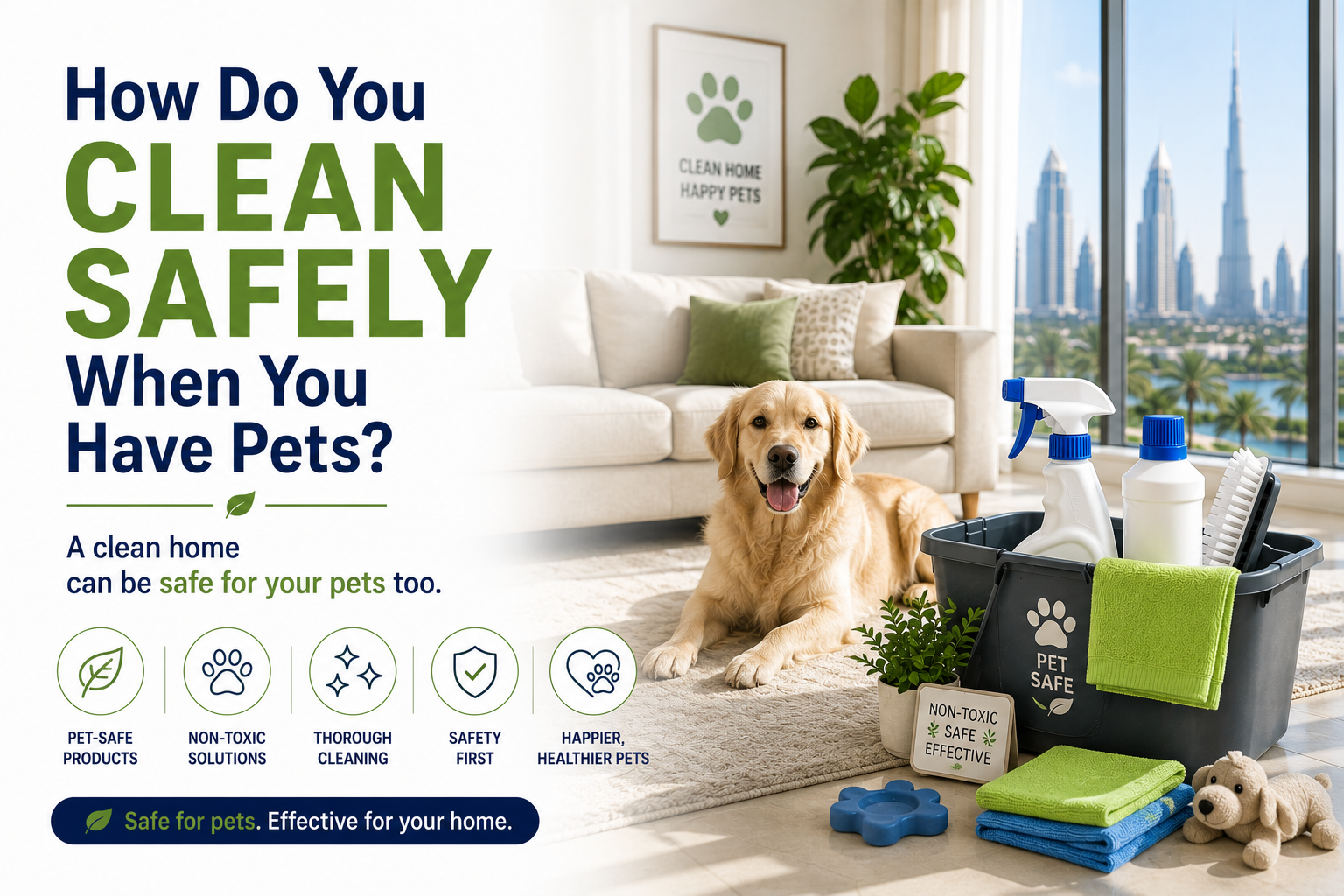
Clean safely around pets by avoiding ammonia, bleach, and essential-oil-based products where possible, keeping pets out of the room until surfaces are fully dry, and storing all cleaning products somewhere they can’t reach. These three habits address how most pet exposure actually happens: paw and skin contact, inhaled fumes, and direct ingestion. According to the ASPCA Animal Poison Control Center, household cleaning products account for roughly 6.5% of all pet poison exposure calls it receives each year.
Key Takeaways
- Ammonia, bleach, and phenol-based disinfectants are common ingredients in general cleaners that can irritate a pet’s skin, paws, and airways.
- Cats are more sensitive to essential oils than dogs, since their liver can’t break certain compounds down the way ours can.
- Most cleaning products are safe around pets once used correctly and left to dry fully before pets return to the room.
- A diluted water-and-vinegar solution is a genuinely pet-safer alternative to ammonia-based glass and surface cleaners.
Alo Maids can be asked to use pet-safer products and follow a pet-specific drying and ventilation routine on request.
Which Cleaning Products Are Unsafe Around Pets?
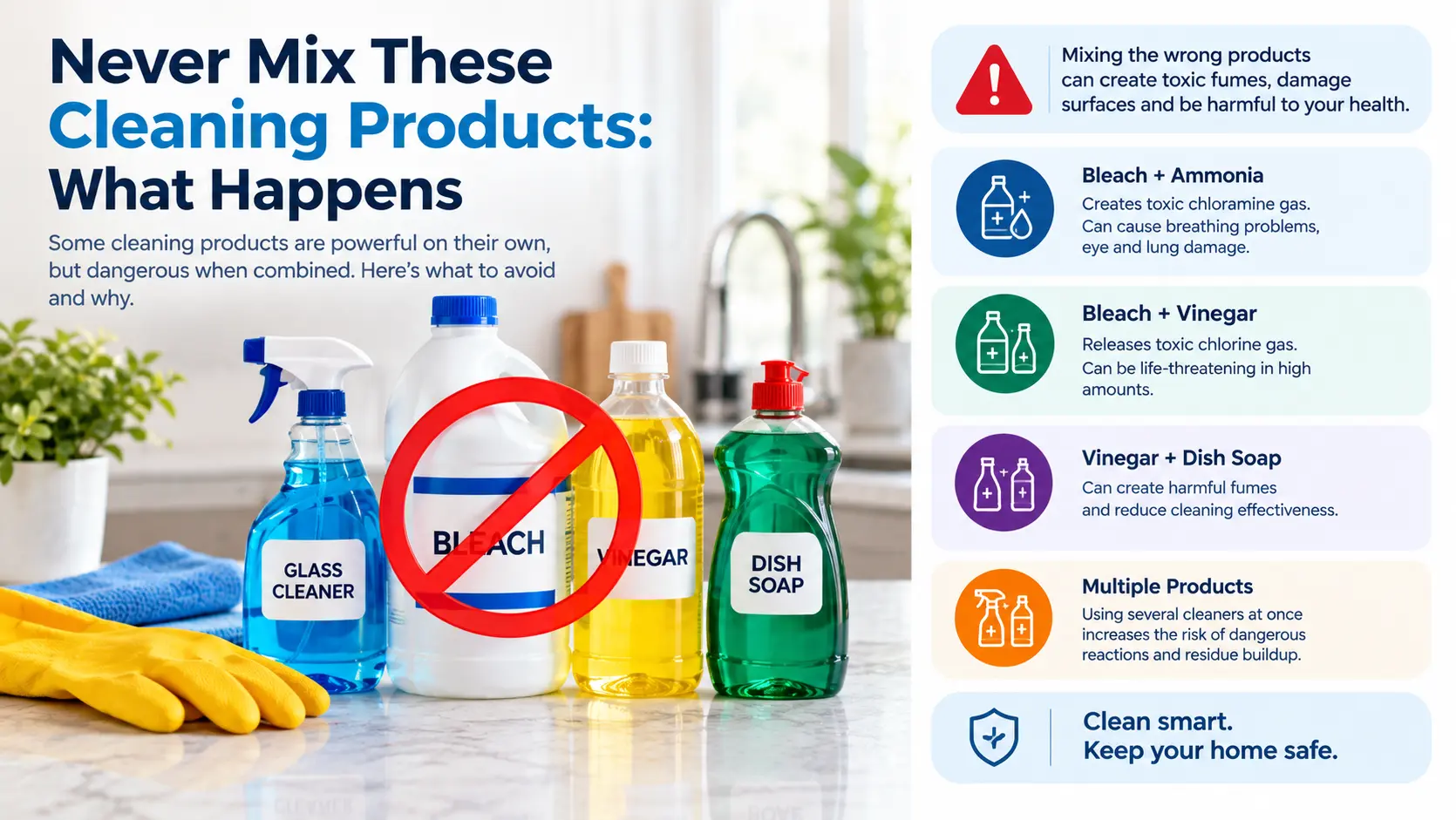
Ammonia, undiluted bleach, phenol-based disinfectants, and essential oils are the main categories of concern for pet owners.
| Ingredient | Risk to Pets | Commonly Found In |
| Ammonia | Irritates skin, paws, and the respiratory tract if inhaled | Glass cleaners, some all-purpose sprays |
| Undiluted bleach | Can burn the mouth and throat if ingested | Disinfectants, some laundry products |
| Phenols | Toxic to cats in particular, even in small amounts | Some disinfectant sprays and wipes |
| Essential oils | Liver damage, GI upset, or breathing problems, mainly in cats | “Natural” sprays, diffusers, scented cleaners |
Most cleaning products are safe around pets when used exactly as labelled and left to dry fully; the real risk comes from strong, undiluted, or scented products used carelessly.
Why Are Cats More Sensitive Than Dogs to Cleaning Products?
Cats lack a liver enzyme most mammals use to break down certain compounds, so some chemicals build up in their system rather than clearing quickly.
This is particularly true of essential oils. The ASPCA notes that cats exposed to concentrated essential oils can develop gastrointestinal upset, central nervous system depression, or liver damage, and that inhaling oils can lead to aspiration pneumonia. As a result, essential-oil-based cleaners and diffusers are worth avoiding entirely in cat-owning households, rather than just used cautiously.
Is Bleach Safe to Use in a Home With Pets?
Yes, once diluted, rinsed, and fully dried; undiluted bleach is a different, genuinely risky product.
Diluted bleach is commonly used to clean pet toys, bowls, and bedding for exactly this reason, provided it’s thoroughly rinsed and the smell has fully dissipated before a pet is allowed back near the item. Undiluted bleach, however, can burn a pet’s mouth and oesophagus if ingested. The distinction between diluted and undiluted use is the entire safety question here, not whether bleach is used at all.
Dilution and drying time, not avoidance, are what make bleach safe or unsafe around pets.
What Is a Safer Homemade Cleaning Solution for Pet Owners?
A diluted water-and-vinegar solution is a widely used, genuinely pet-safer alternative to ammonia-based cleaners.
A mix of roughly one part white vinegar to four parts water cleans most hard surfaces and glass without the ammonia residue found in many commercial sprays. It can still cause mild stomach upset if a pet licks it while the surface is wet, so the same rule applies as with any cleaner: let it dry fully before pets return to the room.
How Should You Clean a Home With Pets, Step by Step?
Move pets out of the room first, choose pet-safer products where possible, and give every surface time to dry before they return.
1. Move pets to another room, a crate, or outside before starting, rather than cleaning around them.
2. Choose pet-safer products where possible, avoiding ammonia, undiluted bleach, phenols, and essential oils.
3. Ventilate the room, opening windows or running the AC fan, while cleaning and while surfaces dry.
4. Let every cleaned surface dry fully before letting pets back into the room.
5. Store all products in a locked cabinet or high shelf immediately after use, not left out on a counter.
6. Check floors and wipe paws if a pet walks across a surface sooner than planned.
7. Wash pet bowls, toys, and bedding separately, using pet-specific or well-diluted products only.
8. Keep a vet or emergency clinic number saved, so it’s ready if accidental exposure ever happens.
How Long Should You Wait Before Letting Pets Back Into a Cleaned Room?
Wait until the surface is visibly dry and any chemical smell has faded, typically 20 to 30 minutes with good ventilation.
Dubai’s air conditioning can work in a household’s favour here, since running the AC fan during and after cleaning helps clear fumes faster than still air would. As a result, a room cleaned with the AC circulating often dries and clears sooner than the same room cleaned with windows and vents closed.
What Should You Do if a Pet Is Exposed to a Cleaning Product?
Move them to fresh air, rinse any affected skin or paws with water, and contact a vet immediately rather than waiting to see if symptoms appear.
Watch for drooling, vomiting, coughing, difficulty breathing, lethargy, or pawing at the mouth or eyes. Symptoms can show up within minutes or take longer, depending on the product involved. A Dubai vet or 24-hour emergency veterinary clinic is the right first call; general poisoning information from a body such as the ASPCA is useful background, but it doesn’t replace an actual local vet assessing the animal.
Contact a vet immediately if exposure is suspected; don’t wait to see whether symptoms develop before acting.
Does a Professional Cleaning Service Account for Pets?
Yes, a reliable provider asks about pets during the initial consultation and adjusts products and timing accordingly.
This matters most during larger visits, such as villa cleaning or deep cleaning, where stronger products and more of the home are covered in a single session. House cleaning in Dubai providers that don’t ask about pets upfront are more likely to default to standard products and standard drying times, which may not suit a pet-owning household.
How Do You Ask for a Pet-Safe Cleaning Visit?
Mention pets when booking, so the team can plan products, timing, and ventilation around your household from the start.
A short consultation is the easiest way to flag this, along with anything else specific to the property, such as a villa’s larger surface area or a deep clean covering rooms a pet uses often. As a result, there are no surprises on the day, and the team can plan the visit around your pet’s routine rather than the other way round.
Booking a consultation costs nothing and takes a few minutes to arrange. A short walkthrough lets the Alo Maids team confirm pet-safer products and timing before any work begins, whether that covers standard house cleaning in Dubai, a full villa cleaning, or a deep cleaning visit. Book a consultation with Alo Maids today to get a plan that works for the whole household.
Frequently Asked Questions
What cleaning products are toxic to dogs and cats?
Ammonia, undiluted bleach, and phenol-based disinfectants are among the most common cleaning ingredients linked to pet poisoning. The ASPCA Animal Poison Control Center reports household cleaning products account for roughly 6.5% of all pet poison exposure calls it receives each year. Always check a product’s label before using it in a home with pets.
Are essential oils safe to use around pets?
Not reliably, especially around cats. Cats lack the liver enzyme most mammals use to break down certain essential oil compounds, so oils can build up and cause liver damage, gastrointestinal upset, or breathing problems if inhaled. It’s safest to avoid essential-oil-based cleaners and diffusers in pet-friendly homes.
Is it safe to use bleach in a home with pets?
Diluted bleach is generally safe once rinsed and fully dried, and it’s often used on pet toys or bedding for this reason. Undiluted bleach is a different story: it can burn a pet’s mouth and throat if ingested. Always dilute, rinse, and let the smell fully dissipate before pets return.
What should I do if my pet licks a cleaned floor?
Watch for drooling, vomiting, or unusual behaviour over the next few hours, and contact a vet if anything seems off. Most diluted, correctly used cleaning products cause only mild stomach upset at worst. If a stronger product was used, or symptoms appear, treat it as a genuine emergency.
How long should pets stay out of a freshly cleaned room?
Until the floor or surface is visibly dry and any chemical smell has faded, typically 20 to 30 minutes with good ventilation. Dubai’s air conditioning can help clear fumes faster if the AC fan runs during and after cleaning. When in doubt, wait longer rather than less.
Can I use vinegar to clean safely around pets?
Yes, a diluted water-and-vinegar solution is a widely used pet-safer alternative to ammonia-based cleaners. It can still cause mild stomach upset if a pet licks it while wet, so let surfaces dry fully before letting pets back into the room.
Will a professional cleaning service use pet-safe products on request?
A reliable provider should ask about pets during the initial consultation and adjust products and timing accordingly. Alo Maids can be asked to use pet-safer options and follow a specific drying and ventilation routine, particularly for larger visits such as villa cleaning or deep cleaning.
What are the signs of cleaning product poisoning in pets?
Watch for drooling, vomiting, coughing, difficulty breathing, lethargy, or pawing at the mouth or eyes. Symptoms can appear within minutes of exposure or take longer, depending on the product. Contact a vet immediately if you notice any of these signs after cleaning.