Yes. Household cleaning products are one of the most common causes of accidental poisoning in young children, and a low, unlocked cabinet is the easiest place for a toddler to reach them. The risk is real but very preventable. Moving products out of reach and locking them away removes most of it.
Why Young Children Are at Risk
Children under about five are the most affected, for several reasons:
- They explore with their mouths. Toddlers taste and swallow things they find.
- They are curious and mobile. A crawling or walking child can open a low cabinet in seconds.
- They are attracted by appearance. Brightly coloured liquids, gel capsules, spray bottles and pleasant scents can look like drinks or sweets.
- Their bodies are small. A small amount of a harmful substance can have a bigger effect on a child than on an adult.
- They can’t read warnings. Labels mean nothing to them.
- Seconds are enough. Accidents often happen while a parent is answering the door, a phone call or cooking.
Which Products Are Most Hazardous
Not every product is equally dangerous, but many common ones can cause harm if swallowed, splashed in the eyes or inhaled.
| Product type | Possible harm |
|---|---|
| Bleach and chlorine products | Burns to mouth, throat and stomach; eye injury; fumes irritate the lungs |
| Drain and oven cleaners | Severe chemical burns (often strongly alkaline or acidic) |
| Toilet bowl cleaners | Burns and breathing problems, especially acid-based ones |
| Laundry and dishwasher capsules or pods | Burns, vomiting, breathing difficulty, eye injury; their colourful look is especially tempting |
| Descalers and limescale removers | Corrosive to skin, eyes and the digestive system |
| Disinfectants and sanitisers | Poisoning if swallowed; alcohol-based gels can cause serious effects in small children |
| Floor and furniture polish | Can cause lung damage if swallowed and inhaled into the lungs |
| Air fresheners, sprays and aerosols | Irritate eyes and airways if sprayed or inhaled |
| Insecticides and pest products | Toxic if swallowed or touched |
| Essential oils | Can be poisonous if swallowed, even in small amounts |
“Natural” or “eco” products are not automatically safe to swallow. Vinegar-based descalers, essential oil blends and concentrated plant-based cleaners can still harm a child. Our post on whether natural cleaning products are really effective explains where “natural” does and doesn’t mean gentler. Strong bathroom products, such as those used for deep cleaning grout in bathroom tiles, deserve extra care in storage.
How Poisoning Happens
Exposure can occur in several ways:
- Swallowing: drinking or tasting the product
- Eye contact: from splashes or spray
- Skin contact: especially with strong or concentrated products
- Inhaling: fumes or aerosol mist
- Mixing: products poured into other containers, or fumes released when cleaners are combined
Why Low Cabinets Are a Problem
The area under the sink is the classic storage spot, and also the most dangerous one.
- It is at a toddler’s exact eye level and reach.
- Simple cabinet doors are easy for children to open.
- Spray bottles, pods and cleaning caddies are stored loosely.
- The cabinet is usually near the kitchen, where adults are distracted. If you’re organising the kitchen as part of a full kitchen deep clean, it’s a good moment to move products out of low cabinets.
- Bathroom cabinets at floor level carry the same risk.
How to Store Cleaning Products Safely
Choose the right location
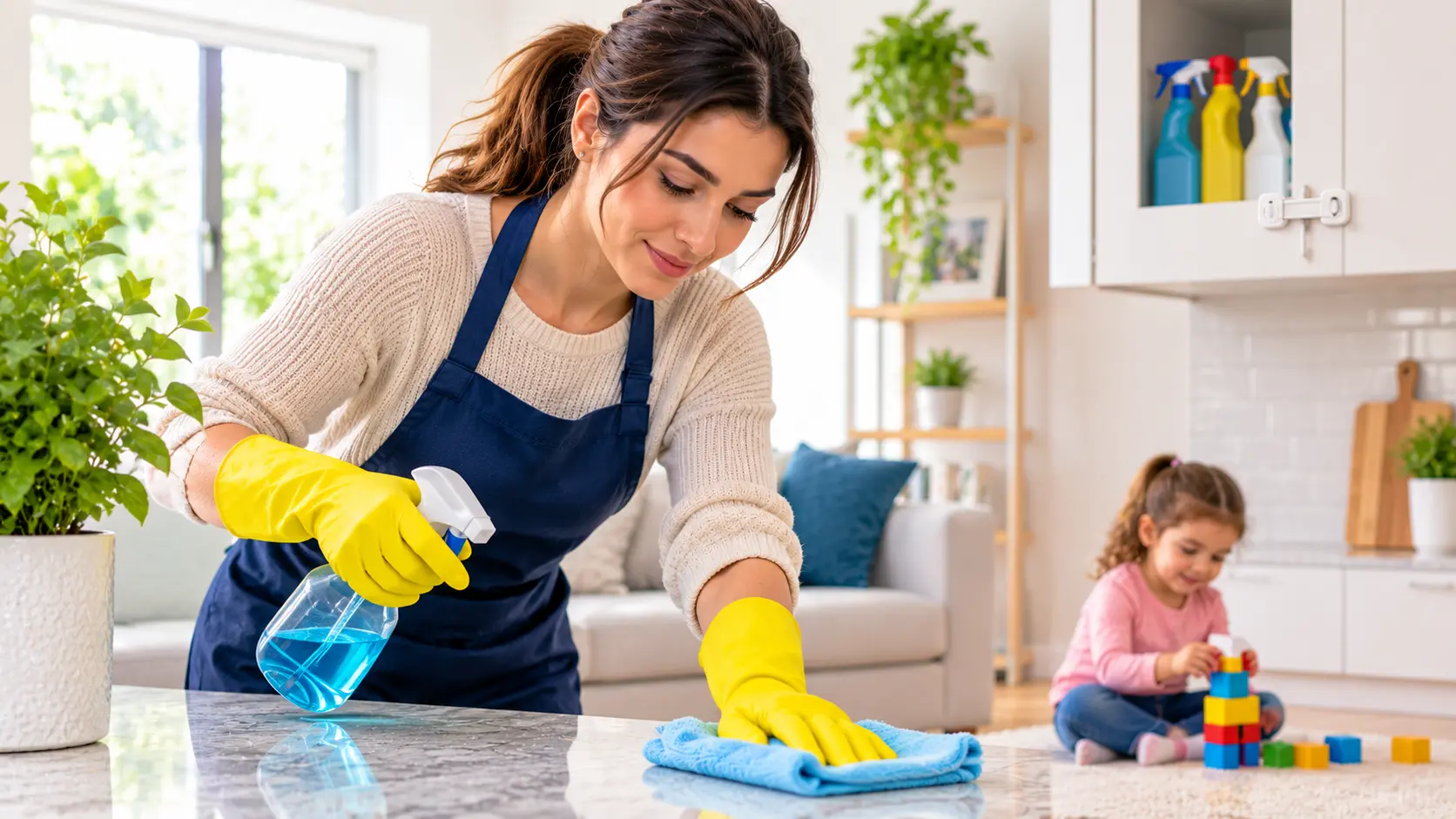
- High and out of sight. Store products in a cabinet well above a child’s reach, ideally above shoulder height of an adult.
- Locked away. A cabinet with a lock or a high shelf with a latch is best, since children can climb.
- Separate from food. Never store cleaning products next to or above food, drinks or baby items.
- Away from the kitchen floor level, bathroom floor and utility area where children play.
Use child safety devices (but don’t rely on them alone)
- Fit child-resistant latches or locks on any low cabinet that holds products.
- Remember that child-resistant caps slow children down, they don’t stop them. They are not child-proof.
- Always re-close and lock after every use.
Handle products safely day to day
- Keep products in their original containers with labels intact. Never decant into drink bottles, cups or food containers.
- Don’t leave products out while you clean. Take a bucket with you and keep it in sight, and never leave a child alone with it. Building cleaning into a simple cleaning routine means products are used and put away at set times.
- Close caps tightly and return products immediately.
- Keep laundry and dishwasher capsules in their original sealed container, stored up high.
- Buy smaller quantities and avoid large concentrated bottles. Cheap bulk buying can tempt you into stockpiling, so see where to find cheap cleaning supplies for smarter ways to save without storing excess.
- Dispose of old products safely, according to local waste guidance.
- Never mix products. Combining bleach with other cleaners can release toxic gases.
- Ventilate when cleaning, and keep children out of the room until surfaces are dry and the air has cleared.
Think beyond the kitchen
Check these places too:
- Bathroom cabinets and bath edges
- Laundry areas and washing machine tops
- Balconies and storerooms
- Car boots and garages
- Handbags, where disinfectant gels and sanitisers are often kept
- Rooms where domestic helpers or cleaners store supplies
If You Have Domestic Help or Hire Cleaners
In many Dubai homes, products are used and stored by someone other than the parents. It’s worth making the rules explicit. The arrangement you choose matters here, and our guide to live-in vs live-out maid services in Dubai explains how each works day to day.
- Show where products should be stored after every use.
- Ask that nothing be left in reach of children, even briefly.
- Ask that products stay in original labelled containers.
- Agree that no one mixes cleaners.
- If a cleaning company brings its own supplies, make sure they take them away or store them safely. This is one reason to think twice before renting cleaning supplies, as rented products can be left in your home with unclear labelling.
When choosing a provider, ask about their product handling and storage practices. Our checklist on what to look for when hiring a cleaning company covers the other questions worth asking.
Choosing Safer Cleaning Products
You can lower risk further by what you buy.
- Choose milder, less concentrated products for everyday use.
- Avoid strongly corrosive products such as drain cleaners where possible.
- Choose products with child-resistant packaging.
- Be cautious with fragranced or colourful products that attract children.
- Remember that a safer product still needs safe storage. Households with animals face the same issue, so see how to clean safely when you have pets in Dubai.
What to Do If a Child Is Exposed
Act quickly and calmly.
- If swallowed: do not make the child vomit unless a medical professional tells you to. Don’t give food or drink unless advised.
- Eyes: rinse gently with clean running water for several minutes.
- Skin: remove contaminated clothing and rinse the skin with water.
- Inhaled fumes: move the child into fresh air.
- Keep the product container or label so medical staff know what was involved.
Get help immediately: in the UAE, call the national emergency number 998 for an ambulance (or 999 for police), and contact your nearest hospital or the poison information service. Please verify the current emergency and poison control numbers for your emirate and keep them stored on your phone and visible at home. Don’t wait for symptoms to appear.
Warning Signs to Watch For
Seek urgent help if a child shows:
- Coughing, choking or difficulty breathing
- Drooling, refusing to swallow or pain in the mouth or throat
- Vomiting
- Burns or redness around the lips, mouth or skin
- Red, watering or painful eyes
- Unusual drowsiness or confusion
Some effects can appear later, so seek medical advice even if the child seems fine.
Quick Child-Safe Storage Checklist
- All cleaning products moved out of low cabinets
- Products stored high or in a locked cabinet
- Latches fitted on any cabinet within reach
- Products kept in original labelled containers
- Capsules and pods stored sealed and out of reach
- Nothing left out during or after cleaning
- [ ] Helpers and cleaners know the rules
- [ ] Emergency numbers saved on phone and posted at home
- [ ] Old and unused products disposed of safely
Final Takeaway
Cleaning products in low cabinets can seriously harm children, and accidents happen fast. The fix is simple: store products high or locked, keep them in original containers, never leave them out while you clean, and make sure everyone who uses your home follows the same rules. A few minutes of prevention is far easier than dealing with an emergency.
If you’d like a cleaner home without adding more products to store, a professional cleaning team brings and removes its own supplies. Not sure which route suits your household? Read whether to hire cleaning or do it yourself.