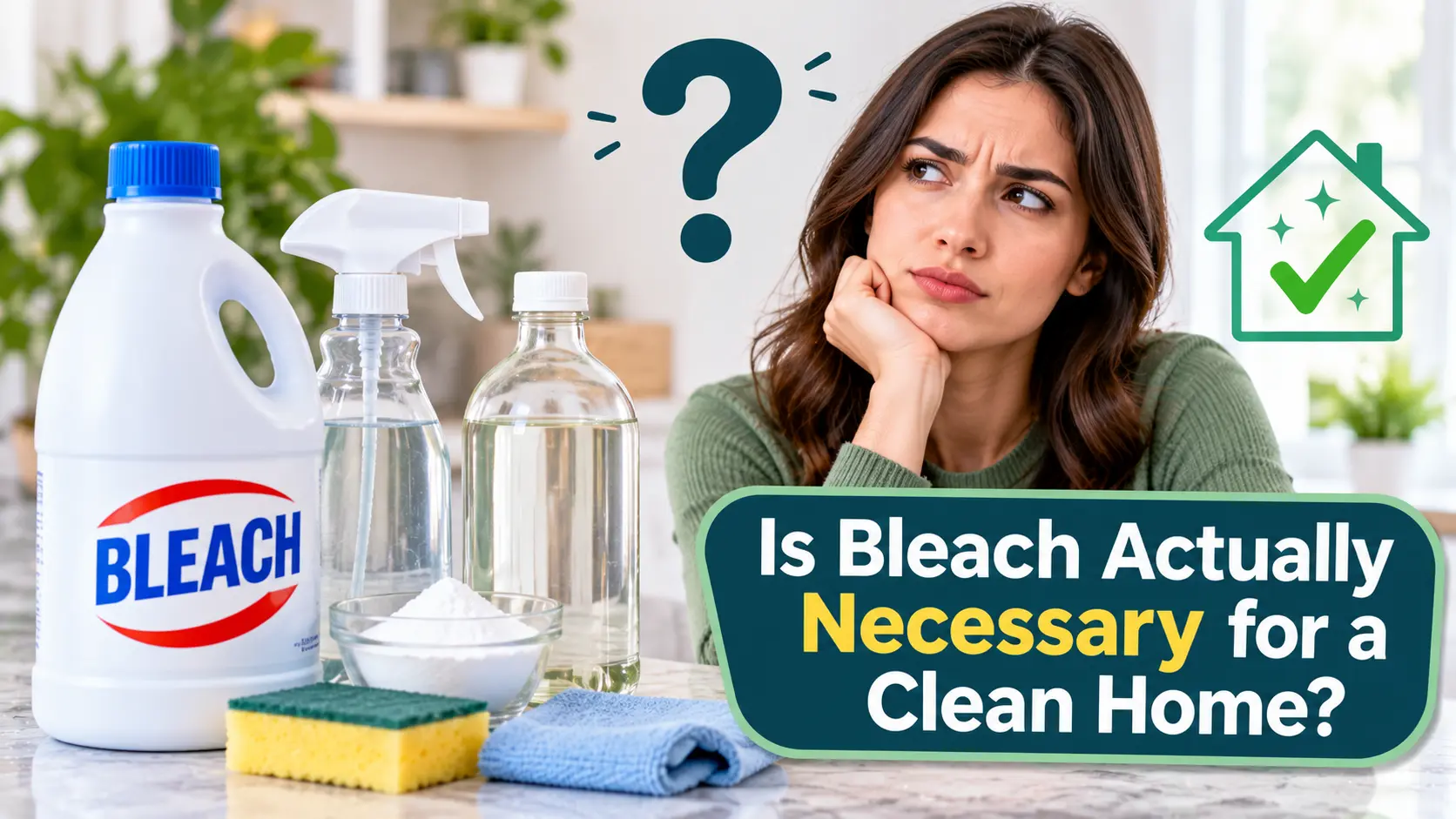
no. For most everyday cleaning, bleach is not necessary. Soap, water and a good cloth remove the dirt and most germs along with it. Bleach has a real but narrow role: disinfecting specific situations, such as bodily fluid spills, mould-prone areas or when someone in the home is ill. Used too often or carelessly, it can damage surfaces, irritate lungs and skin, and create dangerous fumes.
Cleaning, Sanitising and Disinfecting Are Different Jobs
Much of the confusion comes from mixing these up.
| Job | What it does | Typical tools |
|---|---|---|
| Cleaning | Removes dirt, grease and grime, taking many germs with it | Detergent, water, cloth |
| Sanitising | Lowers germs to a safer level | Sanitising sprays, hot water |
| Disinfecting | Kills most germs on a surface | Bleach, disinfectants, alcohol-based products |
A surface must be cleaned before it is disinfected. Bleach applied over grease or dirt is far less effective, because the dirt shields germs and uses up the bleach.
What Bleach Is Good At
Household bleach (sodium hypochlorite) is a strong, fast-acting disinfectant. It is genuinely useful for:
- Bodily fluid spills such as vomit, blood or faeces, after the bulk is removed
- Illness in the home, for example on toilets and bathroom surfaces during a stomach bug
- Mould and mildew on hard, non-porous surfaces such as tiles and sealed grout, as a surface treatment. Our step-by-step guide on how to remove mould and mildew from a shower shows the full process, including the moisture fix.
- Bin and drain-area odours from bacterial growth, when used diluted and carefully
- Whitening white grout or white cotton items, where the product label allows
What Bleach Is Not Good At
- Grease and limescale. It doesn’t dissolve them. For kitchen grease, see how to remove grease stains from kitchen surfaces.
- Everyday dust and dirt. Detergent does this better.
- Porous surfaces. On wood, grout with deep staining or unsealed stone, bleach can discolour the surface and leave the mould roots intact. For stained grout, how to deep clean grout in bathroom tiles explains better options.
- Removing odours at the source. It can mask them while the cause remains.
- Making a home “healthier” on its own. Frequent bleaching doesn’t make a home meaningfully safer than regular cleaning.
The Risks of Using Bleach
Health
- Fumes irritate the eyes, nose, throat and lungs, particularly in small or poorly ventilated bathrooms.
- Asthma and sensitive airways can be triggered by bleach fumes, as covered in our post on whether a dirty home can trigger asthma or eczema.
- Skin contact can cause irritation or burns, especially with concentrated product.
- Swallowing is dangerous, and children are at particular risk. Households with animals should also read how to clean safely when you have pets in Dubai.
Dangerous mixtures
Never mix bleach with:
- Ammonia (found in some glass cleaners), which produces toxic chloramine gas
- Acids such as vinegar, descalers and many toilet cleaners, which release chlorine gas
- Other cleaning products, since you can’t always tell what they contain
Even using one product right after another in a closed bathroom can create fumes. If you’ve used another cleaner, rinse thoroughly and ventilate first.
Damage to your home
- Fabrics and carpets: permanent colour loss
- Metals: corrosion on stainless steel, aluminium, brass and chrome with prolonged contact
- Natural stone and wood: staining and surface damage
- Rubber seals and silicone: can weaken over time
- Painted surfaces: fading or marking
Environment
Bleach going down drains in large quantities is not ideal, and it can react with other substances in wastewater. Using only what you need keeps this to a minimum.
When You Can Skip Bleach
For most routine tasks, there are good alternatives.
| Task | Better option |
|---|---|
| Kitchen counters and tables | Warm water and dish soap, then a food-safe sanitiser if needed |
| Floors | pH-neutral floor cleaner or mild detergent |
| Everyday bathroom cleaning | Bathroom cleaner designed for the job, plus a cloth |
| Glass and mirrors | Glass cleaner or water and vinegar solution (on suitable surfaces) |
| Limescale on taps | A descaler suited to the material |
| Greasy kitchen surfaces | Degreaser or hot soapy water |
| Laundry whites | Oxygen-based laundry boosters, or a hot wash if the fabric allows |
| Light mould on a shower | Dedicated mould remover, or a vinegar-based approach on suitable surfaces |
| Soft toys and fabrics | Machine washing according to the label |
For glass, our guide on how to clean mirrors streak-free every time needs no bleach at all. If you’re building a basic kit, where to find cheap cleaning supplies shows how to stock up without overspending on strong chemicals.
Heat helps too. Hot water, steam on suitable surfaces and a proper dry all reduce germs without chemicals. Drying a surface completely is itself a strong germ control, since many bacteria need moisture to survive.
When Bleach Is Worth Using
Keep it for situations where disinfection genuinely matters:
- Someone in the household has a contagious illness
- Cleaning up vomit, faeces or blood
- Treating a bathroom with persistent mould on sealed, non-porous surfaces
- Sanitising after contact with raw meat juices on surfaces that tolerate it, if you choose to
- Disinfecting bins or outdoor areas as an occasional job
Even then, remove visible dirt first, and treat bleach as a tool, not a habit. For how often bathrooms need regular attention without it, see the ideal frequency for bathroom cleaning.
How to Use Bleach Safely
If you do use it:
- Read the label and follow the dilution instructions exactly. More bleach does not mean better results.
- Ventilate by opening windows and turning on extractor fans.
- Wear gloves, and eye protection if splashing is possible.
- Clean first, then apply diluted bleach to the surface.
- Allow contact time as stated on the label, usually several minutes, with the surface kept wet.
- Rinse surfaces that will touch food, skin or children’s items.
- Never mix with other products.
- Use fresh dilutions. Diluted bleach loses strength within hours, so mix only what you need.
- Store safely in its original container, tightly capped, in a locked or high cabinet, away from children and from other chemicals. See can cleaning products harm children if stored in low cabinets for a full storage checklist.
- Keep children and pets out of the room until surfaces are dry and the air has cleared.
What About “Chlorine-Free” or “Natural” Disinfectants?
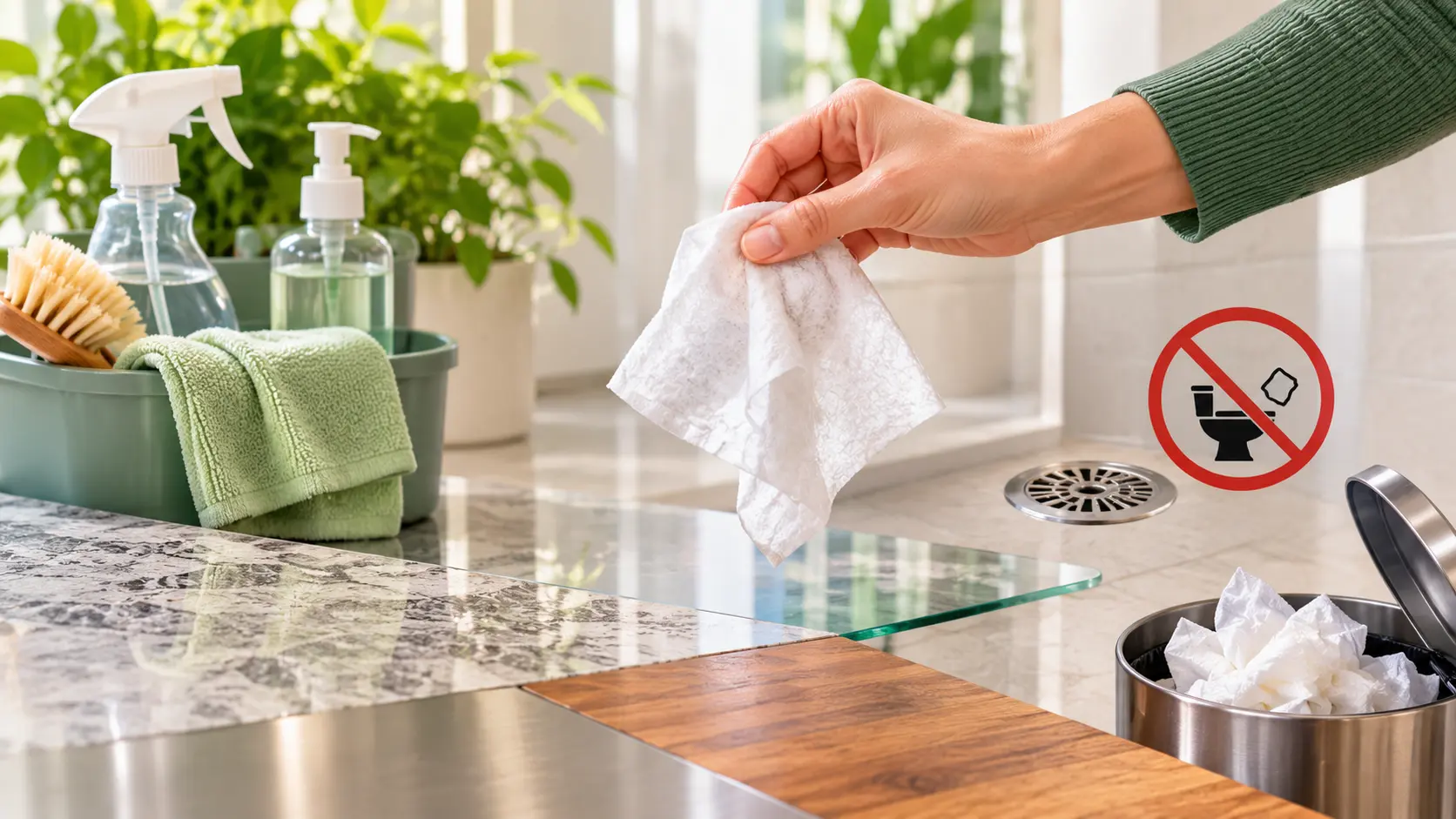
Alternatives exist, including hydrogen peroxide-based products, alcohol-based sprays and quaternary ammonium disinfectants. They each have strengths and limits, and none is risk-free. “Natural” does not automatically mean safe or effective, and our post on whether natural cleaning products are really effective explains where those claims hold up. Disinfecting wipes have their own pitfalls too, covered in are disposable wipes safe for every surface and drain. Always check the label for what the product is approved to kill and how long it needs to stay on the surface.
Is Bleach Needed for a Truly Clean Home?
Consider what “clean” requires:
- Dirt, dust, grease and residue removed
- Surfaces dried properly
- Good ventilation to limit damp and mould
- Food kept and prepared hygienically
- Hands washed regularly
Bleach isn’t on that list. A home cleaned regularly with detergent, water and effort will be hygienic without it. Bleach is a supplement for specific cases, not a foundation.
Final Takeaway
You don’t need bleach to keep a clean, healthy home. Soap, water, good cloths, hot water and thorough drying handle nearly everything. Keep bleach for the occasional job where disinfection genuinely matters, use it diluted and ventilated, and never mix it with other products. When in doubt, clean thoroughly first, and use the gentlest product that does the job.
If you’d like a deeply clean, hygienic home without handling strong chemicals yourself, a professional team can do it for you. See what a professional deep clean actually includes, or read whether to hire cleaning or do it yourself to decide what suits you.