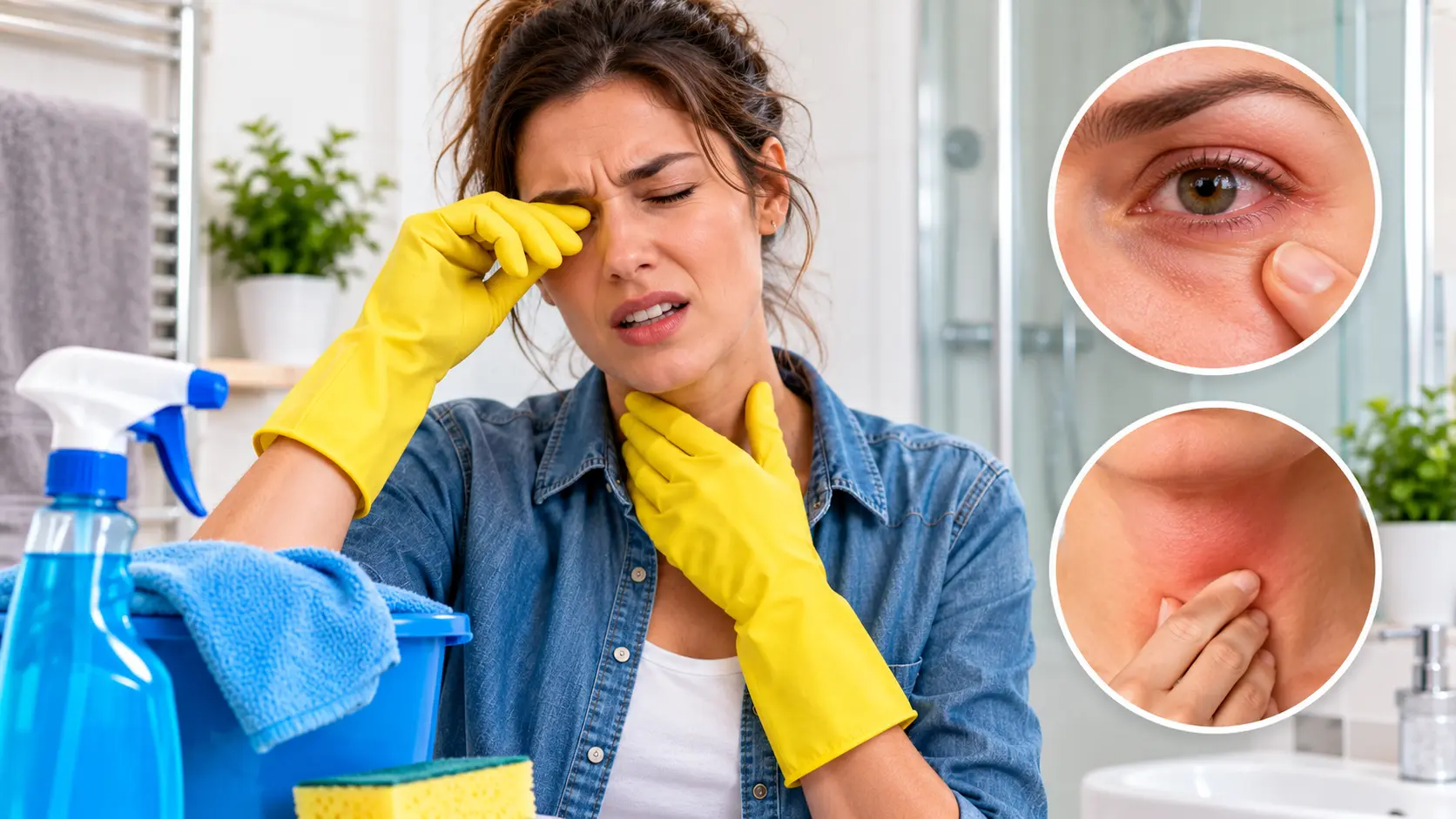
Because bathroom cleaning combines the three things that irritate eyes and airways most: strong chemical products, a small enclosed space and little airflow. The itching is usually a mild irritant reaction to fumes, droplets or dust, not an allergy. It normally fades within minutes to a few hours once you get fresh air. If it is severe, keeps happening or comes with breathing trouble, treat it as a warning sign and get medical advice.
This article is general information, not medical advice.
Why the Bathroom Is the Worst Room for This
- Small space. Fumes concentrate quickly in a compact room with the door closed.
- Poor ventilation. Many bathrooms have only a weak extractor fan or no window.
- Strong products. Toilet cleaners, descalers, mould removers and bleach are among the harshest products in the home.
- Warm, damp air. Steam and humidity carry chemical vapours further and make them easier to breathe in.
- Close contact. You are bent over tiles, showers and toilets, with your face near the surface being sprayed.
The Most Common Causes
1. Chemical fumes
Bleach, ammonia, acid-based toilet cleaners and limescale removers release vapours that irritate the moist lining of the eyes, nose and throat. This causes stinging eyes, a scratchy or burning throat, coughing and a runny nose. Our post on whether bleach is actually necessary for a clean home explains when you can skip it altogether.
2. Accidentally mixed products
This is the most serious cause. Combining cleaners can release toxic gas.
- Bleach plus acids (vinegar, descalers, many toilet cleaners) releases chlorine gas.
- Bleach plus ammonia (found in some glass cleaners) releases chloramine gas.
Mixing doesn’t have to be deliberate. Using a second product on a surface that still has residue from the first, or in the same toilet bowl or shower, can be enough.
If you smell a sharp, choking odour or start coughing heavily, leave the room immediately, get fresh air, and ventilate. Do not go back in to “finish the job.”
3. Spray droplets and aerosols
Spray bottles create a fine mist that you breathe in and that lands in your eyes. Aerosol products spread even further. Spraying upward at tiles or shower screens makes this worse.
4. Fragrance and added chemicals
Scented cleaners contain fragrance compounds and solvents that can irritate or trigger reactions, especially in people with asthma, hay fever, eczema or sensitive airways. “Fresh” or “ocean” scents are not a sign of gentleness. See can a dirty home trigger asthma or eczema flare-ups for more on sensitive airways and skin.
5. Disturbed dust and mould spores
Scrubbing disturbs dust, soap residue and mould. Cleaning visible black mould, or mouldy grout and silicone, can release spores into the air. These can cause itchy eyes, sneezing and throat irritation, particularly in people sensitive to mould. For the safe method, see how to remove mould and mildew from a shower.
6. Limescale and descaler vapours
Dubai’s hard water leaves heavy limescale, so many people reach for strong acid descalers. Their vapours are a common cause of throat and eye irritation, especially when used in a closed bathroom. Our guide on how to deep clean grout in bathroom tiles covers gentler approaches to built-up deposits.
7. Hot water increasing evaporation
Cleaning with hot water or during a hot shower makes chemicals evaporate faster, so you breathe in more vapour.
8. Not rinsing properly
Product left on surfaces keeps releasing vapour, and residue can irritate skin and eyes when you touch it and then rub your face.
Is It an Irritation or an Allergy?
| Irritant reaction | Allergic reaction | |
|---|---|---|
| Cause | Chemicals directly irritate tissue | Immune system overreacts to a trigger |
| Who it affects | Almost anyone, if exposure is high enough | Only sensitised people |
| Timing | During or soon after cleaning | Can be immediate or delayed |
| Typical signs | Stinging eyes, burning throat, coughing | Itching, sneezing, watery eyes, rash, wheeze |
| Settles | Usually fades with fresh air | May need treatment |
Many people have a mix of both. If symptoms appear every time you use the same product, or are worse with fragranced items, it may point to sensitivity.
Quick Relief
- Leave the room and get fresh air straight away.
- Rinse your eyes gently with clean, lukewarm running water for several minutes. Don’t rub them.
- Sip water to soothe the throat.
- Wash your face and hands to remove residue.
- Change clothes if product has splashed on them.
- Open windows and run the extractor fan.
- Rest until symptoms settle.
When to Get Medical Help
Seek urgent medical help if you have:
- Difficulty breathing, wheezing or chest tightness
- Severe or worsening coughing
- Burning pain in the eyes or vision changes
- Symptoms that don’t improve after fresh air
- Swelling of the face, lips or throat
- Nausea, vomiting or dizziness
- Suspected exposure to mixed-product gas
Speak to a doctor if irritation keeps recurring, or if you have asthma, COPD, or another lung condition and cleaning triggers symptoms. In an emergency, call your local emergency number.
How to Prevent It
Ventilate properly
- Open the window and door before you start, and keep them open.
- Switch on the extractor fan.
- Leave the fan running for a while afterwards.
- If there is no window, leave the door open and use a portable fan to move air outward.
Choose and use products carefully
- Use one product at a time. Rinse thoroughly before changing products.
- Never mix cleaners. Don’t use bleach with any other product.
- Choose milder, fragrance-free options for routine cleaning. Our post on whether natural cleaning products are really effective helps you judge what’s worth buying.
- Skip bleach and strong acids unless you truly need them.
- Follow label directions and don’t use more than recommended.
- Spray onto the cloth, not the surface, to cut down mist.
- Avoid aerosols where a liquid or paste works.
Protect yourself
- Wear gloves and, for stronger products, eye protection.
- Consider a mask for dusty or mouldy jobs.
- Take breaks during long cleaning sessions, stepping out for fresh air.
- Keep your hands away from your face.
Clean smarter
- Clean little and often. Frequent light cleaning needs weaker products than a heavily built-up bathroom. The ideal frequency for bathroom cleaning shows how often to aim for, and a simple cleaning routine makes it easy to stick to.
- Fix moisture problems so mould doesn’t return and need harsh treatment.
- Rinse well and dry surfaces so residue isn’t left behind.
- Keep children and pets out until surfaces are dry and the air is clear. See how to clean safely when you have pets in Dubai.
- Store products tightly closed and out of reach. Our checklist on whether cleaning products can harm children if stored in low cabinets shows how.
Safer Bathroom Cleaning Routine
- Open windows and switch on the fan.
- Put on gloves.
- Remove loose dirt and hair first.
- Use a mild bathroom cleaner on the cloth or surface.
- Scrub, then rinse thoroughly with water.
- Use a stronger product only on specific problem spots, one at a time, with rinsing in between.
- Dry surfaces with a cloth or squeegee. For glass, see how to clean mirrors streak-free every time.
- Leave ventilation running and the door open to air out.
Final Takeaway
Itchy eyes and a scratchy throat after cleaning the bathroom usually come from concentrated fumes in a small, poorly ventilated room, often made worse by strong or fragranced products. The fix is straightforward: ventilate, use one mild product at a time, never mix cleaners, protect your eyes and skin, and rinse thoroughly. If symptoms are severe, keep recurring or involve breathing difficulty, get medical advice.
If bathroom cleaning regularly leaves you uncomfortable, a professional team can handle it with the right equipment and ventilation. See what a professional deep clean actually includes, or read whether to hire cleaning or do it yourself to decide.