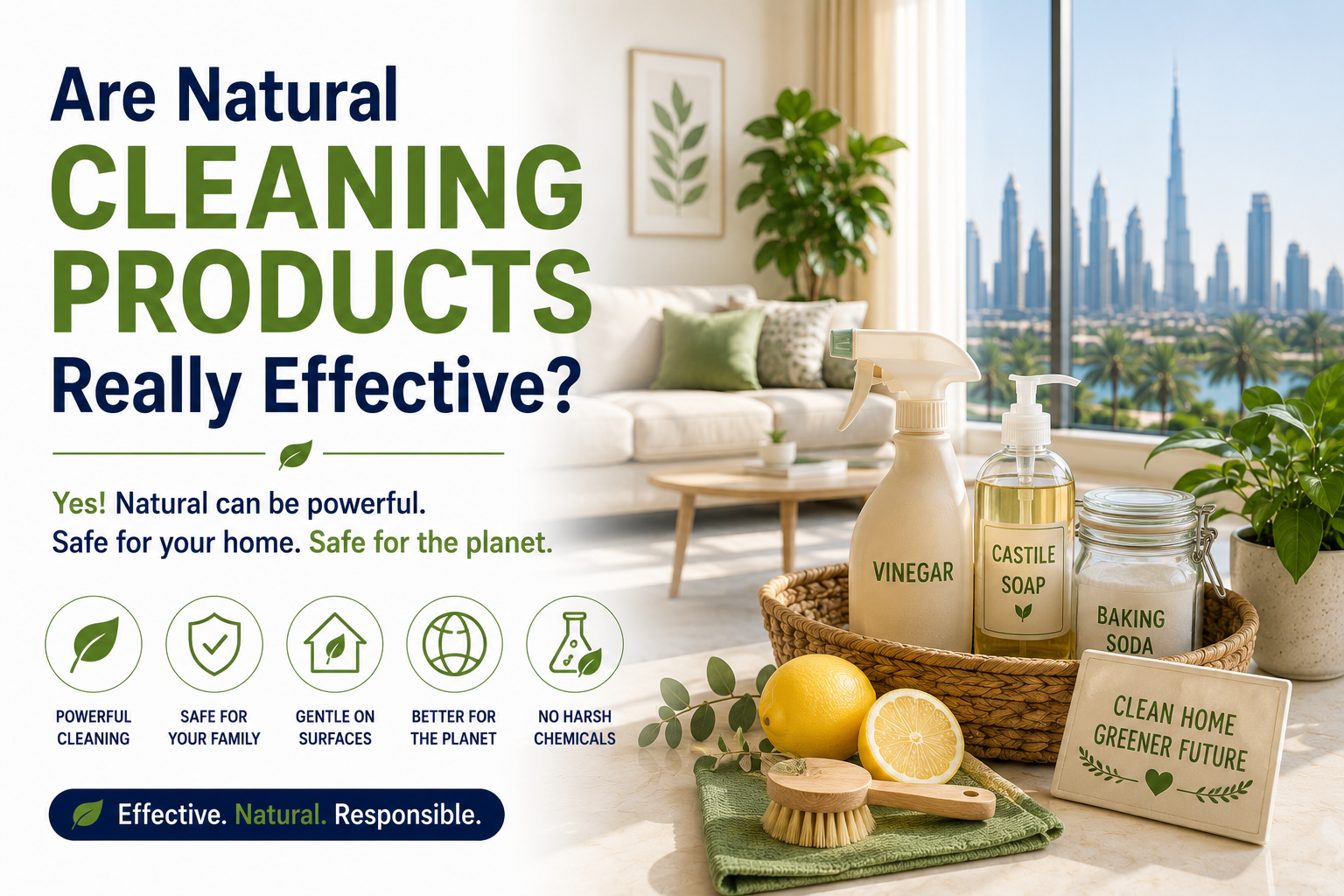
Natural cleaning products genuinely work for everyday dirt and grime, but most are not proven disinfectants, and some can permanently damage certain surfaces. Vinegar, for example, cleans well but isn’t registered by the US Environmental Protection Agency (EPA) as a disinfectant, and it can etch marble and other natural stone. Whether a natural product is “effective” depends entirely on what job it’s being asked to do.
Key Takeaways
- Natural products like vinegar and baking soda genuinely remove everyday dirt and grime, in some cases as well as commercial cleaners.
- Cleaning and disinfecting are different: cleaning removes dirt and reduces germ numbers, while disinfecting kills a specific percentage of germs and requires a registered product.
- Vinegar is not registered by the EPA as a disinfectant and doesn’t reliably kill viruses such as norovirus.
- Vinegar and other acidic “natural” cleaners can permanently etch marble, travertine, and limestone — a real risk in Dubai homes, where marble flooring is common.
The most effective approach is usually a mix: natural products for daily surface cleaning, and registered disinfectants for kitchens, bathrooms, and illness cleanup.
What Counts as a “Natural” Cleaning Product?
A natural cleaning product is one made from simple, minimally processed ingredients, such as vinegar, baking soda, castile soap, or lemon, rather than synthetic surfactants or registered disinfecting chemicals.
These products clean primarily through physical or mild chemical action, such as acidity, abrasion, or basic surfactant properties, rather than through the standardised, tested germ-kill mechanisms found in registered disinfectants. This distinction matters more than the word “natural” itself, since it determines what a product can and can’t be relied on to do.
Do Natural Cleaning Products Actually Clean Effectively?
Yes, for everyday dirt and grime. A CDC-published comparison of household cleaning products found DIY solutions performed as well as, or better than, some commercial products at removing soil.
The 2015 study compared bleach, a commercial “environmentally preferable” cleaner, and a DIY mix of vinegar, club soda, and tea tree oil on ceramic and stainless steel. On ceramic, no product hit the study’s soil-removal benchmark, but the DIY mix outperformed both bleach and the commercial cleaner. On stainless steel, the DIY mix was the only one of the three that fell short. As a result, effectiveness clearly depends on the surface, not on whether a product is labelled natural or commercial.
Natural products can genuinely match or beat commercial cleaners at removing everyday dirt, but results vary by surface, so no single product wins every job.
What Is the Difference Between Cleaning and Disinfecting?
Cleaning physically removes dirt and some germs from a surface; disinfecting uses a registered chemical to kill a specific percentage of germs.
Cleaning lowers the number of germs on a surface simply by removing them, which reduces the risk of them spreading. Disinfecting goes further: a product must be registered, in the US by the EPA, and demonstrate it kills at least 99.9% of tested germs within 5 to 10 minutes to legally claim to disinfect. A surface can look and feel clean without actually being disinfected, which is exactly where natural products are most often misunderstood.
A visibly clean surface and a disinfected surface are not the same thing; only a registered product can legitimately claim the second.
Can Natural Products Disinfect as Well as Commercial Cleaners?
No, not reliably. Vinegar isn’t EPA-registered as a disinfectant and doesn’t reliably kill viruses such as norovirus.
Vinegar shows some antibacterial effect against specific pathogens, including E. coli and Salmonella, largely thanks to its acetic acid content. However, in the same CDC-published study referenced above, bleach and the commercial “environmentally preferable” product both achieved full disinfection under every tested condition, while the DIY mix did not. Vinegar and similar natural products simply haven’t been tested and registered to the same germ-kill standard as products like bleach or hydrogen-peroxide-based disinfectants.
| Product | Good For | Not Reliable For |
| Vinegar (acetic acid) | Everyday grime, mineral deposits, glass, non-stone surfaces | Registered disinfection; viruses such as norovirus; marble and natural stone |
| Baking soda | Mild abrasive scrubbing, odour absorption | Disinfection; heavily greasy or oily residue alone |
| Castile soap | General degreasing, plant-based surfactant cleaning | Disinfection; disinfecting-level germ kill |
| EPA-registered disinfectant | Kitchens, bathrooms, illness cleanup, verified germ-kill claims | Marble and natural stone unless labelled stone-safe |
Can Natural Cleaning Products Damage Surfaces?
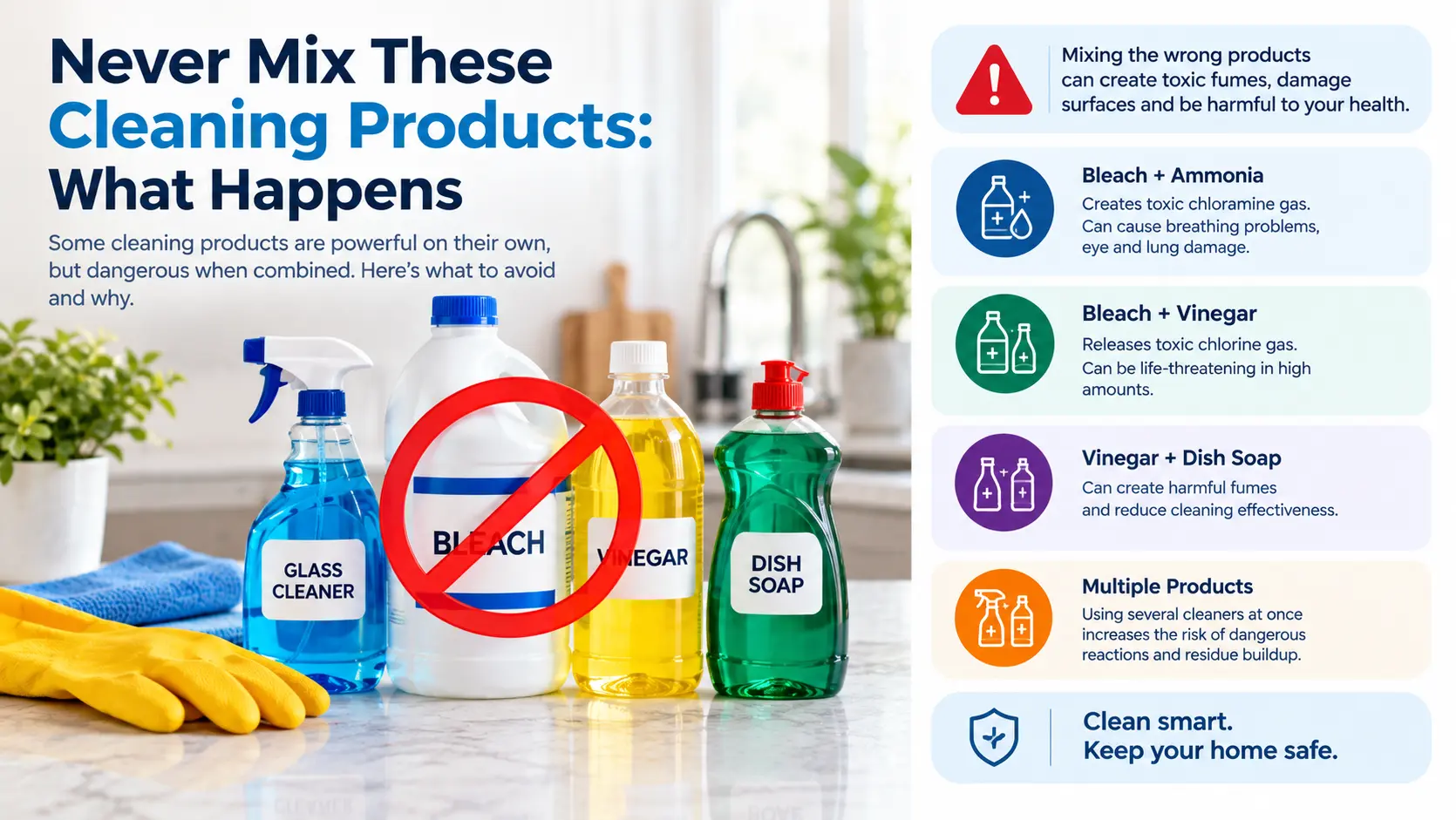
Yes. Acidic products such as vinegar can permanently etch marble, travertine, and limestone, even with light, regular use.
Vinegar is acidic, typically around pH 2 to 3, and reacts directly with the calcium carbonate that makes up marble, travertine, and limestone. That reaction dissolves the polished surface, leaving dull spots or rings known as etching, which can’t be cleaned away once it’s happened. This matters more in Dubai than in many other markets, since marble flooring and countertops are common in villas and apartments across the city.
“Natural” doesn’t mean safe for every surface; vinegar is one of the most common causes of accidental marble damage precisely because it’s assumed to be harmless.
When Should You Use Natural Products vs Commercial Cleaners?
Use natural products for daily, low-risk surface cleaning, and switch to registered disinfectants for kitchens, bathrooms, and illness cleanup.
- Everyday dusting, glass, and non-stone surfaces: natural products such as diluted vinegar work well
- Marble, travertine, or limestone floors and counters: use a pH-neutral stone cleaner, never vinegar or lemon
- Kitchen surfaces after handling raw meat: an EPA-registered disinfectant, not a natural product alone
- Bathroom hygiene and illness cleanup: a registered disinfectant, used according to its label’s contact time
- Odour control and mild scrubbing: baking soda is a genuinely effective, low-risk option
How Does a Professional Cleaning Service Decide Which Products to Use?
A good provider matches the product to the surface and the job, rather than using one product type throughout a property.
This means pH-neutral cleaners on marble, registered disinfectants in kitchens and bathrooms, and natural or standard products elsewhere. House cleaning in Dubai visits that treat every surface the same way risk either under-disinfecting a kitchen or accidentally etching a marble floor with the wrong product. This distinction matters most during villa cleaning, where marble flooring is common, and deep cleaning, where kitchens and bathrooms need genuine disinfection rather than a general wipe-down.
How Do You Get the Right Product Used on Every Surface?
Flag any marble, travertine, or sensitive surfaces when booking, so the team can plan products before the visit, not during it.
A short consultation is the easiest way to confirm this, alongside anything else specific to the property, such as a villa’s mix of marble and tile, or a deep clean covering a kitchen that needs genuine disinfection. As a result, the right product reaches the right surface the first time, rather than relying on guesswork on the day.
Booking a consultation costs nothing and takes a few minutes to arrange. A short walkthrough lets the Alo Maids team confirm exactly which products suit each surface, whether that covers standard house cleaning in Dubai, a full villa cleaning, or a deep cleaning visit. Book a consultation with Alo Maids today to get a plan that protects every surface in your home.
Frequently Asked Questions
Are natural cleaning products as effective as chemical cleaners?
For everyday dirt and grime, often yes. A CDC-published comparison found DIY products such as vinegar performed as well as, or better than, some commercial cleaners at removing soil from certain surfaces. For disinfection, though, natural products generally fall short of EPA-registered options.
Does vinegar kill germs?
Vinegar has some antibacterial effect against certain germs, such as E. coli and Salmonella, but it isn’t registered by the EPA as a disinfectant and doesn’t reliably kill viruses like norovirus. It’s a genuinely useful cleaner, just not a substitute for a proper disinfectant.
Can I use vinegar on marble floors?
No. Vinegar is acidic and reacts with the calcium carbonate in marble, causing permanent etching and dullness. This applies to travertine and limestone too. Marble surfaces, common in Dubai villas and apartments, need a pH-neutral stone cleaner instead of vinegar or other acidic products.
What is the difference between cleaning and disinfecting?
Cleaning physically removes dirt, dust, and some germs from a surface, lowering the overall risk. Disinfecting uses a registered chemical product to kill a specific percentage of germs, typically 99.9% within 5 to 10 minutes. A surface can look clean without actually being disinfected.
Are natural cleaning products safe for kitchens and bathrooms?
For general surface cleaning, yes. For genuine disinfection, such as after handling raw meat or during illness in the household, an EPA-registered disinfectant is more reliable than vinegar or other natural options alone. Many households use both, depending on the task.
What natural products actually work well for cleaning?
Vinegar cuts through grease and mineral deposits on non-stone surfaces, baking soda works as a mild abrasive for scrubbing, and castile soap is an effective plant-based degreaser. Each suits specific jobs rather than replacing every product in a cleaning cupboard.
Do I need a registered disinfectant at home?
For most daily cleaning, no. For high-risk moments, such as illness in the household, raw meat preparation surfaces, or bathroom hygiene, a registered disinfectant gives a level of verified germ-kill that natural products generally can’t match, since they aren’t tested to the same standard.
Does a professional cleaning service use natural or chemical products?
A good provider matches the product to the surface and the job, using pH-neutral options on marble, registered disinfectants in kitchens and bathrooms, and natural products elsewhere. Alo Maids can be asked about specific product preferences during the initial consultation.