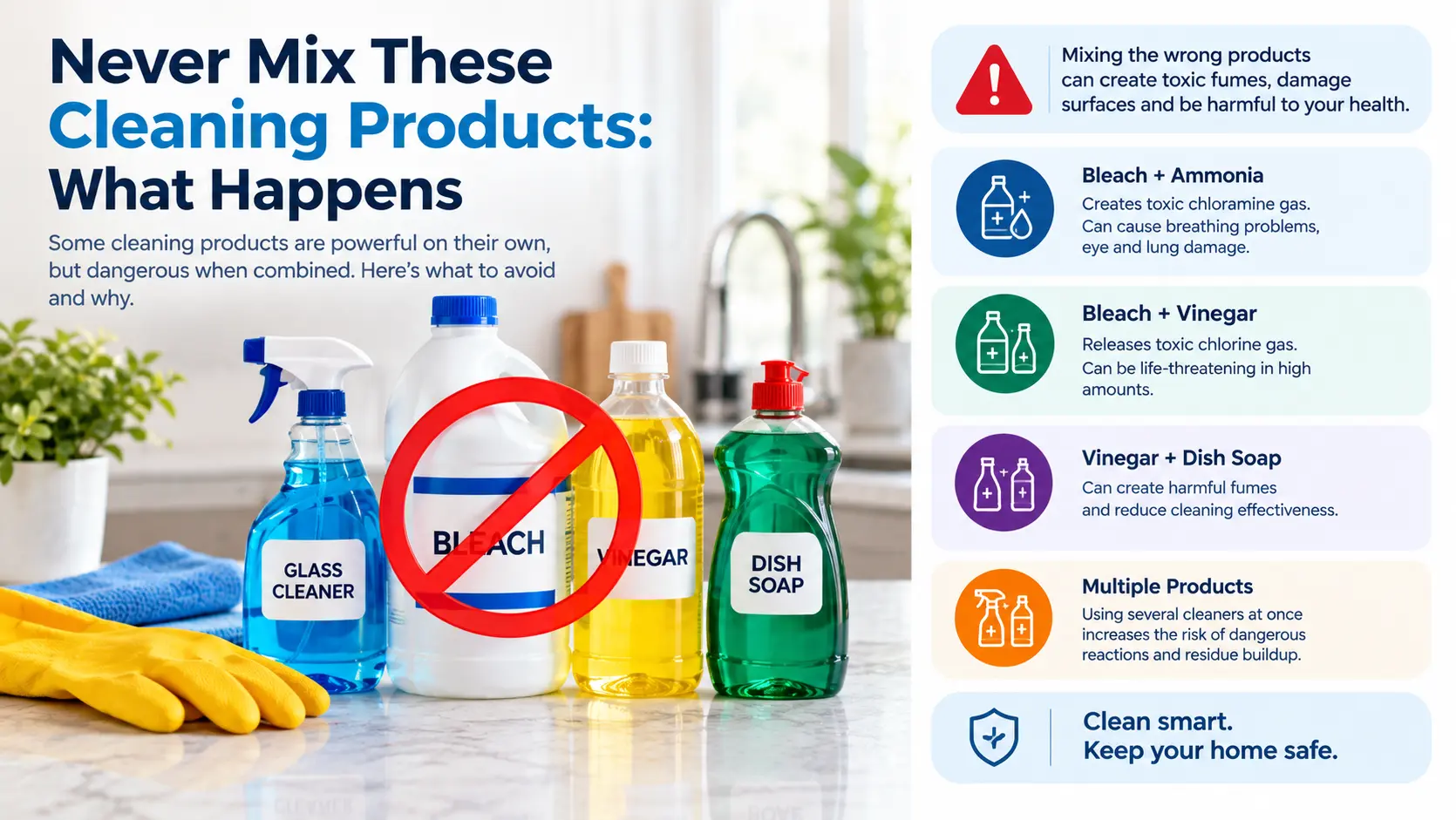
| Never mix bleach with ammonia, vinegar or other acids, or rubbing alcohol. Each pair reacts to release toxic gases that can burn your eyes, throat and lungs within seconds. Hydrogen peroxide and vinegar make a corrosive acid, and two different drain cleaners can boil and splash. Use one product at a time, rinse with water in between, and keep the room well ventilated. |
It’s tempting to think two cleaners are better than one. If bleach kills germs and a limescale remover shifts stains, surely using both at once gets the job done faster? In reality, some of the most common products in a Dubai home react badly with each other. Instead of a cleaner bathroom, you get a cloud of gas you can’t see but can certainly feel.
Here’s which combinations to avoid, what actually happens when they meet, and how to clean safely without them.
Why Mixing Cleaning Products Is Dangerous
Cleaning products are made of active chemicals. Each one is designed to work on its own, at a set strength. When you combine two, those chemicals can react with each other instead of with the dirt.
Some reactions release toxic gases. Others create new corrosive liquids, or produce heat and splashing. A few simply cancel each other out, so you waste time and money for nothing.
The risk is higher in Dubai homes. Bathrooms are often small, and many have no window. Air conditioning recirculates air rather than replacing it, so fumes can linger longer than you expect.
1. Bleach and Ammonia
This is the best-known dangerous mix, and for good reason. Bleach (sodium hypochlorite) and ammonia react to release chloramine gases.
What happens: Chloramine vapours irritate the eyes, nose and throat almost at once. They can cause coughing, chest pain, shortness of breath and, at higher levels, fluid on the lungs.
Where people get caught out: Ammonia isn’t only in bottles labelled “ammonia”. It’s found in some glass and window cleaners and some multi-surface sprays. Urine also breaks down into ammonia. Pouring bleach into an uncleaned toilet or a pet’s litter tray can release fumes too.
2. Bleach and Vinegar (or Any Acid)
Vinegar feels harmless because it’s in the kitchen cupboard. But it’s an acid, and acids react with bleach to release chlorine gas.
What happens: Chlorine gas has a sharp, choking smell. Even small amounts cause watering eyes, burning in the throat and coughing. Larger exposures can seriously damage the lungs.
Where people get caught out: Many toilet bowl cleaners, limescale removers and rust removers are acid-based. A common mistake is pouring bleach into a toilet that still has acidic toilet cleaner in the bowl. Lemon juice is also acidic, so it falls into the same group.
3. Bleach and Rubbing Alcohol
Rubbing alcohol (isopropyl alcohol) and some alcohol-based sanitisers and wipes should never meet bleach.
What happens: The two react to form chloroform and other harmful compounds. These can cause dizziness, nausea and headaches, and can damage the liver and kidneys with heavier exposure.
Where people get caught out: People sometimes wipe a surface with an alcohol-based wipe, then follow up with a bleach spray, thinking they’re adding extra protection. Pick one disinfectant and use it properly instead.
4. Hydrogen Peroxide and Vinegar
Both are popular “natural” cleaners, and both work well on their own. Mixed in the same bottle, they form peracetic acid.
What happens: Peracetic acid is corrosive. It can irritate the skin, eyes and lungs, and it can damage some surfaces.
What to do instead: If you like using both, apply one, wipe and rinse, then use the other. Never store them together in one spray bottle.
5. Two Different Drain Cleaners
Drain cleaners are among the strongest chemicals in any home. Some are strongly alkaline, and others are strongly acidic.
What happens: If you pour one type on top of another, they can react violently. The mixture can heat up quickly, bubble and spit back out of the drain, causing chemical burns to skin and eyes.
What to do instead: Use only one product, follow the label exactly, and never add a second if the first doesn’t work. Call a plumber instead. Be careful with a plunger after using a chemical drain cleaner, as it can splash the product back up.
6. Baking Soda and Vinegar
This one isn’t dangerous in an open bowl, but it’s worth knowing about. The fizz looks impressive, yet the two neutralise each other and leave mostly salty water behind.
The real risk: Sealed in a closed bottle or jar, the gas builds up pressure and can burst the container. In short, you get less cleaning power, not more.
Warning Signs You’ve Been Exposed
If two products have reacted, you’ll usually notice quickly. Watch for:
- A strong, sharp or unusual smell, like a swimming pool or burning.
- Watering, stinging or burning eyes.
- Coughing, wheezing or a tight chest.
- A sore throat, runny nose or a burning feeling in the nose.
- Headache, dizziness or nausea.
What to Do If You Mix Products by Accident
- Leave the room straight away and get into fresh air.
- Open windows and doors only if you can do so quickly on your way out. Don’t stay to clean up.
- Keep children and pets away from the area.
- If a liquid splashed on your skin or into your eyes, rinse with lots of clean, running water for at least 15 minutes.
- If anyone has trouble breathing, chest pain, or symptoms that don’t ease in fresh air, call an ambulance on 998.
- For non-emergency advice in the UAE, the Department of Health Abu Dhabi runs a Drug and Poison Information Service on 800 424.
- Go back in only once the smell has fully cleared. Wear gloves and rinse the mixture away with plenty of water.
Simple Rules for Safer Cleaning
- Use one product at a time, and rinse the surface with water before switching.
- Read the label every time. Look for warnings such as “Do not mix with other products.”
- Keep products in their original containers. Never decant them into unlabelled bottles.
- Store bleach away from acids and ammonia-based products.
- Flush the toilet before and after using any toilet cleaner.
- Open a window or run the extractor fan, especially in small bathrooms.
- Wear rubber gloves, and keep all cleaners out of reach of children.
When to Call in the Professionals
Most of the time, people mix products because a stain won’t shift. Hard limescale, mould in the grout or burnt-on grease can feel like they need something stronger. That’s usually when accidents happen.
Professional cleaners know which products work on which surfaces, and which must never meet. A bathroom deep clean tackles limescale, soap scum and mould safely, one step at a time. For greasy hobs, ovens and extractor hoods, a kitchen deep cleaning service uses the right degreasers without guesswork.
Would you rather not handle strong chemicals at all? Regular house cleaning in Dubai from Alo Maids keeps your home fresh. Our trained, vetted cleaners know how to use every product safely.
The simplest rule is the safest one: one product, one job, and plenty of fresh air.
Frequently Asked Questions
What cleaning products should never be mixed?
Never mix bleach with ammonia, vinegar or other acids, or rubbing alcohol. Also avoid mixing hydrogen peroxide with vinegar, and never combine two different drain cleaners. Each of these pairs can release toxic gases, form corrosive liquids or react violently.
Is it safe to mix bleach and vinegar?
No. Vinegar is an acid, and acids react with bleach to release chlorine gas. Even a small amount can irritate your eyes, throat and lungs. Use them separately and rinse with water in between.
What happens if you accidentally mix bleach and ammonia?
The mixture releases chloramine gases, which can cause coughing, watery eyes, chest pain and shortness of breath. Leave the area at once and get fresh air. If anyone struggles to breathe, call an ambulance on 998.
Can I mix two different toilet cleaners?
It’s best not to. Many toilet cleaners are acid-based, and others contain bleach. If the two meet, they can release chlorine gas. Flush the toilet between products and use only one at a time.
Is mixing baking soda and vinegar dangerous?
Not in an open bowl, but it isn’t very useful either. The two neutralise each other, leaving mostly salty water. Never seal the mixture in a closed container, as the gas can build up pressure and burst it.
How long should I wait between using different cleaning products?
Rinse the surface thoroughly with clean water and let it dry before using a different product. Keep the room ventilated throughout. If you’re unsure whether two products are compatible, use only one.