
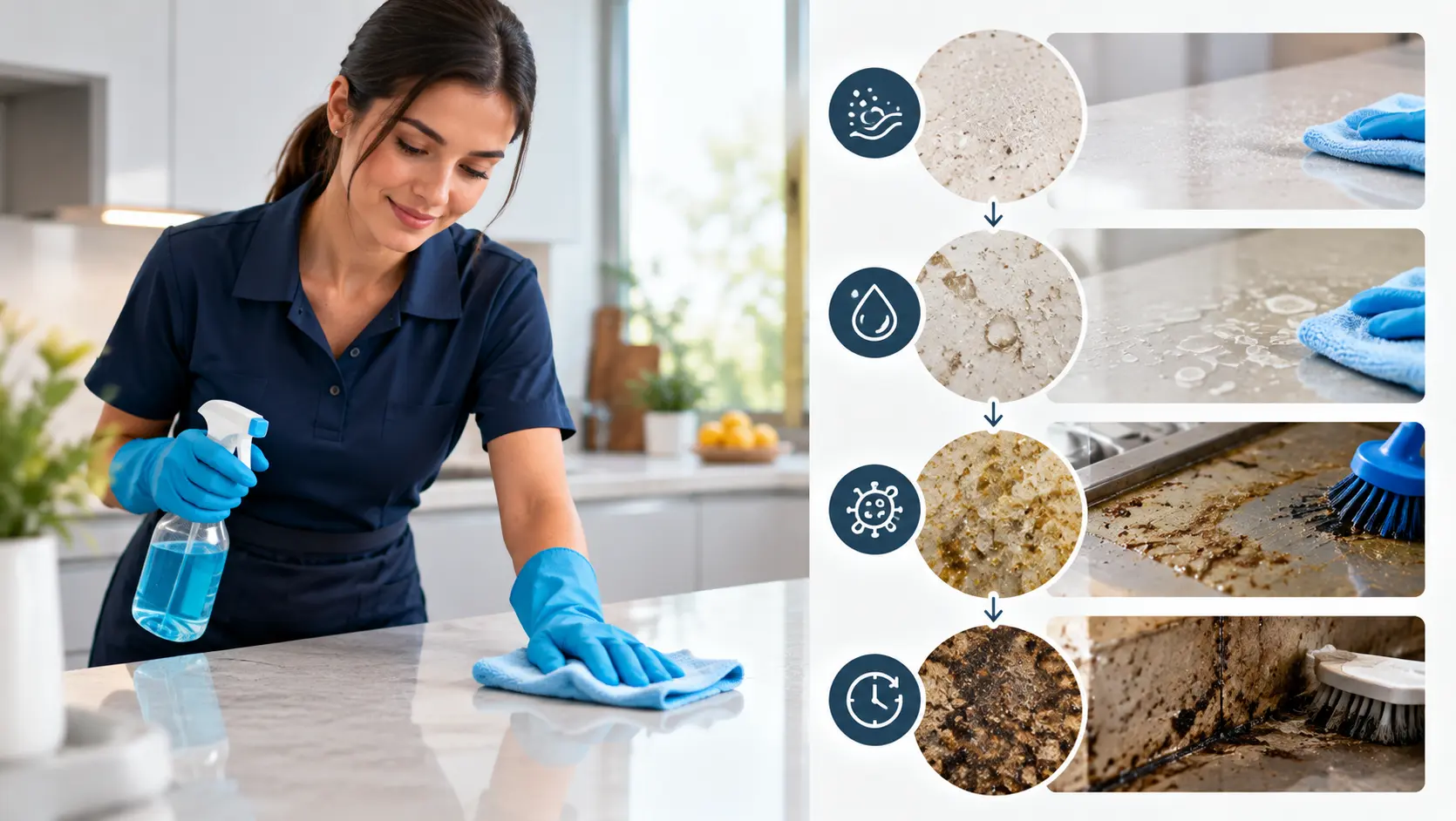
| Dirt gets harder to remove over time because it changes. Cooking grease oxidises into a sticky, varnish-like film. Minerals in tap water dry into hard limescale. Dust mixes with moisture and bonds to surfaces. Stains soak into fabric and grout, and bacteria build a protective layer called biofilm. A spill wiped up today takes seconds. The same spill left for a month can need special products, soaking time and hard scrubbing. |
You wipe the hob after dinner and it comes clean in seconds. Skip it for a few weeks and the same splatter turns brown, sticky and stubborn. That’s not your imagination. Dirt doesn’t just sit on a surface waiting to be cleaned. It reacts with air, water and heat, and every day it gets a firmer grip.
In Dubai, this happens faster than in many places. Heat, humid summers, fine desert dust and hard tap water all speed things up. Here’s what’s going on, and how to stay ahead of it.
What Happens to Dirt Over Time?
Fresh dirt is loose. It sits on top of a surface, held by weak forces. Water and a cloth are usually enough to lift it. Over time, three things change:
- It changes chemically. Oils oxidise and minerals harden.
- It moves deeper. Liquids soak into porous materials like grout, fabric and stone.
- It builds up in layers. New dirt sticks to old dirt, and each layer seals the one below.
The result is that a five-second wipe turns into a job that needs the right product, time to soak and real effort.
1. Grease Oxidises and Turns Sticky
Cooking oil is the classic example. When it’s fresh, it’s liquid and wipes away with warm, soapy water. But heat and air slowly change it. The oil oxidises, its molecules link together, and it thickens into a tacky, yellow-brown film. Give it long enough and it hardens into something close to varnish.
This is why old grease on extractor hoods, cabinet tops and tile backsplashes won’t shift with a normal spray. Dust and smoke particles also get trapped in the sticky layer, so it grows thicker and darker every week.
If your kitchen has reached that stage, a professional kitchen deep cleaning service can help. Trained cleaners use the right degreasers and steam to break down hardened grease without damaging your finishes.
2. Hard Water Minerals Build Up in Layers
Every time water dries on a tap, shower screen or kettle, it leaves behind dissolved minerals, mainly calcium and magnesium. One drop leaves a faint mark. Hundreds of drops, day after day, form a hard, chalky crust called limescale.
Limescale also reacts with soap. The calcium combines with fats in the soap to form soap scum, the grey film that clings to tiles and glass. Fresh scum wipes off. Older scum bonds with the limescale beneath it and needs an acidic cleaner and patience.
Many Dubai residents notice white spots on taps and shower glass within days of cleaning. Leave them for a few months and you may need a bathroom deep clean to bring chrome and glass back to a proper shine.
3. Dust and Humidity Bond Together
Dry dust is easy. A microfibre cloth lifts it in one pass. Problems start when dust meets moisture. During Dubai’s humid months, and around AC vents where condensation forms, dust absorbs water and turns into a thin paste. When it dries, it sticks.
Fine desert sand adds another problem. It’s gritty and abrasive. Left on floors and window sills, it gets ground in by foot traffic and can slowly scratch marble, wood and glass.
Balconies, window tracks and sliding door rails collect this mix the fastest. That’s why they often look grimy even in homes that are otherwise spotless.
4. Stains Soak In and Set
Porous materials act like sponges. Grout, unsealed marble, fabric sofas, carpets and mattresses all absorb spills. The longer a liquid sits, the deeper it travels, and the harder it is to draw back out.
Some stains also change once they’re inside. Coffee, tea and red wine contain tannins that darken as they oxidise. Protein stains such as sweat, blood and egg bind more tightly when heated. That’s why washing them in hot water can lock them in for good.
5. Bacteria and Mould Build a Protective Layer
Bacteria don’t just sit on damp surfaces. Given time, they form a biofilm, a slimy layer that holds the colony together and shields it from cleaning products. You see it as the pink or black film in shower corners, sink overflows and around drains.
A new biofilm wipes away fairly easily. An established one clings tightly and grows back fast if you only clean the surface. Mould works in a similar way. Once it reaches into silicone sealant or grout, surface cleaning only removes what you can see.
6. Old Dirt Traps New Dirt
Build-up makes more build-up. A greasy surface catches dust. A rough, limescale-coated surface gives grime more places to cling. A scratched floor holds dirt in its grooves. Each layer makes the next one stick faster.
This is why cleaning effort doesn’t grow in a straight line. Two months of build-up is often far more than twice the work of one month.
How Long Before Dirt Becomes Hard to Remove?
| Surface | What builds up | Starts to set within | Suggested routine |
| Hob and backsplash | Cooking grease | A few days | Wipe after cooking; deep clean monthly |
| Extractor hood and filters | Oxidised grease and smoke | 2 to 4 weeks | Clean every 1 to 3 months |
| Shower glass and taps | Limescale and soap scum | 1 to 2 weeks | Squeegee daily; clean weekly |
| Grout and silicone | Mould and biofilm | 2 to 4 weeks in damp areas | Scrub weekly |
| Balcony and window tracks | Sand, dust and moisture | 1 to 2 weeks | Vacuum every 1 to 2 weeks |
| Sofas, carpets and mattresses | Spills and body oils | Hours to days | Spot-clean at once; deep clean once or twice a year |
These timings are a rough guide for a typical Dubai apartment. Cooking habits, pets, the season and how often windows are open will all change them.
What This Means for Your Time and Money
Little and often is almost always cheaper than rare and intense. A daily wipe uses water, a cloth and a minute of your time. Hardened build-up needs stronger products, longer soaking and much more labour. In some cases, such as etched glass, stained grout or scratched marble, the damage can’t be fully reversed at all.
Regular cleaning also protects what you’ve paid for. Surfaces that are cleaned before dirt sets last longer and keep their finish.
How to Stay Ahead of Build-Up
- Wipe spills straight away, especially on fabric, grout and natural stone.
- Clean the hob and backsplash after cooking, while grease is still warm and soft.
- Squeegee shower glass after each use to stop mineral spots forming.
- Run the bathroom fan or open a window after showers to cut moisture.
- Dust with a microfibre cloth before you mop, so you aren’t turning dust into mud.
- Vacuum balcony doors and window tracks weekly during dusty months.
- Stick to a weekly routine, and book a deep clean every few months for the jobs routine cleaning misses.
When a Deep Clean Makes More Sense
Sometimes build-up is past the point of a quick fix. These are the usual signs:
- Grease that still feels sticky after you’ve sprayed and wiped it.
- White crust on taps and glass that won’t budge.
- Grout that has turned grey, brown or black.
- A musty smell in bathrooms or cupboards.
- Floors that look dull even straight after mopping.
If you’re seeing several of these, a professional deep cleaning service is the fastest way to reset your home. The Alo Maids team works top to bottom with the right product for each surface. Hardened grease, limescale and grime come off safely. After that, a simple weekly routine is usually enough to keep things that way.
The lesson is simple: the best time to clean dirt is before it has time to settle in. And when it already has, you don’t have to tackle it alone.
Frequently Asked Questions
Why does dirt get harder to clean over time?
Dirt changes the longer it sits. Grease oxidises and hardens, water minerals turn into limescale, dust mixes with moisture and sticks, and stains soak deeper into porous surfaces. Bacteria can also form a biofilm that protects them from cleaning products.
How quickly does kitchen grease become hard to remove?
Fresh grease is easy to wipe off for the first day or two. After a few days of heat and air, it starts to turn sticky. After several weeks, especially on extractor hoods, it can harden into a varnish-like layer that needs a strong degreaser or steam.
Can old limescale be removed?
Yes, in most cases. Acidic cleaners such as white vinegar or citric acid dissolve limescale if left to soak. Avoid acids on marble and other natural stone, as they can etch the surface. Very old deposits on glass may leave permanent marks.
Should I use hot water on old stains?
It depends on the stain. Warm water helps loosen grease and oil. Rinse protein stains such as blood, sweat and egg in cold water first. Heat can set them into the fabric.
Why does my home in Dubai get dirty so fast?
Fine desert dust, sandstorms, high summer humidity and constant air conditioning all play a part. Dust is carried in through balcony doors and AC systems, and humidity helps it stick to surfaces.
How often should I deep clean my home in Dubai?
Many households book a deep clean every three to six months, alongside a weekly routine. Homes with pets, heavy cooking or lots of balcony use may benefit from more frequent deep cleans.