| Most children’s toys can be cleaned safely with warm water, a little mild washing-up liquid and a soft cloth. Hard plastic toys can often go on the dishwasher’s top rack. Soft toys can usually be machine washed, and wooden toys should be wiped, not soaked. For germs after illness, heat from hot water or a dishwasher works well. Always rinse, dry toys fully and check the manufacturer’s care label first. |
Toys go everywhere children go. Into mouths, onto floors, out to the park and into the bath. Within days, they can pick up dirt, sticky residue and germs.
It’s tempting to reach for strong disinfectant sprays, but harsh chemicals can leave residue that little ones then touch and chew. The good news is that you don’t need them. Simple, gentle methods clean most toys just as well.
Here’s how to clean every type of toy safely and how often to do it. We’ll also cover tricky items such as bath toys and soft teddies.
Why Avoid Harsh Chemicals on Toys?
Young children explore with their hands and mouths. Strong cleaners, such as bleach or heavily scented disinfectant sprays, can leave a film behind if they aren’t rinsed off properly. They can also irritate sensitive skin and damage paint, plastic and fabric over time.
Gentle cleaning is safer for children and kinder to the toys themselves. It also means you can clean more often without worry.
What You’ll Need
- Warm water.
- Mild, unscented washing-up liquid or baby-safe soap.
- Soft cloths or microfibre cloths.
- An old toothbrush for small gaps.
- White vinegar for limescale and light cleaning.
- Bicarbonate of soda for scrubbing stubborn marks.
- A mesh laundry bag or pillowcase.
- A clean towel or drying rack.
How to Clean Toys by Material
Hard Plastic Toys
- Fill a bowl or sink with warm water and a few drops of mild washing-up liquid.
- Wash each toy with a soft cloth, using a toothbrush for grooves and corners.
- Rinse well under clean running water.
- Dry with a towel or leave to air dry completely.
Many solid plastic toys without batteries can go on the top rack of the dishwasher. Check the label first, as heat can warp some plastics.
Building Blocks and Small Pieces
Put small pieces, such as building bricks, into a mesh laundry bag. Wash them in a basin of warm, soapy water, then rinse and spread them out on a towel to dry. Avoid very hot water, which can warp some plastics.
Soft Toys and Plush Teddies
- Check the care label. Some soft toys are machine washable, others are surface-clean only.
- Place washable toys in a pillowcase or mesh bag.
- Wash on a gentle cycle with a mild detergent at the temperature the label allows.
- Reshape and air dry fully before giving back. Damp stuffing can grow mould.
For toys that can’t go in the machine, wipe the surface with a damp cloth and a little mild soap. Sprinkle with bicarbonate of soda, leave for 15 minutes, then brush or vacuum it off to freshen it.
Wooden Toys
Wood absorbs water, which can cause swelling, cracking and peeling paint. Never soak wooden toys.
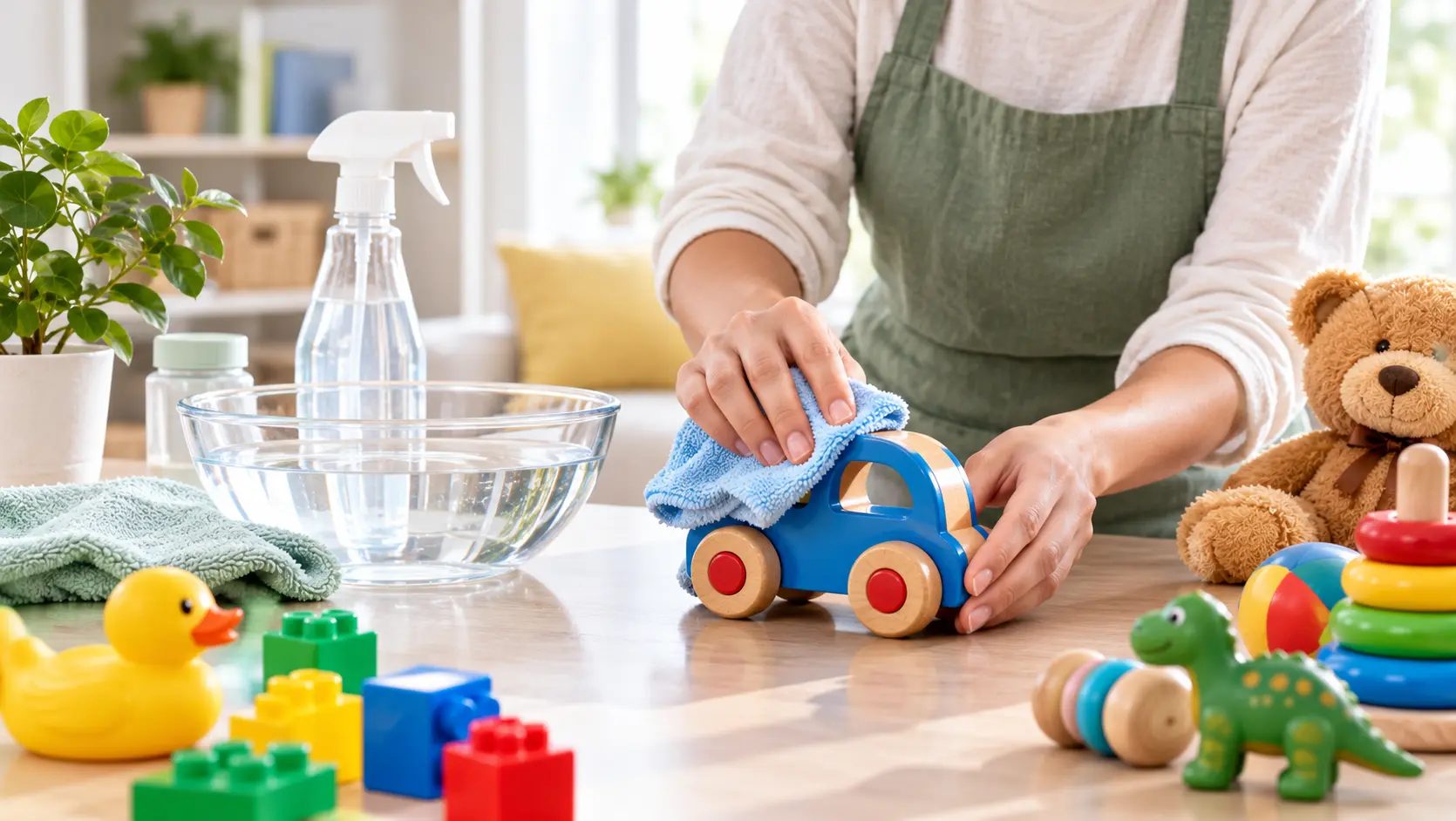
- Wipe with a cloth dampened in warm water and a little mild soap.
- For a gentle clean, use a cloth dampened with one part white vinegar to four parts water.
- Wipe again with a cloth dampened in clean water.
- Dry straight away with a towel and leave in a well-ventilated spot.
Bath Toys
Bath toys with a hole in the bottom are a common hiding place for mould. Water gets trapped inside and never fully dries.
- Squeeze out all the water after every bath.
- Once a week, soak them in a mix of equal parts warm water and white vinegar for about an hour.
- Squeeze the mixture in and out several times to flush the inside.
- Rinse with clean water, squeeze out and leave to dry upside down.
If you can see black mould inside a bath toy that won’t rinse out, it’s safest to throw it away. To prevent the problem, choose bath toys without holes, or seal the hole with a little non-toxic, waterproof glue before first use.
Electronic and Battery-Operated Toys
- Remove the batteries first.
- Wipe the surface with a cloth that’s barely damp with soapy water.
- Use a cotton bud for buttons and small gaps.
- Never submerge electronic toys or put them in the dishwasher.
- Let them dry fully before replacing the batteries.
Rubber and Silicone Toys and Teethers
Wash in warm, soapy water and rinse thoroughly. Some silicone teethers are dishwasher-safe or can be boiled, but only if the manufacturer says so. Check for cracks or splits, and replace any damaged teethers.
What About Germs After Illness?
Everyday cleaning removes most dirt and germs, but you may want to go further after a stomach bug or cold.
Heat is your best chemical-free option. Dishwasher-safe toys can go through a hot cycle. Washable soft toys can go in at the highest temperature their label allows.
White vinegar is great for cleaning and removing limescale, but it isn’t a reliable disinfectant. For toys that can’t take heat, a disinfectant labelled as safe for toys or food-contact surfaces can be used. Follow the label carefully, then rinse with clean water and let the toy dry fully.
How Often Should You Clean Toys?
| Type of toy | How often to clean |
| Teethers and toys babies put in their mouths | Daily |
| Bath toys | Rinse and squeeze after each bath; deep clean weekly |
| Everyday plastic toys | Weekly |
| Soft toys used for sleep | Every 1–2 weeks |
| Shared toys after playdates or nursery | After each use |
| Any toy after illness | As soon as the child is well |
Tips for Dubai Homes
- Shake out sand. Toys from the beach or park often bring sand indoors. Rinse them outside or tap them over a bin before washing.
- Watch for humidity. Bath toys and soft toys can develop mould faster in humid months, so dry them thoroughly.
- Don’t leave toys on the balcony. Strong sun can fade colours and make plastic brittle.
Mistakes to Avoid
- Using bleach or strong sprays on toys children put in their mouths.
- Soaking wooden toys or electronic toys.
- Putting toys back in the toy box while still damp.
- Mixing cleaning products to make them “stronger”. This can release harmful fumes.
- Ignoring care labels on soft toys.
- Keeping bath toys with mould inside.
Keep Your Whole Home Fresh for Little Ones
Clean toys are part of a healthy home, but so are clean floors, play areas and bathrooms where children spend their time. Regular house cleaning in Dubai from Alo Maids keeps family spaces fresh and tidy.
For a thorough top-to-bottom refresh, our deep cleaning service reaches the corners that daily cleaning misses. And if bath time leaves mould and soap scum behind, a bathroom deep clean gets it sparkling again.
Frequently Asked Questions
How do you clean children’s toys naturally?
Wash most toys in warm water with a little mild washing-up liquid, then rinse and dry them fully. Use a vinegar and water solution for bath toys and light cleaning, and bicarbonate of soda for scrubbing stubborn marks.
Can I put plastic toys in the dishwasher?
Many solid plastic toys without batteries can go on the top rack of the dishwasher. Check the manufacturer’s label first, as high heat can warp some plastics.
How do I clean soft toys and teddies?
Check the care label. Machine-washable toys can go in a pillowcase on a gentle cycle with mild detergent. Surface-clean-only toys can be wiped with a damp, soapy cloth and freshened with bicarbonate of soda.
How do I stop mould in bath toys?
Squeeze out all the water after every bath and let toys dry upside down. Soak them weekly in equal parts warm water and white vinegar. Choose toys without holes, or seal the holes before use.
Is vinegar a disinfectant for toys?
Vinegar is good for cleaning and removing limescale, but it isn’t a reliable disinfectant. After illness, use heat, such as a hot dishwasher or washing cycle. Or use a disinfectant labelled safe for toys, then rinse well.
How often should I clean my child’s toys?
Clean teethers and toys babies mouth daily, everyday toys weekly, and soft toys every one to two weeks. Clean shared toys after playdates and any toy after your child has been ill.