
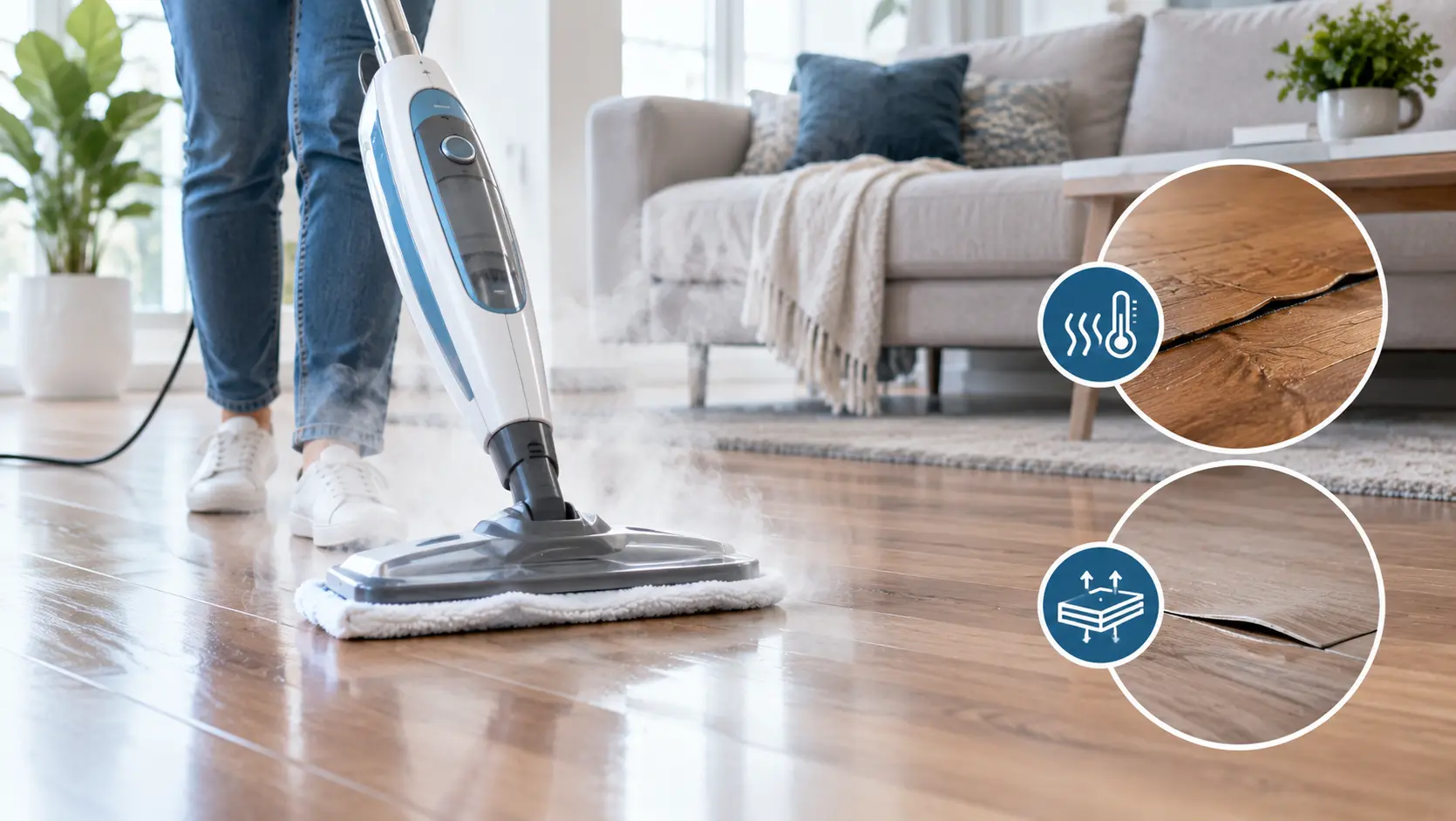
| Steam mops force hot moisture into the joints and edges of laminate and engineered wood. Laminate has a fibreboard core that swells when it absorbs water. Engineered wood can warp, lose its finish or separate from its core. The damage often builds slowly, showing up as raised edges, bubbling, cloudy patches or gaps. Many flooring manufacturers advise against steam mops. Use a dry dust mop, then a well-wrung microfibre mop with a cleaner made for wood or laminate. |
Steam mops look like the perfect floor cleaner. No chemicals, quick to use, and they leave floors looking fresh. It’s no surprise they’re popular in Dubai homes.
But on laminate and engineered wood, a steam mop can do more harm than good. The damage isn’t always obvious at first. It builds up quietly, clean after clean, until boards start lifting or the finish turns dull and patchy.
Here’s what’s really happening under your mop, how to spot early damage, and how to clean these floors safely.
How Steam Mops Work
A steam mop heats water until it turns to vapour, then pushes that steam through a cloth pad onto the floor. The combination of heat and moisture loosens dirt and helps kill some germs.
That works well on hard, sealed surfaces such as ceramic and porcelain tiles. The problem is that laminate and engineered wood are not solid, waterproof surfaces. They’re built in layers, and the joints between boards are their weak point.
Why Laminate Is So Vulnerable
Laminate looks like wood, but most of it isn’t. A typical laminate board has:
- A clear, tough wear layer on top.
- A printed photo layer that gives the wood or stone look.
- A core made of high-density fibreboard (HDF), which is compressed wood fibres.
- A backing layer underneath.
The top layer resists spills, but the fibreboard core does not like water. When steam is pushed into the seams between boards, the core absorbs moisture and swells.
That leads to:
- Raised or “peaked” edges where boards push against each other.
- Bubbling or blistering of the top layer.
- Soft spots that feel spongy underfoot.
- Separation of the printed layer from the core.
Once a laminate board has swollen, it rarely goes back to normal. Damaged boards usually need replacing.
Why Engineered Wood Suffers Too
Engineered wood has a real hardwood top layer, called a veneer, bonded to a core of plywood or fibreboard. It’s more stable than solid wood, but it still reacts to heat and moisture.
A steam mop can cause:
- Damage to the finish. Heat can dull, cloud or strip lacquer and oil finishes, leaving white or hazy patches.
- Cupping or crowning. Boards absorb moisture unevenly and curve at the edges or centre.
- Delamination. Repeated heat and moisture can weaken the glue holding the veneer to the core.
- Gaps and cracks. Wood swells with moisture, then shrinks as it dries, stressing the joints.
Oiled finishes are especially sensitive because they’re less sealed than lacquered ones.
Why It’s a Bigger Issue in Dubai Homes
In Dubai, floors already deal with big swings in conditions. Air conditioning keeps indoor air very dry for much of the year. Humid months and open balcony doors then bring moisture back in. Wood and fibreboard expand and shrink with these changes.
Adding regular blasts of hot steam on top of that puts extra stress on the boards and joints. Fine desert sand adds another problem. If grit isn’t removed first, a mop pad can drag it across the surface and scratch the finish.
Does Using a Steam Mop Void Your Floor Warranty?
It can. Many laminate and engineered wood manufacturers specifically advise against steam cleaning. If your floor is damaged and the manufacturer finds steam was used, they may refuse a warranty claim.
Always check your floor’s care guide before using any new cleaning method. If you rent, it’s worth checking with your landlord too, as floor damage can come out of your deposit.
Early Signs Your Floor Has Steam Damage
Catching damage early can stop it spreading. Look out for:
- Edges of boards that feel raised when you run your hand across them.
- Small bubbles or blisters on the surface.
- Cloudy, white or dull patches on the finish.
- Boards that curve up at the edges or in the middle.
- New gaps between boards.
- A spongy feel underfoot in certain spots.
- Peeling at the edges of the top layer.
If you notice any of these, stop steam cleaning straight away and let the floor dry out fully.
How to Clean Laminate and Engineered Wood Safely
Remove Dust and Grit First
Use a dry microfibre dust mop or a vacuum on its hard-floor setting. Turn off any beater bar or rotating brush, as it can scratch the surface. In Dubai, doing this every few days helps keep sand from wearing down the finish.
Use a Damp Mop, Not a Wet One
Lightly mist a microfibre mop pad, or wring it out until it’s barely damp. The floor should dry within a minute or two. Standing water is the enemy.
Choose the Right Cleaner
Use a pH-neutral cleaner made for laminate or wood floors. Avoid harsh chemicals, wax-based polishes on laminate, and strong acidic cleaners unless your manufacturer says they’re safe.
Wipe Spills Straight Away
Don’t leave water, drinks or pet accidents sitting on the floor. Blot them up quickly with a dry cloth.
Protect the Surface
- Place mats at entrances to trap sand and grit.
- Add felt pads under chair and table legs.
- Avoid dragging heavy furniture across the floor.
Where Steam Mops Are Usually Safe
Steam mops are a great tool on the right surface. They generally work well on sealed ceramic and porcelain tiles. For vinyl, natural stone and any other flooring, check the manufacturer’s care guide first, as heat can affect some finishes and sealants.
Can Steam-Damaged Floors Be Repaired?
It depends on the damage. A flooring specialist can sometimes improve a cloudy finish on engineered wood by cleaning, refinishing or re-oiling the boards. Swollen or bubbled laminate usually can’t be repaired and needs replacing board by board.
The best fix is prevention. Once you switch to safer cleaning, your floors will look better and last far longer.
Let the Professionals Look After Your Floors
Every floor type needs a different approach. Professional cleaners know which tools and products are safe for laminate, engineered wood, tiles and stone.
With regular house cleaning in Dubai from Alo Maids, our trained team cleans every floor the right way. For larger homes, our villa cleaning service covers every room and surface. And when floors need more than a quick mop, a deep cleaning service lifts built-up dirt safely without risking damage.
Frequently Asked Questions
Can you use a steam mop on laminate floors?
It’s best not to. Steam pushes hot moisture into the joints between boards, where the fibreboard core absorbs it and swells. Many laminate manufacturers advise against steam mops, and using one may affect your warranty.
Is a steam mop safe for engineered wood floors?
Generally, no. Heat and moisture can damage the finish and cause boards to cup or warp. They can also weaken the glue holding the wood veneer to its core. Oiled finishes are especially sensitive.
What are the signs of steam damage on laminate?
Look for raised or peaked edges, bubbles on the surface, soft or spongy spots, and peeling at the edges of the boards. Swollen laminate usually can’t be repaired and needs replacing.
What is the best way to clean laminate and engineered wood?
Remove dust and grit with a dry microfibre mop or a vacuum on its hard-floor setting. Then use a barely damp microfibre mop with a pH-neutral cleaner made for laminate or wood. Never leave standing water.
Will using a steam mop void my floor warranty?
It can. Many manufacturers specifically advise against steam cleaning laminate and engineered wood. Always check your floor’s care guide before trying a new cleaning method.
Which floors are safe for steam mops?
Sealed ceramic and porcelain tiles are usually fine. For vinyl, natural stone and other floors, check the manufacturer’s care guide first, as heat can affect some finishes and sealants.