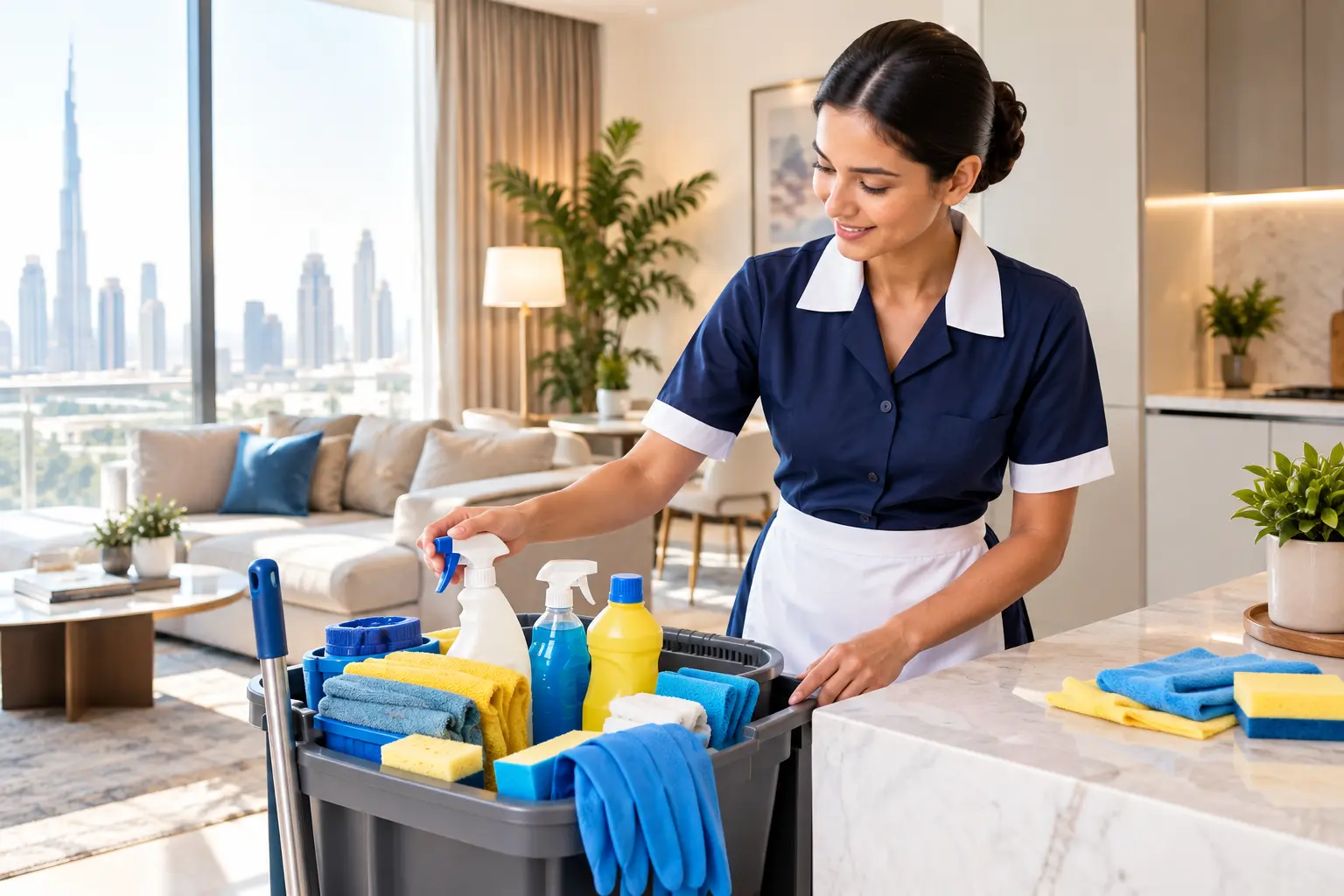

Preventing dust buildup at home requires sealing gaps that let outdoor dust in, using a HEPA-filter vacuum weekly, and washing soft furnishings monthly. Dubai’s arid climate and frequent sandstorms make this harder than in most cities, so consistency matters more than intensity. Alo Maids, a professional cleaning company operating across Dubai since 2015, has tested and refined this routine across hundreds of client homes.
Dust in Dubai is not just a nuisance — it is a mix of desert sand, construction particles, pollen, and indoor debris like skin cells and fabric fibres. The World Health Organization (WHO) links prolonged exposure to indoor dust with respiratory irritation and worsened allergy symptoms. Reducing dust is therefore a health priority, not just a cosmetic one.
Why Does Dust Build Up So Quickly in Dubai Homes?
Dust builds up quickly in Dubai because of desert sand infiltration, central air conditioning, and low humidity that keeps particles airborne longer. These three factors combine to create dust accumulation rates far higher than in coastal or temperate regions. Understanding the cause is the first step to controlling it.
Is the Desert Climate Really the Main Cause?
Yes, the desert climate is the primary driver of indoor dust in Dubai households. Fine sand particles from the surrounding desert enter homes through open windows, doors, and even small gaps in seals. The UAE’s National Center of Meteorology regularly reports sandstorms and dust haze events, particularly between March and August.
Does Air Conditioning Make Dust Worse?
Air conditioning circulates dust throughout a home if filters are not cleaned regularly. Central AC systems, common in Dubai apartments and villas, pull in air continuously and distribute any trapped particles through every room. A dirty AC filter can undo days of cleaning within hours.
What Are the Most Effective Ways to Prevent Dust Buildup?
The most effective methods combine sealing entry points, upgrading filtration, and following a consistent cleaning schedule. No single action solves the problem alone; dust prevention works as a layered system. Below are the ten methods Alo Maids recommends to clients across Dubai.
- Seal windows and doors with weatherstripping to block sand and outdoor particles.
- Use a HEPA-filter vacuum at least once a week on carpets, rugs, and upholstery.
- Change AC filters every 4–6 weeks, or monthly during sandstorm season.
- Wash bedding and curtains every one to two weeks in hot water.
- Declutter surfaces so dust has fewer places to settle and hide.
- Use microfibre cloths, not feather dusters, which scatter particles into the air.
- Install door mats at every entrance to trap sand before it spreads indoors.
- Run an air purifier with a HEPA filter in bedrooms and living areas.
- Groom pets regularly if you have them, since pet dander adds to household dust.
- Book professional deep cleaning every four to six weeks to remove built-up residue.
Which of These Steps Has the Biggest Impact?
Sealing windows and doors delivers the fastest visible reduction in household dust. This single step stops the largest external source before it enters the home at all. Alo Maids’ internal client audits show homes with sealed windows need 30% less frequent dusting than those without.
How Often Should You Clean to Stop Dust Returning?
Daily surface wiping combined with weekly vacuuming keeps dust from accumulating visibly. Deep cleaning tasks, such as washing curtains or cleaning behind furniture, should happen monthly. This tiered schedule matches how quickly different dust sources rebuild in a Dubai home.
| Task | Recommended Frequency |
|---|---|
| Wipe visible surfaces | Daily |
| Vacuum carpets and rugs | Weekly |
| Clean AC filters | Every 4–6 weeks |
| Wash curtains and soft furnishings | Monthly |
| Professional deep clean | Every 4–6 weeks |
Why Isn’t Daily Cleaning Enough on Its Own?
Daily cleaning removes surface dust but misses particles trapped in fabric, vents, and hard-to-reach corners. Rugs, sofas, and mattresses act as dust reservoirs that release particles back into the air over time. The Asthma and Allergy Foundation of America (AAFA) notes that soft furnishings can hold significantly more allergens than hard flooring.
Which Rooms Collect the Most Dust in a Dubai Home?
Bedrooms and living rooms collect the most dust because of soft furnishings, carpets, and frequent human activity. Kitchens and bathrooms accumulate less visible dust but attract grease-bound particles that are harder to remove. Each room needs a slightly different approach.
How Do You Handle Bedroom Dust Specifically?
Bedroom dust concentrates in mattresses, pillows, and curtains, so these need weekly attention. Use dust-mite-proof covers on mattresses and pillows to reduce buildup between deep cleans. Bedrooms should be prioritised first, since people spend the most hours there breathing that air.
What About Dust in the Kitchen and Bathroom?
Kitchen dust often mixes with grease, making it stick to cabinet tops and extractor fans. Bathroom dust combines with moisture, which can encourage mould if left unaddressed. Alo Maids’ Kitchen Cleaning and Bathroom Cleaning services target these specific buildup patterns with tailored techniques and products.
Does Professional Cleaning Actually Reduce Dust Long-Term?
Yes, professional cleaning reduces long-term dust levels by removing buildup that household routines typically miss. Trained cleaners use commercial-grade HEPA equipment and reach areas like behind appliances and inside vents. This is where most residual dust hides between regular cleaning sessions.
Alo Maids has delivered dust-reduction cleaning across Dubai homes since 2015, with trained and vetted cleaning teams. One recent client case in Dubai Marina reported a 70% drop in visible dust within two weeks of switching to fortnightly professional cleaning combined with the daily habits above. Consistent professional support, not one-off cleans, produces the most durable results.
For homes with mixed residential and workspace areas, Alo Maids also offers Office Cleaning to keep dust under control in home offices and study spaces, which often collect dust from electronics and paperwork.
How Do I Choose a Reliable Cleaning Company in Dubai?
Look for a company with verified reviews, trained staff, and clear service guarantees. Confirm they use HEPA-filtration equipment and eco-friendly products suitable for Dubai’s climate. Ask about their experience with villas versus apartments, since dust control needs differ between property types.
Frequently Asked Questions
How often should I dust my home in Dubai to prevent buildup?
Dust visible surfaces daily and vacuum weekly. Dubai’s sand and low humidity mean dust returns faster than in most cities, so infrequent cleaning allows noticeable buildup within just two to three days.
Does closing windows really stop dust from entering?
Yes, closed and sealed windows block most outdoor sand and dust from entering a home. Adding weatherstripping around frames further reduces infiltration, particularly during sandstorm season between March and August.
What type of vacuum is best for reducing household dust?
A vacuum with a certified HEPA filter is best, as it traps particles as small as 0.3 microns. Standard vacuums often recirculate fine dust back into the air instead of removing it fully.
Can air purifiers make a noticeable difference to dust levels?
Yes, HEPA air purifiers reduce airborne dust particles between cleaning sessions. They work best in bedrooms and living rooms where people spend the most time and where soft furnishings hold dust.
How long does it take to notice less dust after changing my routine?
Most Alo Maids clients notice visibly less dust within one to two weeks of combining sealed windows, weekly vacuuming, and professional cleaning support every four to six weeks.
Is professional deep cleaning worth it if I already clean daily?
Yes, daily cleaning handles surface dust, but professional deep cleaning removes buildup inside vents, behind furniture, and within fabrics. These areas typically get missed during routine household cleaning.
Does Dubai’s air conditioning system contribute to dust problems?
Yes, central AC systems circulate dust throughout a home if filters are dirty. Changing filters every four to six weeks, or monthly during sandstorm season, significantly reduces this circulation effect.
What is the biggest mistake people make when trying to reduce dust?
The biggest mistake is using feather dusters or dry cloths, which scatter dust into the air rather than removing it. Microfibre cloths and HEPA vacuums trap particles instead of redistributing them.
Struggling with dust that keeps coming back no matter how often you clean? Alo Maids’ trained Dubai teams can design a cleaning schedule tailored to your home. Book a consultation with Alo Maids today and get a dust-control plan built around your property and lifestyle.
Author
Written by the Alo Maids editorial team, drawing on operational insights from cleaning technicians who have serviced Dubai homes since 2015. Alo Maids’ teams are trained in HEPA-filtration deep cleaning and have handled dust-control projects across villas, apartments, and offices throughout Dubai.