
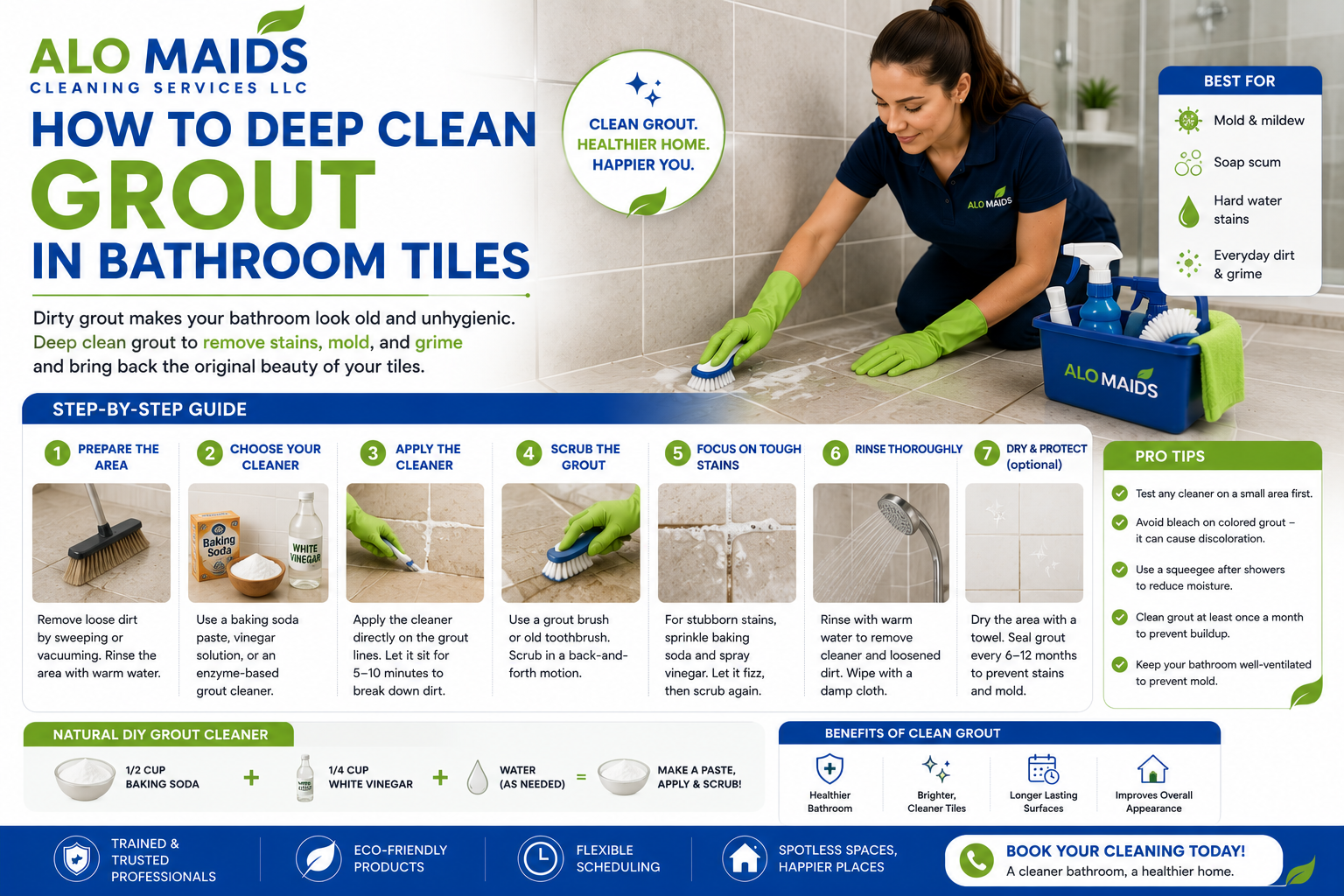
Deep clean grout in bathroom tiles by applying a paste of baking soda and hydrogen peroxide directly onto the grout lines, then scrubbing with a stiff nylon brush before rinsing with clean water. For mould or black stains, leave an oxygen bleach solution on the grout for 10–15 minutes before scrubbing. Repeating this process every four to six weeks keeps bathroom grout hygienic and prevents long-term staining.
What Is Grout and Why Does It Get Dirty So Fast?
Grout is the cement-based material that fills the gaps between bathroom tiles, sealing them against water and dirt. Its porous surface absorbs soap scum, body oils, and moisture far more readily than the tile itself. As a result, grout darkens and grows mould long before the surrounding tiles show any wear.
Grout’s porous texture is the main reason it stains faster than tile — not poor cleaning habits.
How Do You Deep Clean Grout in Bathroom Tiles?
Deep cleaning grout involves loosening embedded dirt with a chemical paste, agitating it with a brush, then rinsing and drying thoroughly. The method below works for ceramic, porcelain, and natural stone tiles alike, provided a pH-neutral cleaner is used on stone surfaces.
What Tools and Products Do You Need?
- Baking soda (sodium bicarbonate)
- White vinegar or hydrogen peroxide
- A stiff-bristled nylon grout brush or old toothbrush
- A spray bottle for applying liquid cleaners evenly
- Microfibre cloths for rinsing and drying
- Rubber gloves and a well-ventilated room
- Optional: a handheld steam cleaner for heavily soiled grout
What Are the Step-by-Step Instructions?
- Clear the area: remove bath mats, shower curtains, and loose debris from the tiled surface.
- Mix the paste: combine three parts baking soda with one part water or hydrogen peroxide until thick.
- Apply to grout lines: spread the paste along each grout line using a toothbrush or spatula.
- Let it sit: leave the paste for 10–15 minutes so it can break down grease and embedded grime.
- Scrub thoroughly: work the brush along the grout in small circular motions with firm, even pressure.
- Rinse and dry: wash away all residue with clean water, then dry with a microfibre cloth to prevent new mould.
Letting the paste sit for at least 10 minutes before scrubbing is what actually lifts ground-in grime — rushing this step is the most common mistake.
How Do You Remove Mould and Black Stains from Grout?
Remove mould and black stains from grout with an oxygen bleach solution, which breaks down organic growth without damaging most sealants. Mix the oxygen bleach with warm water following the product’s instructions, apply it to the affected grout, and leave it for 10–15 minutes. Scrub with a stiff brush, rinse thoroughly, and ventilate the room while it dries.
The World Health Organization links persistent damp and mould exposure to respiratory irritation, which makes prompt grout mould removal a health matter rather than a purely cosmetic one. Trapped moisture beneath tiles can also encourage mould to return quickly if the room isn’t properly ventilated afterwards. For this reason, drying time matters as much as the cleaning product used.
How Often Should Bathroom Grout Be Deep Cleaned?
Deep clean bathroom grout every four to six weeks in normal household use, and weekly in high-traffic bathrooms such as those in restaurants or guest villas. Humid climates, like Dubai’s, accelerate mould growth and shorten this interval considerably. Daily wipe-downs between deep cleans reduce how quickly grime rebuilds.
ISSA, the worldwide cleaning industry association, recommends more frequent cleaning cycles for high-humidity, high-occupancy bathrooms. Alo Maids applies this same standard across its villa and restaurant contracts throughout Dubai. Commercial kitchens and guest bathrooms typically need weekly attention rather than the monthly schedule suited to most family homes.
Grout maintenance is one part of Alo Maids’ broader home cleaning packages, which cover kitchens, floors, and living spaces alongside bathrooms.
Should You Seal Grout After Deep Cleaning?
Seal grout after every deep clean once it has fully dried, ideally within 24 hours of finishing. A silicone-based or penetrating sealant blocks moisture and stains from re-entering the porous surface. Reapply sealant every 12–18 months, or sooner in heavy-use bathrooms.
The Tile Association, a UK trade body for the ceramic tile industry, advises using pH-neutral cleaners on sealed grout to avoid breaking down the sealant prematurely. Harsh acidic cleaners, including undiluted vinegar, can shorten a sealant’s lifespan significantly. Choosing the right product after cleaning protects the work already done.
When Should You Call Professional Cleaners Instead of DIY?
Call professional cleaners when grout stays discoloured after two DIY attempts, or when mould keeps returning within a few weeks. Professional-grade steam cleaning and commercial oxygen treatments reach deeper into grout pores than household products. This matters most for restaurants and villas, where hygiene compliance and guest impressions are both at stake.
Alo Maids’ cleaning teams recently restored grout in a Dubai villa bathroom that had been left untreated for over a year. Using a two-stage oxygen bleach and steam process, the team lifted years of built-up mould without needing to replace a single tile. With years of hands-on experience cleaning homes, villas, and restaurants across Dubai, Alo Maids’ technicians are trained in safe, sealant-friendly grout restoration methods.
Persistent mould after repeated DIY attempts usually signals moisture trapped beneath the grout — a problem professional deep cleaning is built to solve.
Ready for spotless, hygienic grout without the scrubbing? Book a consultation with Alo Maids and let Dubai’s cleaning specialists handle the deep clean for you.
Frequently Asked Questions
What is the best homemade grout cleaner?
A paste of baking soda and hydrogen peroxide is one of the most effective homemade grout cleaners. Mix three parts baking soda to one part hydrogen peroxide, apply to grout lines, leave for 10 minutes, then scrub with a stiff brush and rinse. This combination lifts dirt without damaging most sealants.
Does vinegar damage grout?
White vinegar can wear down grout sealant over time if used too frequently, since its acidity slowly erodes the surface. Use it occasionally for light cleaning, but avoid it on natural stone tiles, where acidic cleaners can cause etching and permanent dullness.
How do you get black mould out of grout?
Apply an oxygen bleach solution directly to mouldy grout lines, leave it for 10–15 minutes, then scrub with a stiff nylon brush. Rinse thoroughly and ventilate the room while it dries. Persistent mould after two attempts usually needs professional steam cleaning.
Can I use a steam cleaner on bathroom grout?
Yes, a steam cleaner works well on bathroom grout, using high-temperature vapour to loosen grime without harsh chemicals. It is particularly effective on ceramic and porcelain tiles, though care is needed on natural stone, which can be sensitive to heat and moisture.
How long should grout paste sit before scrubbing?
Leave a baking soda or oxygen bleach paste on grout for 10 to 15 minutes before scrubbing. This dwell time allows the solution to break down grease and embedded dirt. Scrubbing too early reduces the treatment’s effectiveness and can mean repeating the process.
Is grout cleaning different for restaurants and villas?
Restaurants and villas typically need more frequent grout cleaning due to higher foot traffic and guest hygiene expectations. Weekly deep cleans are common in commercial kitchens and bathrooms, compared with monthly cleans in a typical family home. Dubai’s climate adds extra humidity-related demands.
How much does professional grout cleaning cost in Dubai?
Professional grout cleaning costs in Dubai vary by bathroom size, tile type, and condition, and typically form part of a broader deep cleaning package. Book a consultation with Alo Maids for an accurate quote based on the property’s specific tiles and grout condition.
Can grout be restored without replacing tiles?
Most stained or mouldy grout can be restored without replacing tiles, using oxygen bleach treatments, steam cleaning, or professional regrouting where damage is severe. Full tile replacement is rarely necessary unless the grout has physically crumbled or cracked.
AUTHOR
Written with input from Alo Maids’ senior cleaning technicians, who bring years of combined experience deep cleaning bathrooms, kitchens, and tiled surfaces across Dubai’s villas, homes, and restaurants. Alo Maids trains its teams in safe chemical handling and grout-specific restoration techniques, ensuring consistent, hygienic results for every client.