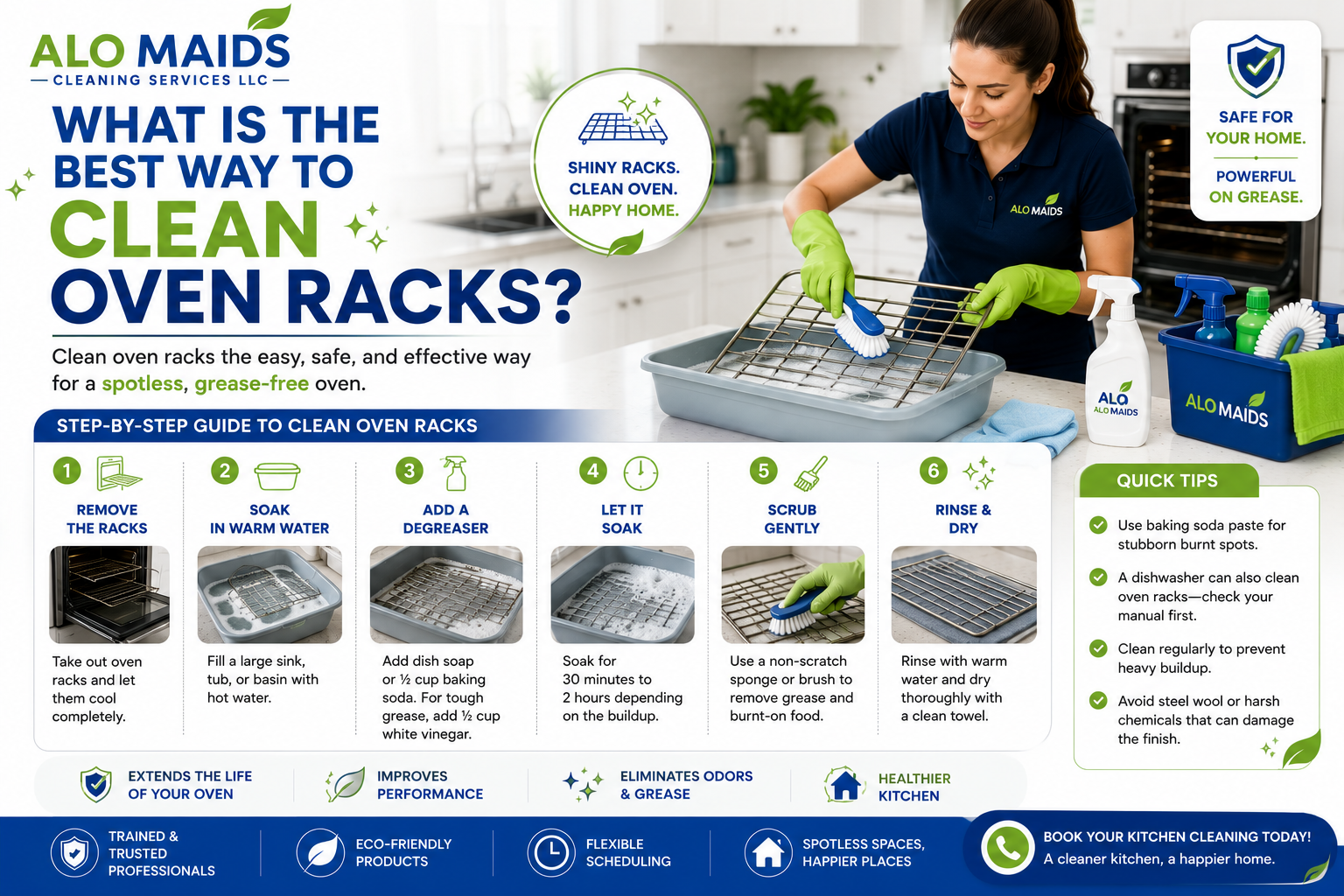
The best way to clean oven racks is to soak them in warm water with dish soap, or a baking soda and vinegar paste, for 30 to 60 minutes. Scrub gently with a non-abrasive sponge, then rinse and dry thoroughly before replacing them. For racks with heavy, baked-on grease, an overnight soak lifts carbon deposits without scratching the metal.
Oven racks build up grease and burnt food faster than any other part of the appliance. This guide from Alo Maids, a professional cleaning company operating across Dubai, explains the fastest and safest methods. Each method below suits a different level of buildup, from light grease to years of baked-on carbon.
Why Do Oven Racks Get So Dirty?
Oven racks get dirty because high heat bakes food spills and grease onto the metal, forming a hard carbon layer. This layer, often called baked-on grease, resists normal wiping and thickens with every use.
Restaurant and villa kitchens face this problem faster due to higher cooking frequency. According to the American Cleaning Institute, a nonprofit authority on household cleaning practices, baked-on grease hardens further each time the oven reheats. Left untreated, it can affect heat distribution and even cause smoke during cooking.
Baked-on grease only gets harder to remove the longer it is left on the rack.
What Household Products Work Best for Cleaning Oven Racks?
Baking soda, white vinegar, dish soap, and ammonia are the four most effective household products for cleaning oven racks. Each suits a different level of grease buildup.
The Baking Soda and Vinegar Method
Baking soda and vinegar work well together because the chemical reaction lifts grease without scratching metal or enamel coatings.
- Lay the racks flat in a bathtub or large bin lined with an old towel.
- Sprinkle a thick layer of baking soda over both sides of each rack.
- Spray or pour white vinegar over the baking soda until it fizzes.
- Leave to soak for at least 30 minutes, or overnight for heavy grease.
- Scrub with a non-abrasive sponge, then rinse and dry completely.
The Dishwashing Liquid Soak
A hot water and dish soap soak works best for light to moderate grease buildup.
Fill a bathtub or large sink with hot water and a generous squeeze of dish soap, such as Dawn or Fairy. Submerge the racks fully and leave for 30 to 60 minutes before scrubbing with a sponge.
The Ammonia Bag Method (For Heavy Baked-On Grease)
Sealing racks inside a bin bag with ammonia overnight loosens even years of baked-on carbon.
Place each rack inside a large bin bag, add a cup of household ammonia, then seal tightly and leave in a well-ventilated area overnight. The fumes soften grease without direct scrubbing. Rinse thoroughly the next day, since ammonia has a strong odour.
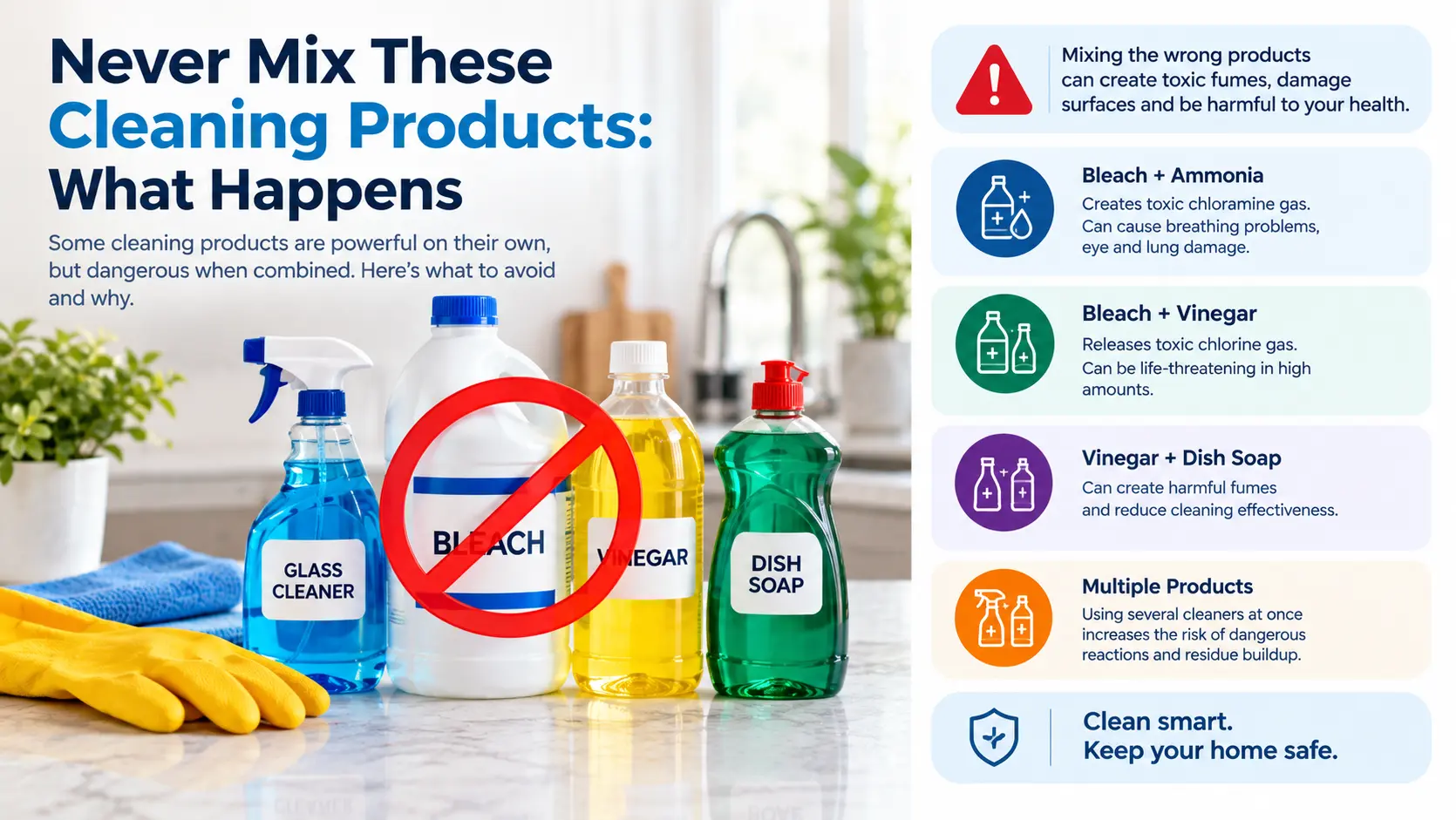
Never mix ammonia with bleach or other cleaning chemicals, as this creates toxic fumes.
How Do You Clean Badly Burnt Oven Racks?
Badly burnt oven racks need a longer soak, usually overnight, combined with a stronger method such as ammonia or a thick baking soda paste.
Some cleaners also soak racks in hot water with a few fabric softener sheets, since the surfactants help loosen grease. This trick suits light to moderate carbon but rarely works on decades-old buildup. Professional degreasing is often faster and safer for severely burnt racks.
For racks that have not been cleaned in years, professional deep cleaning saves time and avoids damaging the coating.
Can You Put Oven Racks in the Dishwasher?
Most oven racks are not dishwasher-safe unless the manufacturer confirms otherwise, so check the appliance manual first.
Dishwasher heat and detergent can strip protective coatings from some racks, causing rust or discolouration. Stainless steel racks without a non-stick coating usually tolerate a dishwasher cycle safely. When in doubt, hand-cleaning remains the lower-risk option.
How Often Should Oven Racks Be Cleaned?
Oven racks should be cleaned every one to three months in home kitchens, and weekly in restaurant kitchens with daily use.
The British Institute of Cleaning Science (BICSc), the UK’s professional body for the cleaning industry, recommends more frequent cleaning wherever food safety is a priority. Dubai Municipality’s food safety guidelines also require commercial kitchens to keep cooking equipment free from grease build-up to reduce fire risk. Villas with private chefs or frequent entertaining often need monthly attention.
Commercial kitchens should clean oven racks weekly to meet food safety and fire safety standards.
Should You Hire a Professional for Oven and Kitchen Deep Cleaning?
Hiring a professional makes sense when racks have years of baked-on grease, or when time and safety are a concern.
Alo Maids’ technicians recently restored a full set of heavily carbonised oven racks for a villa client in Dubai within a single two-hour visit, using industrial-grade degreasers unavailable to most households. With years of hands-on experience across Dubai homes, restaurants, and villas, the team handles jobs that store-bought products cannot fully resolve. Professional kitchen cleaning also covers hoods, hobs, and extractor fans that collect the same grease as oven racks.
A dedicated kitchen cleaning service typically includes oven racks, hobs, extractor fans, and worktops in a single visit, saving significant time compared with DIY methods. For a full property refresh, a deep cleaning visit covers every room, while a broader home cleaning plan keeps kitchens grease-free between deeper sessions.
Professional degreasing removes years of baked-on carbon in hours, not the days DIY methods can take.
Ready for spotless oven racks without the scrubbing? Book a consultation with Alo Maids today for professional kitchen and oven deep cleaning across Dubai.
Frequently Asked Questions
What is the fastest way to clean oven racks?
Soaking racks in hot water with dish soap for 30 minutes, then scrubbing with a non-abrasive sponge, is the fastest method for everyday grease. Heavier buildup needs baking soda and vinegar or an overnight ammonia bag soak for full results without scratching the surface.
Can I use steel wool on oven racks?
Avoid steel wool on non-stick or enamel-coated racks, since it scratches the coating permanently. Plain stainless steel racks tolerate light steel wool use, but a non-abrasive sponge or nylon brush is safer for most oven rack materials.
Does vinegar remove baked-on grease from oven racks?
Yes, vinegar combined with baking soda breaks down baked-on grease through a fizzing chemical reaction. Leaving the paste on for 30 minutes or longer loosens carbon deposits enough to wipe away without heavy scrubbing or harsh chemicals.
How long should oven racks soak before cleaning?
Light grease needs 30 to 60 minutes of soaking in hot water and dish soap. Heavily burnt racks benefit from an overnight soak, either in baking soda and vinegar or sealed in a bag with ammonia, for complete carbon removal.
Is it safe to use ammonia on oven racks?
Yes, ammonia is safe when used alone in a well-ventilated area, sealed inside a bag with the racks overnight. Never mix ammonia with bleach, as the combination produces toxic fumes that pose a serious health risk.
Can dryer sheets clean oven racks?
Dryer sheets can help loosen light to moderate grease when soaked in hot water alongside the racks. The surfactants in the sheets break down grease, though heavily burnt racks usually need a stronger method like ammonia or professional cleaning.
How much does professional oven rack cleaning cost in Dubai?
Professional oven and kitchen deep cleaning cost in Dubai varies by kitchen size and grease build-up, typically forming part of a wider kitchen deep clean package. Alo Maids provides tailored quotes after a free consultation based on the property’s needs.
Do restaurants need more frequent oven rack cleaning than homes?
Yes, restaurant kitchens need weekly oven rack cleaning due to daily heavy use and food safety regulations. Home kitchens typically need cleaning every one to three months, depending on cooking frequency and oven usage.
Author
Alo Maids Content Team
Last Reviewed
July, 2026