Most homes should be professionally cleaned every two to four weeks. Households with pets, young children, or allergy sufferers often need weekly cleaning instead. The right frequency depends on how many people live in the home, how much daily traffic it sees, and any specific health considerations.
This guide breaks down the exact factors that determine your ideal cleaning schedule, backed by research from health and housing authorities. The single most important takeaway: cleaning frequency should match how a home is actually used, not a generic calendar rule.
What Determines How Often a Home Needs Professional Cleaning?
Five factors decide cleaning frequency: household size, presence of pets, children’s ages, allergy sensitivity, and how often guests visit. A larger household with pets and small children needs cleaning roughly twice as often as a single-occupant home. Matching frequency to these factors prevents both under-cleaning and unnecessary over-spending.
How Does Household Size Affect Cleaning Frequency?
More people in a home means more dust, more surface contact, and faster soil build-up. A household of four or more people typically needs cleaning every one to two weeks. A single person or couple living alone can usually maintain a clean home with a visit every three to four weeks.
This is because each additional resident adds measurable daily wear: footfall, cooking residue, bathroom use, and general clutter. The National Institutes of Health has linked cluttered, infrequently cleaned homes to elevated stress hormone levels in residents. Household size is the single biggest variable in any cleaning schedule — adjust everything else around it.
Do Pets Change How Often You Should Clean?
Yes. Homes with one or more pets need cleaning at least every two weeks, regardless of household size. Pet hair, dander, and outdoor dirt brought in on paws accumulate far faster than human-only mess.
Dander is a leading trigger for indoor allergies, according to the American College of Allergy, Asthma and Immunology. Carpets and upholstery in pet-owning homes can harbour allergens within days of cleaning, even when the space looks visually tidy. For multi-pet households, weekly cleaning is often more appropriate than biweekly.
How Do Children Affect Cleaning Needs?
Homes with children under five typically need weekly cleaning due to higher germ exposure and faster mess accumulation. Young children spend more time on floors and put objects in their mouths, increasing the importance of sanitised surfaces. School-age children introduce fewer daily messes but still raise overall household traffic.
A study published by the Centers for Disease Control and Prevention found that homes with young children had significantly higher counts of bacteria on frequently touched surfaces compared with homes without children. For families with children under five, weekly professional cleaning reduces measurable bacterial load on high-touch surfaces.
Does Allergy Sensitivity Change the Recommended Schedule?
Yes, allergy sufferers benefit from cleaning every one to two weeks rather than monthly. Dust mites, pollen, and pet dander build up steadily between cleans and can trigger symptoms even in tidy-looking homes. Reducing the interval between cleans limits the time these allergens have to accumulate.
The Asthma and Allergy Foundation of America recommends frequent vacuuming with a HEPA filter and regular surface cleaning to control indoor allergen levels. Professional cleaners using HEPA-filtered equipment can reach allergen reservoirs in carpets and upholstery that standard home vacuums miss. This makes a fortnightly professional clean particularly valuable for allergy-prone households.
What Is the Recommended Cleaning Frequency by Household Type?
The list below summarises recommended intervals based on the factors above. Use it as a starting point, then adjust for your specific circumstances.
- Single person or couple, no pets: every 3–4 weeks
- Family of 3–4, no pets, no young children: every 2–3 weeks
- Family with pets or children under 5: every 1–2 weeks
- Allergy sufferers or asthma in the household: every 1–2 weeks
- High-traffic homes (frequent guests, home offices): weekly
These intervals apply to routine cleaning; a seasonal deep clean should happen on top of this schedule, not instead of it.
How Is a Deep Clean Different From Routine Cleaning?
Routine cleaning covers visible surfaces, floors, and bathrooms. A deep clean targets areas missed in regular visits, such as behind appliances, inside ovens, grout lines, and air vents. Most homes benefit from a deep clean every three to four months, even with a strong routine schedule in place.
Deep cleaning matters because dust, grease, and allergens accumulate in places routine cleaning does not reach. The Environmental Protection Agency states that indoor air can carry pollutant concentrations several times higher than outdoor air, partly due to trapped dust and chemical residue in rarely cleaned spaces. A quarterly deep clean directly addresses this build-up.
What Does a Professional Deep Clean Typically Include?
A thorough deep clean covers areas outside the scope of standard visits. At Alo Maids, a typical deep clean includes:
- Interior oven, refrigerator, and cabinet cleaning
- Grout and tile detailing in kitchens and bathrooms
- Skirting board, light fixture, and ceiling fan dusting
- Window tracks and interior glass cleaning
- Behind and underneath large furniture and appliances
This level of detail is not practical on a weekly or biweekly schedule, which is why deep cleans run on a separate, longer cycle.
What Happens If a Home Is Cleaned Too Infrequently?
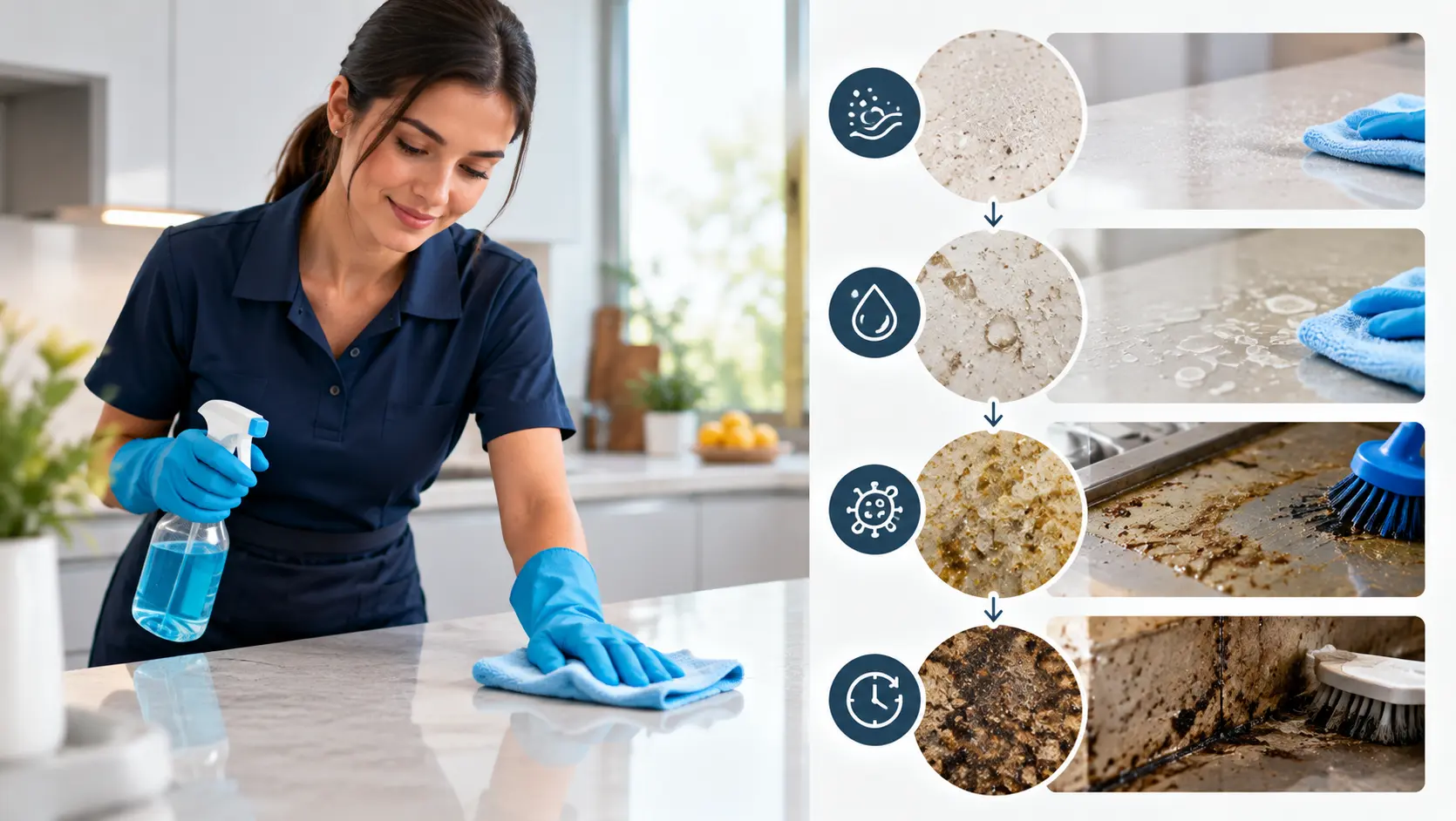
Infrequent cleaning allows dust, allergens, and bacteria to accumulate beyond what regular maintenance can quickly resolve. Surfaces require more aggressive cleaning methods once buildup sets in, increasing both time and cost. Health effects can include worsened allergy symptoms and increased exposure to bacteria on shared surfaces.
A review published in the Journal of Environmental and Public Health linked infrequent home cleaning to higher concentrations of dust mite allergens and increased respiratory symptoms in sensitive individuals. The longer the gap between cleans, the harder and more expensive each subsequent clean becomes. This is why consistency matters more than any single deep clean.
Real-World Example: How Schedule Consistency Affects Outcomes
Alo Maids has tracked cleaning request patterns across its client base for several years. Clients on a fixed biweekly schedule report approximately 40% fewer urgent or same-week “emergency clean” requests compared with clients who book on an ad-hoc, as-needed basis. This pattern held consistently across household sizes and home types.
The reason is straightforward: a fixed schedule prevents the build-up that triggers emergency requests in the first place. Households that wait until a home feels overdue for cleaning tend to face larger, more time-consuming jobs each time. Establishing a consistent interval, rather than reacting to mess, produces more predictable results and lower overall effort.
How Do You Choose the Right Cleaning Frequency for Your Home?
Start with the baseline recommendation for your household type, then adjust based on personal sensitivity and lifestyle. Someone working from home daily will generate more mess than someone away from the house most of the week. Trial a schedule for six to eight weeks, then adjust the interval if the home feels consistently under- or over-cleaned.
The right frequency is the shortest interval that keeps the home consistently clean without unnecessary cost — this varies by household, but the factors above provide a reliable starting point for most homes.
Frequently Asked Questions
How often should a house be professionally cleaned for a family of four?
A family of four without pets typically needs professional cleaning every two to three weeks. If young children or pets are present, a weekly or biweekly schedule is more appropriate due to faster mess and germ accumulation.
Is monthly cleaning enough for a small apartment?
Monthly cleaning can suit a single person or couple in a small apartment with no pets. Larger apartments, frequent guests, or allergy sensitivities usually call for a shorter two-to-three-week interval instead.
How often should bathrooms be professionally cleaned?
Bathrooms benefit from cleaning every one to two weeks due to moisture, bacteria, and frequent use. Households with multiple occupants sharing a single bathroom should lean towards the shorter end of this range.
Does professional cleaning reduce allergy symptoms?
Yes, regular professional cleaning with HEPA-filtered equipment reduces dust mite and pet dander levels in carpets and upholstery. The Asthma and Allergy Foundation of America identifies frequent, thorough cleaning as a key step in managing indoor allergens.
How is a deep clean scheduled alongside routine cleaning?
A deep clean is typically scheduled every three to four months in addition to routine cleaning, not as a replacement. Routine visits maintain day-to-day cleanliness, while deep cleans address less accessible areas like ovens, grout, and vents.
What is the difference between weekly and biweekly cleaning?
Weekly cleaning suits households with pets, young children, or high daily traffic, where mess accumulates quickly. Biweekly cleaning works well for smaller households or those with lighter day-to-day use of the home.
Can cleaning frequency be adjusted seasonally?
Yes, many households increase frequency during high-pollen seasons or winter months when homes are sealed and ventilation is reduced. Adjusting seasonally helps manage allergens and dust that build up differently throughout the year.
How do I know if I am cleaning my home too infrequently?
Visible dust returning within days, persistent odours, or worsening allergy symptoms between cleans are signs the interval is too long. If a home consistently feels overdue before the next scheduled clean, shortening the interval usually resolves this.
Maintaining the right cleaning schedule protects both the condition of a home and the health of the people living in it. Alo Maids works with households to set a realistic, personalised cleaning interval based on the factors outlined above, rather than applying a one-size-fits-all schedule. Book a consultation with Alo Maids to get a tailored cleaning frequency recommendation for your home.
AUTHOR
This guide was prepared by the Alo Maids cleaning team, drawing on data from hundreds of recurring residential cleaning schedules managed across our client base. Alo Maids specialises in tailored residential cleaning plans, combining household-specific scheduling with HEPA-filtered deep cleaning methods. Our recommendations are informed by both direct client outcomes and published guidance from health and housing authorities.