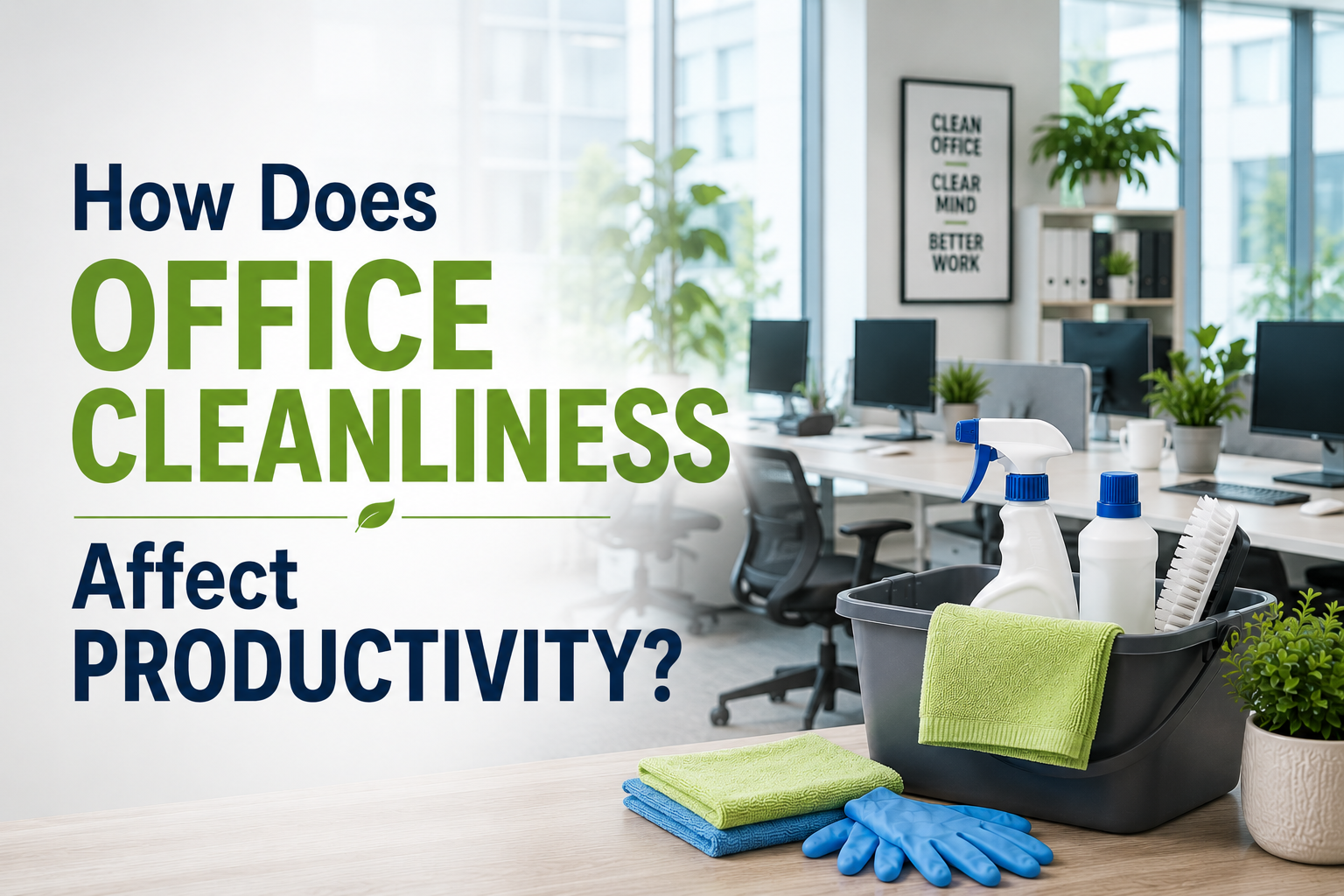
Office cleanliness directly affects productivity by reducing distractions, lowering stress, and cutting sick days caused by contaminated surfaces. Studies show employees in clean workspaces report productivity gains of up to 15% compared with those in cluttered environments. For Dubai businesses, a structured cleaning programme is one of the most cost-effective ways to protect output and staff wellbeing.
Alo Maids has delivered professional office cleaning across Dubai for years, working with businesses that range from small startups to multi-floor corporate headquarters. This article draws on published workplace research, third-party industry data, and Alo Maids’ own client experience to explain exactly why cleanliness matters — and what Dubai employers can do about it.
Why Does a Clean Workspace Improve Focus?
A clean workspace improves focus because it removes visual clutter that competes for the brain’s attention. Researchers at Princeton University found that disorganised surroundings force the brain to process unnecessary visual information, which reduces the ability to concentrate on a single task. This is why a tidy desk often feels calmer to work at than a cluttered one.
Clutter is not just an aesthetic issue. It is a measurable drain on cognitive resources.
- Papers, mugs, and loose cables scattered across a desk create ongoing low-level distraction.
- Employees waste time searching for documents or supplies buried under clutter.
- Disorganised environments have been linked to higher self-reported stress levels among office staff.
As a result, employees working in tidy, well-organised offices tend to complete tasks faster and with fewer errors. The core takeaway is that decluttering is not cosmetic — it is a direct productivity intervention.
What Does the Research Say About Cleanliness and Output?
Multiple independent studies point to the same conclusion: cleanliness and productivity are measurably linked. A widely cited University of Arizona study found that employees in clean, organised environments were up to 15% more productive than those working in disorderly settings. Separately, research published in the Journal of Environmental Psychology reported similar productivity gains among staff in well-maintained offices.
A Staples survey adds a useful human dimension to these figures. It found that 94% of workers felt more productive in a clean workspace, and 77% believed they produced higher-quality work as a result. In addition, a Dutch study of non-profit office environments confirmed that objectively measured cleanliness correlated significantly with employees’ perceived productivity and job satisfaction.
The consistent finding across these studies is that cleanliness is not a minor comfort — it is a quantifiable driver of workplace performance.
How Does Office Hygiene Affect Employee Health and Absenteeism?
Poor office hygiene increases illness transmission, which raises absenteeism and reduces overall team output. High-touch surfaces such as desks, door handles, and shared kitchen equipment can carry significant bacteria if not cleaned regularly. Reducing this contamination through scheduled disinfection lowers the risk of illness spreading through a team.
The financial impact of this is substantial. The U.S. Centers for Disease Control and Prevention (CDC) estimates that workplace illness costs employers around $225.8 billion annually in lost productivity, equivalent to roughly $1,685 per employee. While this figure is US-based, the underlying mechanism — contaminated surfaces spreading illness among close-quartered teams — applies equally to Dubai’s dense commercial office towers.
Consider a simplified example relevant to Dubai SMEs:
- A 50-person office loses an average of 1.5 sick days per employee each year to preventable illness.
- At an estimated cost of AED 1,800 per lost workday, that equates to significant annual productivity loss.
- A structured professional cleaning programme typically costs a fraction of this figure.
In short, investing in professional office hygiene almost always delivers a stronger return than the cost of the service itself.
Which Areas of an Office Carry the Highest Hygiene Risk?
Shared spaces — kitchens, bathrooms, and communal desks — carry the highest hygiene risk in any office. These areas see the most daily foot traffic and the most hand-to-surface contact, making them primary sites for bacteria and virus transmission if cleaning schedules lapse.
- Kitchens: Shared kettles, fridge handles, and countertops accumulate bacteria quickly without daily attention.
- Bathrooms: Poorly maintained restrooms are strongly linked to negative perceptions of a business’s overall standards, according to Harris Interactive research on the “halo effect.”
- Desks and keyboards: Personal workstations often go uncleaned for weeks, despite constant hand contact.
Alo Maids addresses each of these risk zones with dedicated Office Cleaning, Bathroom Cleaning, and Kitchen Cleaning services designed around Dubai’s fast-paced commercial environment.
Does a Clean Office Affect Client Perception and Business Reputation?
Yes — a clean office shapes client perception within seconds and can influence whether a business appears trustworthy. Research from the University of Wolverhampton describes this as the “halo effect,” where a single positive trait, such as cleanliness, causes people to assume other positive traits, like professionalism and reliability, are also present.
This matters directly for client-facing Dubai businesses. Visitors form judgements almost instantly, often before a meeting even begins. A polished, hygienic reception area and meeting room can reinforce a brand’s credibility before a single word is spoken.
As a result, office cleanliness functions as a silent extension of brand reputation, not just a maintenance task.
How Can Dubai Businesses Improve Office Cleanliness Practically?
Dubai businesses can improve office cleanliness most effectively through scheduled professional cleaning rather than ad hoc staff efforts. Relying on employees to tidy shared spaces is inconsistent and pulls attention away from core work. A structured cleaning calendar removes this burden entirely.
Practical steps that consistently improve outcomes include:
- Daily disinfection of high-touch surfaces such as door handles, shared keyboards, and light switches.
- Weekly deep cleans of kitchens and bathrooms to prevent bacteria build-up between routine cleans.
- Decluttering policies that encourage clear desks at the end of each working day.
- Air quality management, since a widely cited 2003 meta-analysis found productivity gains of up to 11% linked to improved ventilation and reduced indoor pollutants.
- Professional partnerships with cleaning providers who follow documented, auditable schedules rather than informal arrangements.
The single biggest improvement most Dubai offices can make is replacing inconsistent internal cleaning with a professional, scheduled programme.
What Results Have Dubai Businesses Seen From Professional Cleaning?
Alo Maids has worked with Dubai offices where inconsistent cleaning previously led to visible clutter build-up and recurring staff complaints about shared kitchen and bathroom hygiene. After introducing a structured daily and weekly cleaning schedule, client feedback consistently reported fewer hygiene complaints and a noticeably tidier working environment within the first month.
This mirrors the wider research findings above: structured, professional cleaning produces measurable improvements in both perceived cleanliness and workplace satisfaction. Consistency, not occasional deep cleans, is what drives lasting productivity benefits.
Frequently Asked Questions
Does office cleanliness really affect productivity?
Yes. Multiple studies, including University of Arizona and Journal of Environmental Psychology research, link clean workspaces to productivity gains of up to 15%. Reduced clutter and better hygiene lower distraction and illness-related absenteeism, both of which directly support higher daily output.
How much can a clean office increase employee output?
Research findings vary but generally point to gains between 12% and 15%. A Staples survey found 94% of workers felt more productive in clean environments, while a separate HLW International study recorded 12% higher productivity among staff in well-maintained offices.
What is the biggest hygiene risk in a shared office?
Shared kitchens and bathrooms carry the highest hygiene risk due to constant hand-to-surface contact. Desks and keyboards are also frequently overlooked, despite research showing they can harbour significant bacteria between routine cleans.
How often should a Dubai office be professionally cleaned?
Most Dubai offices benefit from daily disinfection of high-touch surfaces and weekly deep cleans of kitchens and bathrooms. Businesses with higher foot traffic or client visits often schedule more frequent attention to reception areas and meeting rooms.
Can office cleanliness affect how clients perceive a business?
Yes. The “halo effect,” identified in University of Wolverhampton research, shows that people associate a clean environment with professionalism and reliability. A tidy, hygienic office can positively shape client trust before any conversation takes place.
Does poor office hygiene increase sick days?
Yes. The CDC estimates workplace illness costs employers approximately $1,685 per employee annually in lost productivity. Regular disinfection of shared surfaces reduces illness transmission and helps lower absenteeism across a team.
Is professional cleaning more effective than staff-led tidying?
Generally, yes. Staff-led cleaning is inconsistent and diverts attention from core tasks. Professional providers such as Alo Maids follow structured, auditable schedules that maintain consistent hygiene standards across an entire office.
How can Dubai businesses get started with a cleaning programme?
The simplest first step is a consultation with a professional cleaning provider to assess current hygiene gaps. Alo Maids offers tailored office, kitchen, and bathroom cleaning plans built around each business’s layout, foot traffic, and working hours.
Ready to see the difference a professionally cleaned office can make to your team’s focus and output? Book a consultation with Alo Maids and get a tailored cleaning plan for your Dubai workplace.
Author
Written by the Alo Maids editorial team, drawing on years of hands-on commercial cleaning experience across Dubai offices, kitchens, and shared facilities. Alo Maids’ cleaning specialists follow structured hygiene protocols informed by published workplace research and direct client outcomes. This article combines that operational expertise with independently published productivity studies to give Dubai businesses practical, evidence-based guidance.