
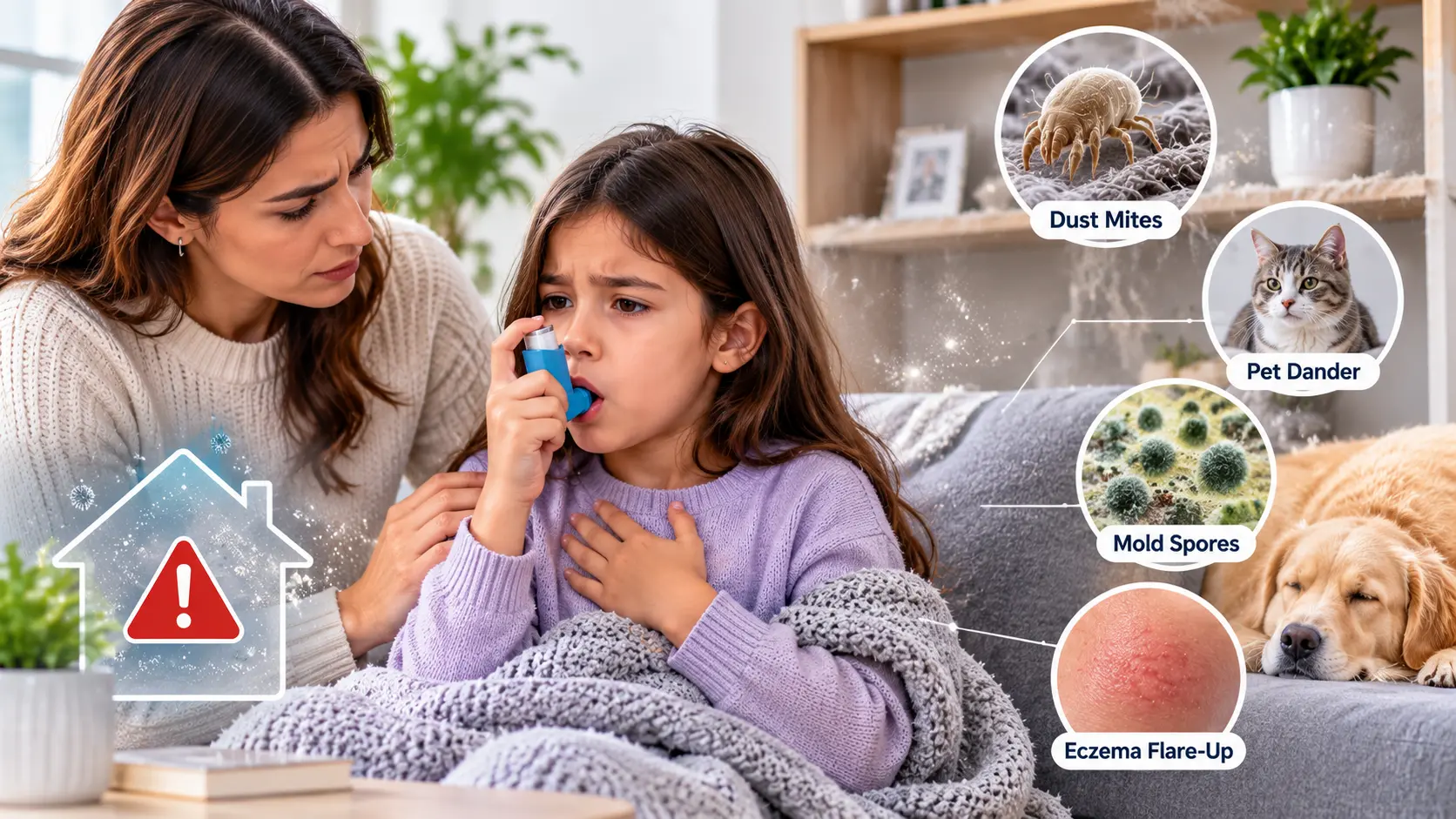
Yes, a home can trigger asthma and eczema flare-ups, but “dirty” is not quite the right word. The real culprits are specific things that build up in homes: dust mite allergens, mould, pet dander, cooking and incense smoke, and, surprisingly, some cleaning products. A home can look spotless and still hold triggers, and a slightly untidy one can be perfectly fine.
This article is general information, not medical advice. If you or your child have asthma or eczema, follow your doctor’s treatment plan.
How Asthma and Eczema Respond to Indoor Triggers
- Asthma is a condition of the airways. Inhaled irritants and allergens can inflame them, causing coughing, wheezing, chest tightness and breathlessness.
- Eczema (atopic dermatitis) is a condition where the skin barrier is weaker and more reactive. Allergens, irritants, dryness and sweat can set off itching and rashes.
The two often occur together, and both are linked to allergies. That’s why the same household triggers show up for both.
The Main Household Triggers
1. Dust mites
Dust mites are microscopic creatures that live in bedding, mattresses, sofas, carpets and soft toys. It is their droppings and body fragments, not the mites themselves, that trigger reactions. They thrive in warm, humid conditions and feed on shed skin cells.
- Bedrooms are the main hotspot.
- Allergen levels rise when bedding isn’t washed regularly.
- Dubai’s air-conditioned homes can keep fabrics cool and slightly humid, which suits mites.
2. Mould
Mould grows where there is moisture: bathrooms, window frames, behind furniture, around leaking pipes and inside poorly maintained AC units. Spores and mould fragments can irritate airways and skin.
- Visible black or green patches are an obvious sign.
- A persistent musty smell can signal mould you can’t see.
- Heavy mould exposure is more likely to affect people who already have asthma or allergies.
3. Dust and fine particles
Household dust is a mix of fibres, skin flakes, pollen, soil, soot and allergens. In Dubai, desert and construction dust also enters homes and settles on surfaces and inside AC systems. Dust itself is an irritant, and it carries allergens with it.
4. Pet dander
Skin flakes, saliva and fur from cats and dogs are a common trigger. Dander is sticky and sticks to fabric, walls and carpets, and it can linger long after the animal has left the room.
5. Pests
Cockroach droppings and body parts are a well-recognised asthma trigger, especially in children. Rodents can also be a source. Food crumbs and unsealed bins attract them.
6. Smoke, incense and fragrance
Tobacco smoke, shisha, candles, bakhoor and oud all release fine particles and chemicals. In closed rooms with limited ventilation, these can irritate the airways and worsen asthma symptoms in sensitive people. Strong air fresheners and scented sprays can do the same.
7. Cleaning products themselves
This is the one people overlook. Some products can irritate rather than help.
- Chlorine bleach, ammonia and strong disinfectants release fumes that can trigger coughing and wheezing.
- Aerosol sprays disperse fine droplets into the air that you breathe.
- Fragranced products can irritate skin and airways.
- Leftover residue on surfaces, towels or clothes can irritate eczema-prone skin.
- Mixing products, such as bleach with other cleaners, can create dangerous gases.
So the answer is not simply “clean more.” It’s “clean in a way that removes triggers without adding new ones.”
What the Evidence Says (and Doesn’t Say)
It’s worth being accurate here:
- There is good evidence that dust mite allergen, mould, cockroach allergen and tobacco smoke worsen asthma in people who are sensitised to them.
- There is good evidence that irritants such as harsh soaps, detergents and dry skin can worsen eczema.
- The picture on whether a very clean home causes asthma or allergies in the first place is less clear. Some research suggests that early-life exposure to a diverse environment may help the immune system develop, which is sometimes called the hygiene hypothesis. It does not mean dirt is good for people who already have asthma or eczema. For them, reducing triggers is generally recommended.
In short: if you already have asthma or eczema, reducing allergens and irritants at home is sensible. This doesn’t mean a sterile home is necessary or even desirable.
Signs Your Home May Be Contributing
Consider whether triggers might be involved if:
- Symptoms are worse at night, in the bedroom or first thing in the morning
- Symptoms improve when you’re away from home
- There’s a musty smell, visible mould or damp patches
- Flare-ups follow cleaning, burning incense or using certain products
- Symptoms are worse after the AC has been off and is switched back on
- Dust visibly returns quickly after cleaning
Keeping a simple diary of symptoms and activities for a couple of weeks can reveal patterns worth sharing with your doctor.
Practical Ways to Reduce Triggers
Bedroom
- Wash sheets and pillowcases weekly in hot water if the fabric allows.
- Use mattress and pillow covers designed to block allergens.
- Wash duvets, pillows and soft toys regularly according to their labels.
- Keep clutter and soft furnishings to a minimum in sleeping areas.
- Consider keeping pets out of the bedroom.
Dust control
- Damp dust surfaces with a microfibre cloth, since dry dusting moves dust into the air.
- Vacuum regularly with a HEPA-filter vacuum if possible.
- Clean AC filters and vents often, since they circulate whatever has collected inside.
- Keep windows closed on dusty or sandy days.
Moisture and mould
- Use extractor fans or open windows after showers and cooking.
- Wipe condensation from windows and tiles.
- Fix leaks promptly.
- Keep indoor humidity in a comfortable range, roughly 40 to 60 percent.
- Clean mould early, before it spreads, and address the moisture source.
Pets and pests
- Brush and bathe pets regularly and wash their bedding.
- Store food in sealed containers and take rubbish out daily.
- Clean spills and crumbs promptly.
Smoke and fragrance
- Reduce or avoid burning incense, candles and bakhoor in closed rooms, especially where someone has asthma.
- Ventilate well when you do use them.
- Choose fragrance-free products where possible.
Choosing and using cleaning products
- Choose mild, fragrance-free products for everyday cleaning.
- Avoid mixing cleaning products.
- Ventilate the room while cleaning and afterward.
- Avoid aerosols and spray directly onto cloths when possible.
- Rinse surfaces that come into contact with skin, such as changing tables or bath areas.
- Wear gloves to protect eczema-prone hands, ideally with cotton liners.
- Remember that “natural” doesn’t automatically mean gentler. Essential oils, for instance, can be strong irritants for some people.
For eczema in particular
- Wash laundry with a gentle, fragrance-free detergent and consider an extra rinse.
- Skip fabric softeners if they irritate.
- Keep nails short and surfaces that touch skin, such as bedding and towels, fresh.
- Moisturise as advised by your doctor.
A Realistic Cleaning Rhythm for Sensitive Households
| Frequency | Tasks |
|---|---|
| Daily | Wipe kitchen surfaces, take out rubbish, ventilate rooms |
| Weekly | Wash bedding, vacuum floors and sofas, damp dust, clean bathrooms |
| Monthly | AC filters, window tracks, wash curtains or covers as needed, mould check |
| Seasonally | Deep clean, mattress and upholstery care, AC servicing |
When to See a Doctor
Cleaning helps, but it isn’t a treatment. Speak to a doctor if:
- Symptoms are frequent, worsening or disturbing sleep
- A child has repeated wheezing or persistent skin flare-ups
- You rely on reliever inhalers more than usual
- You suspect a specific allergen and want testing
Seek urgent medical help for severe breathlessness, difficulty speaking, blue lips or a rapidly worsening attack.
Final Takeaway
A home can trigger asthma and eczema, but the cause is usually specific: dust mites, mould, dander, pests, smoke and sometimes the cleaning products themselves. The goal is not an obsessively sterile home. It’s a home where triggers are controlled, moisture is managed and cleaning is done in a way that doesn’t irritate the airways or skin. Targeted, regular cleaning and good ventilation do more than occasional heavy scrubbing.
If keeping up with the hidden spots, like mattresses, vents and upholstery, is difficult, a professional deep clean can help reset the triggers.