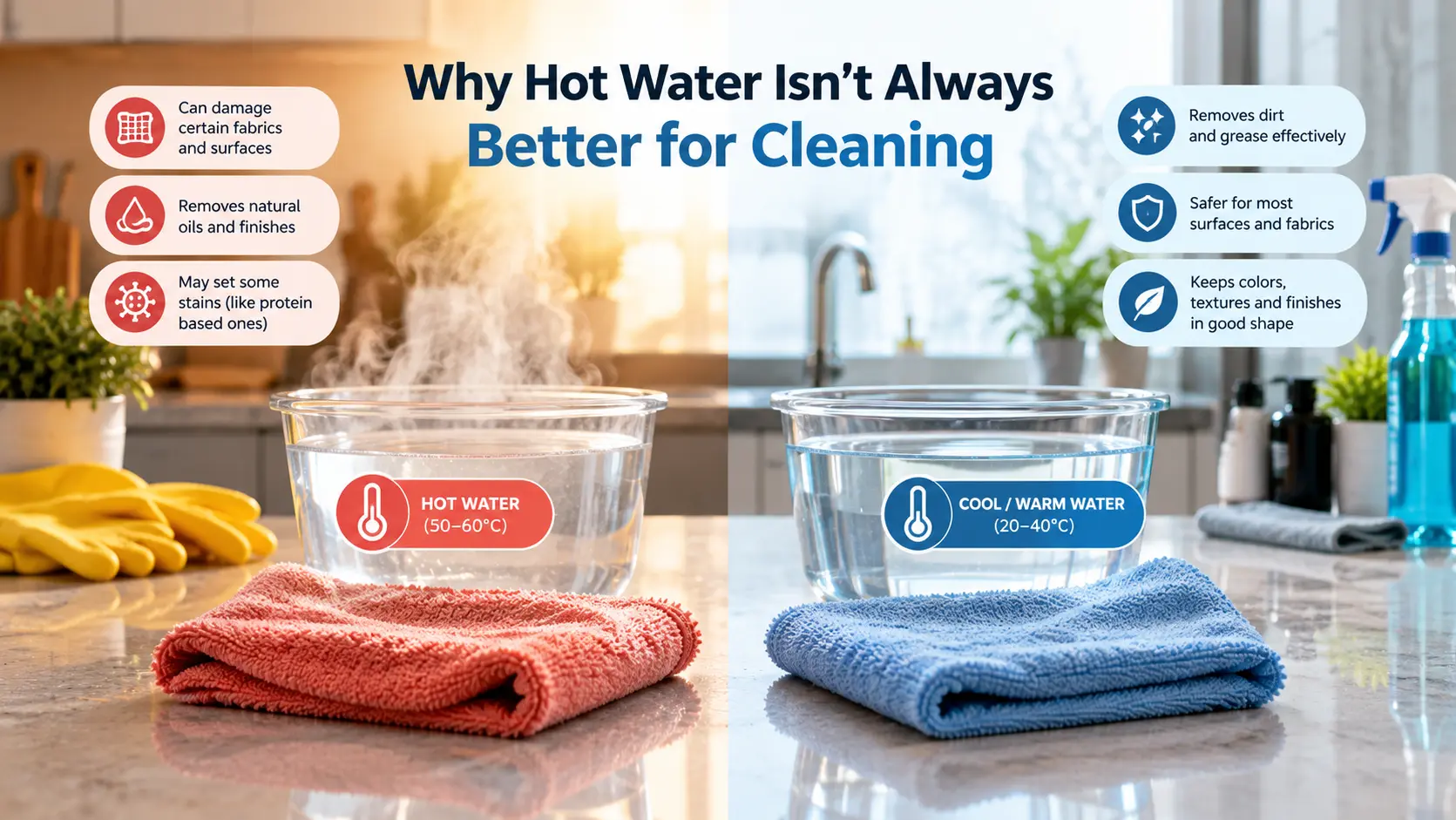
Hot water can help remove grease, oil, and stubborn dirt. However, it is not the best choice for every cleaning task. Some surfaces need cooler water to stay in good condition. Others require specific cleaning products to remove stains safely.
Using the wrong water temperature can damage delicate materials. It can also make certain stains harder to remove. Knowing when to use hot or cold water helps you clean more effectively.
In this guide, Alo Maids explains why hot water is not always better for cleaning. You will also learn how to choose the right temperature for different surfaces and household cleaning tasks.
Does Hot Water Clean Better?
Hot water can improve cleaning in several situations. Heat helps loosen grease and oily residue. It can also help some cleaning products work more effectively.
However, water temperature is only one part of the cleaning process. The right detergent, cleaning method, and surface type matter too.
For example, warm water can help remove greasy marks from kitchen surfaces. Cold water may work better on fresh blood stains. Delicate materials may also need cooler water to prevent damage.
The best approach is to match the water temperature to the cleaning task.
6 Reasons Hot Water Isn’t Always the Best Choice
1. Hot Water Can Set Certain Stains
Some stains become harder to remove when exposed to heat. Protein-based stains, such as blood, can set into fabric when hot water is used.
This can make the stain more difficult to remove completely.
What to do instead: Rinse fresh blood stains with cold water first. Treat the affected area with a suitable stain remover. Follow the fabric care label before washing.
For unknown stains, avoid applying heat until you identify the substance.
2. Heat Can Damage Delicate Surfaces
Not every household material can tolerate high temperatures. Natural stone, delicate fabrics, some plastics, and certain finishes may react poorly to excessive heat.
Hot water may affect protective coatings or cause some materials to warp. Repeated exposure can also shorten the life of sensitive surfaces.
What to do instead: Use lukewarm or cool water where appropriate. Always check the manufacturer’s cleaning instructions. Test your cleaning solution on a small, hidden area first.
This is especially important when cleaning delicate furniture, decorative finishes, and specialist flooring.
3. Hot Water May Damage Some Fabrics
High temperatures can cause certain fabrics to shrink, fade, or lose their shape. Wool and some synthetic materials require particular care.
Colour transfer can also occur when unsuitable washing conditions are used.
What to do instead: Check the garment’s care label before washing. Use the recommended water temperature and a suitable detergent. Separate colours when necessary.
For upholstery and curtains, check the fabric care instructions before applying water or cleaning products.
4. Excessive Heat Can Affect Cleaning Products
Cleaning products are designed for specific uses. Some work well with warm water, while others require cool water or no dilution at all.
Using very hot water with the wrong product may reduce its effectiveness. It can also create unwanted fumes or other safety risks with certain chemicals.
What to do instead: Follow the product label carefully. Use the recommended dilution and water temperature. Never mix cleaning products unless the manufacturer specifically confirms that it is safe.
In particular, never mix bleach with ammonia or acidic cleaners.
5. Hot Water Can Increase the Risk of Surface Damage
Repeated exposure to excessive heat can affect some sealants, adhesives, coatings, and finishes.
For example, certain laminated surfaces may be sensitive to high temperatures. Some floor finishes may also require specific cleaning methods.
Using hot water without checking the surface requirements can lead to avoidable damage.
What to do instead: Use a suitable cleaner and a soft cloth or mop. Avoid pouring hot water directly onto delicate surfaces. Follow the care instructions for the material you are cleaning.
6. Hot Water Is Not a Substitute for Disinfection
Many people assume that hot water alone kills all household germs. This is not a reliable way to disinfect everyday surfaces.
The temperature needed to kill microorganisms varies. Ordinary household cleaning rarely maintains the heat and contact time required for dependable disinfection.
What to do instead: Clean surfaces with an appropriate cleaning product first. When disinfection is needed, use a suitable disinfectant according to its label. Follow the recommended contact time.
For laundry, use the hottest temperature permitted by the fabric care label and the washing product instructions.
When Should You Use Hot, Warm, or Cold Water?
Choosing the right water temperature depends on the material and type of dirt.
| Cleaning task | Recommended approach |
|---|---|
| Greasy kitchen surfaces | Warm water with a suitable degreaser |
| Fresh blood stains | Cold water first |
| Delicate fabrics | Follow the care label |
| Everyday hard surfaces | Cool or lukewarm water with a suitable cleaner |
| Bathroom surfaces | Use a surface-safe cleaner as directed |
| Dishes and greasy utensils | Warm or hot water, following product and material guidance |
| Natural stone surfaces | Use a stone-safe cleaner and manufacturer-approved temperature |
| Disinfection | Use a suitable disinfectant as directed |
Remember that hot water is not always necessary. Many household cleaning products work effectively at room temperature.
Common Cleaning Mistakes to Avoid
Using too much heat is only one of several cleaning mistakes that can affect your results.
Here are some habits worth avoiding:
- Using hot water on every stain: Some stains respond better to cold water.
- Ignoring surface instructions: Materials differ in their heat and chemical tolerance.
- Using too much detergent: Excess product can leave residue behind.
- Scrubbing delicate finishes: Abrasive tools can cause scratches and dullness.
- Mixing cleaning chemicals: Certain combinations can release dangerous gases.
- Skipping a spot test: Testing first helps reduce the risk of visible damage.
- Using heat before identifying a stain: Heat may make some stains harder to remove.
A little preparation can help prevent damage and reduce cleaning time.
How Professional Cleaners Choose the Right Method
Professional cleaning involves more than choosing a strong product or using hot water. Each task requires an appropriate method.
A professional cleaner considers the surface material, the type of dirt, and the cleaning product. They also consider how much moisture the material can safely handle.
For example, greasy kitchen areas may benefit from a suitable degreaser and warm water. Delicate upholstery may require a fabric-specific treatment. Bathroom surfaces need products suited to their materials and the type of buildup present.
This tailored approach helps protect household surfaces while improving cleaning results.
At Alo Maids, the right cleaning approach should always match the task. Choosing suitable products and methods helps maintain a cleaner home without exposing surfaces to unnecessary wear.
Frequently Asked Questions
Is hot water better than cold water for cleaning?
Not always. Hot water can help loosen grease, but cold water is often better for fresh blood stains. The best temperature depends on the surface, stain, and cleaning product.
Does hot water kill bacteria on household surfaces?
Hot water alone should not be relied on for household disinfection. Use an appropriate disinfectant and follow its instructions when disinfection is required.
Should I use hot water for kitchen cleaning?
Warm water can help loosen grease on suitable kitchen surfaces. Use a compatible degreaser and follow the surface manufacturer’s care instructions.
Can hot water damage floors?
Yes, some flooring materials, finishes, and adhesives may be sensitive to excessive heat or moisture. Use a cleaner and water temperature approved for your flooring type.
Is warm water better for bathroom cleaning?
Warm water can help loosen some soap residue and dirt. However, the cleaning product and surface compatibility matter more than temperature alone. Use products designed for your bathroom surfaces.
What is the safest water temperature for general cleaning?
Lukewarm water is a practical starting point for many routine cleaning tasks. However, always follow the care instructions for the surface and cleaning product.
Final Thoughts
Hot water is useful for many cleaning jobs, but it is not a universal solution. It can help loosen grease while making certain stains harder to remove. Excessive heat may also affect delicate fabrics, flooring, and surface finishes.
The key is to choose the right temperature for each task. Use suitable cleaning products, follow care instructions, and test delicate surfaces before cleaning them fully.
Want help keeping your home clean and well maintained? Alo Maids offers professional cleaning services to help you care for your living spaces. Choose the right cleaning support for your home’s needs and enjoy a fresher, more comfortable environment.