These three words get thrown around interchangeably, especially since 2020, but they actually describe very different levels of germ control. Using the wrong one for the wrong situation isn’t just a semantic slip — it can mean you’re leaving harmful bacteria or viruses behind when you thought you’d dealt with them. Here’s what each term actually means, and when each one applies in a real home.
The One Thing People Skip: Cleaning Comes First
Before any of the three terms below apply, there’s a step that has to happen first — plain cleaning. Cleaning is the physical removal of dirt, dust, and debris using soap, water, and some form of scrubbing or wiping. It doesn’t kill germs; it just physically clears them off the surface along with everything else.
This matters because sanitizers and disinfectants work by chemical contact — if a surface is still covered in grime, the product can’t reach the germs underneath it properly. Skipping the clean-first step is one of the most common reasons a “disinfected” surface isn’t actually as germ-free as people assume.
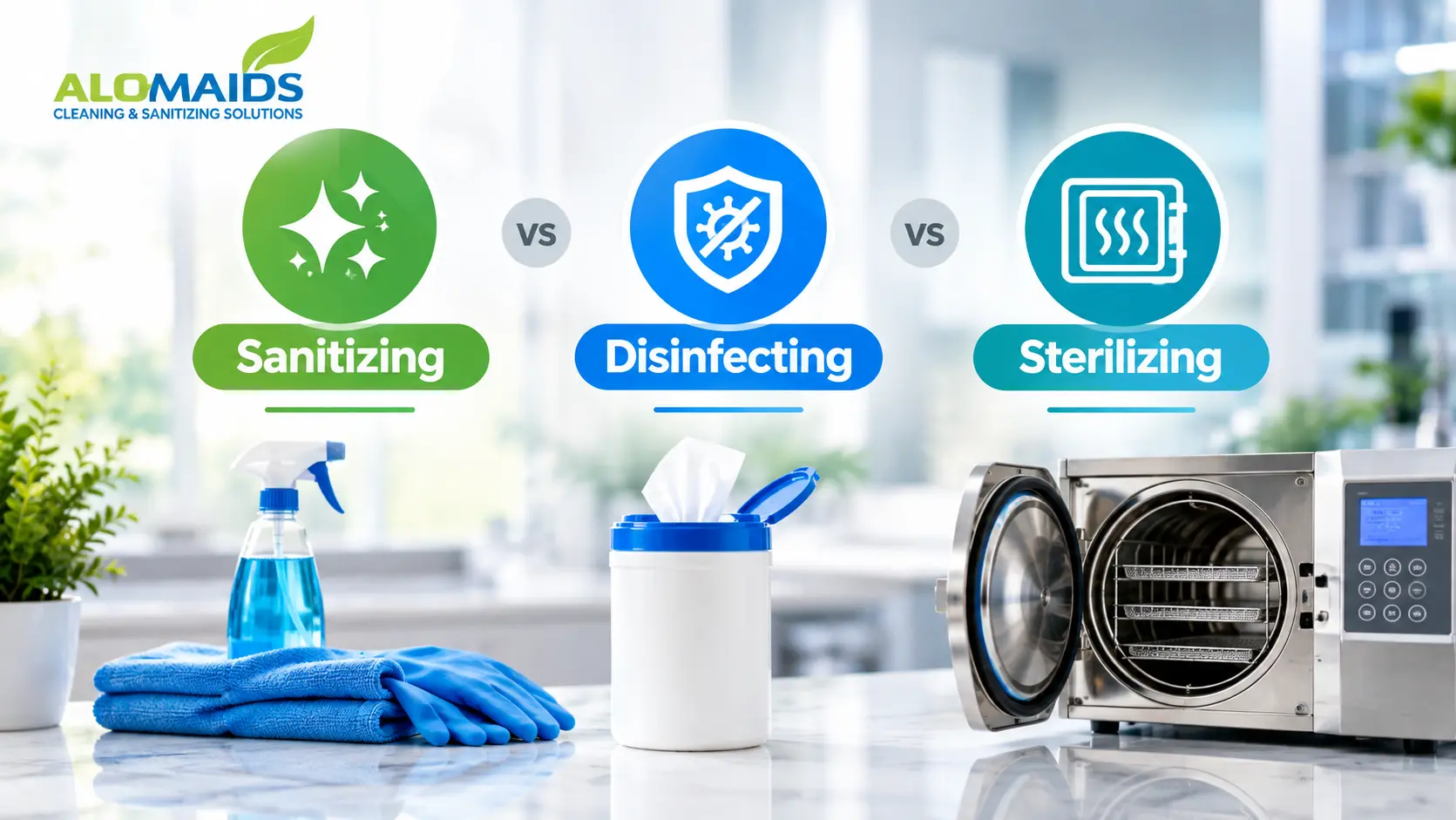
Sanitizing: Getting Germs to a “Safe” Level
Sanitizing reduces the number of bacteria on a surface to a level considered safe by public health standards — it doesn’t claim to eliminate everything, just to bring the count down significantly. It’s a middle step: stronger than plain cleaning, but not as aggressive as disinfecting.
Where it’s used at home: kitchen counters, cutting boards, high chairs, baby toys, and anything that comes into regular contact with food or mouths. These are surfaces you want low-risk, but not necessarily treated with harsh chemical disinfectants on a daily basis.
Disinfecting: Killing Specific Viruses and Bacteria
Disinfecting goes a step further — it uses chemical agents specifically formulated to destroy a defined range of bacteria, viruses, and fungi on a surface. Disinfectants are typically registered products with active ingredients tested against specific pathogens, which is why product labels list exactly what they kill (certain flu strains, norovirus, staph, etc.).
Where it’s used at home: doorknobs, light switches, remote controls, bathroom surfaces, and anywhere illness could spread quickly through a household — especially when someone in the home is sick or immunocompromised.
The key distinction from sanitizing: disinfecting targets and destroys specific pathogens rather than simply reducing overall germ counts, which is why disinfectants are the go-to choice during cold and flu season or after illness in the household.
Sterilizing: Eliminating Everything, No Exceptions
Sterilizing is the most intense level — it destroys all microbial life on a surface, including bacterial spores that survive both sanitizing and disinfecting. This is achieved through methods like high heat, pressurized steam, or specialized chemical processes, and it’s the standard used for surgical instruments and medical equipment that contacts sterile tissue.
Where it’s used at home: almost never, and that’s by design. Sterilization isn’t necessary — or even desirable — for typical household surfaces. It’s reserved for clinical and medical environments where any surviving microorganism poses a serious risk.
Quick Comparison
| Cleaning | Sanitizing | Disinfecting | Sterilizing | |
|---|---|---|---|---|
| Removes visible dirt | Yes | Sometimes | Sometimes | Sometimes |
| Kills germs | No | Reduces to safe level | Kills specific pathogens | Kills all microorganisms |
| Typical home use | Daily | Kitchen, food-contact surfaces | High-touch surfaces, illness situations | Rarely needed |
| Method | Soap, water, scrubbing | Sanitizing sprays/wipes | Registered disinfectants | Heat, steam, specialized chemicals |
Which One Does Your Home Actually Need?
For most day-to-day household maintenance, a combination of regular cleaning and targeted sanitizing covers the essentials — especially in kitchens and bathrooms. Disinfecting becomes important during flu season, after illness, or in households with young children, elderly family members, or anyone with a weakened immune system. Sterilization simply isn’t something a typical home needs, and reaching for it unnecessarily just means using stronger chemicals than the situation calls for.
The mistake most people make isn’t choosing the wrong product — it’s skipping steps or using the same approach for every surface regardless of risk level. A cutting board and a bathroom faucet don’t need the same treatment, and understanding the difference means you’re protecting your household more effectively, with less unnecessary chemical exposure.
Getting It Right, Every Time
Knowing the difference between these terms is one thing — consistently applying the right level of care to the right surfaces, every single cleaning session, is another. That’s where a professional team makes a measurable difference.
At Alo Maids, our cleaning teams are trained to know exactly which surfaces need sanitizing, which need disinfecting, and how to do both properly — not just spray and wipe. Whether it’s a routine home clean or a deeper health-focused service, we bring the right process to every surface in your home.
Ready for a home that’s genuinely germ-free, not just tidy? Book your appointment with Alo Maids today.